Short Communication - (2025) Volume 10, Issue 5
Received: 01-Oct-2025, Manuscript No. jomp-26-185130;
Editor assigned: 03-Oct-2025, Pre QC No. P-185130;
Reviewed: 17-Oct-2025, QC No. Q-185130;
Revised: 22-Oct-2025, Manuscript No. R-185130;
Published:
29-Oct-2025
, DOI: 10.37421/2576-3857.2025.10.332
Citation: Petrovic, Valentina. ”Genomics Revolutionizes Pediatric Leukemia Treatment.” J Oncol Med and Pract 10 (2025):332.
Copyright: © 2025 Petrovic V. This is an open-access article distributed under the terms of the Creative Commons Attribution License, which permits unrestricted use, distribution and reproduction in any medium, provided the original author and source are credited.
Integrative genomic profiling is profoundly transforming the landscape of pediatric leukemia treatment by meticulously identifying critical genetic drivers and potential therapeutic targets within individual tumors. This sophisticated approach synergistically combines a multitude of genomic techniques to construct a comprehensive molecular portrait of each child's specific cancer. A deep understanding of these intricate genomic alterations is absolutely paramount for refining diagnostic accuracy, accurately predicting disease prognosis, and strategically guiding the selection of highly targeted therapies and innovative immunotherapies, with the ultimate goal of substantially improving patient outcomes and significantly reducing treatment-related toxicity in children battling leukemia. The application of advanced whole-genome sequencing (WGS) in the study of pediatric acute lymphoblastic leukemia (ALL) has been instrumental in uncovering previously unknown driver mutations and intricate genomic rearrangements. These groundbreaking discoveries are of paramount importance for elucidating the fundamental mechanisms of disease pathogenesis and for the development of more precise diagnostic tools and prognostic indicators. The rich data generated from WGS analyses holds the potential to significantly inform and refine treatment strategies by revealing actionable mutations that are amenable to highly specific targeted therapies. Furthermore, RNA sequencing (RNA-seq) plays an indispensable role in comprehensively characterizing the transcriptional landscape of pediatric leukemias, including the crucial identification of fusion genes and the detection of aberrant gene expression patterns. These deep molecular insights are essential for accurately subtyping leukemias and for predicting a patient's likely response to various therapeutic interventions. RNA-seq also significantly contributes to understanding the complex biological mechanisms underlying drug resistance, thereby paving the way for the development and implementation of truly personalized treatment approaches. Epigenetic alterations, such as DNA methylation patterns and histone modifications, are increasingly being recognized as critical contributors to the initiation, development, and progression of pediatric leukemias. Integrative profiling that deliberately incorporates epigenomic data offers a far more complete and nuanced picture of the intricate regulatory mechanisms that drive these aggressive cancers. The strategic targeting of these specific epigenetic changes presents exciting and novel therapeutic avenues for treating these challenging diseases. The integration of single-cell genomics into the rigorous investigation of pediatric leukemia is proving to be a revolutionary approach, effectively uncovering profound cellular heterogeneity and pinpointing rare cell populations that may be responsible for disease relapse or the development of treatment resistance. This high-resolution analytical methodology allows for the detailed characterization of individual cells, providing an exceptionally deep understanding of leukemia biology and enabling the development of significantly more targeted and effective therapeutic interventions. Liquid biopsies, through the meticulous analysis of circulating tumor DNA (ctDNA) and other relevant biomarkers present in bodily fluids, offer a minimally invasive yet highly effective strategy for monitoring treatment response and for detecting even minute amounts of minimal residual disease (MRD) in pediatric leukemias. The integration of these liquid biopsy findings with comprehensive genomic profiling provides invaluable dynamic molecular insights, which are crucial for the early detection of disease relapse and for guiding timely and appropriate treatment adjustments. The development and deployment of targeted therapies, specifically designed and guided by the unique genomic profile of individual pediatric leukemias, has demonstrated remarkable promise and significant clinical benefits. The precise identification of specific mutations that drive cancer cell proliferation and survival allows for the judicious selection of drugs that can accurately and potently inhibit these critical molecular targets, ultimately leading to more effective treatments with substantially reduced toxicity compared to traditional, broad-spectrum chemotherapy regimens. Immunogenomic profiling is substantially enhancing our understanding of the complex and dynamic interplay between pediatric leukemias and the intricate architecture of the immune system. The identification of key immune checkpoints and the characterization of tumor-infiltrating lymphocytes are critically important factors for the successful implementation and efficacy of immunotherapies, such as the highly promising CAR T-cell therapy. This integrated molecular approach facilitates the careful tailoring of immunotherapy strategies to the unique biological profiles of individual patients. The classification of pediatric leukemias is undergoing a significant and necessary evolution, driven by the incorporation of comprehensive and detailed genomic data. Moving beyond traditional morphological and immunophenotypic classifications, novel molecular subtypes are now being recognized, which possess profound implications for predicting prognosis and for making informed decisions regarding treatment selection. This molecular understanding leads to a much higher degree of precision in the management of these complex and challenging hematologic malignancies. The successful clinical implementation of integrative genomic profiling in the challenging field of pediatric leukemia necessitates the establishment of robust and reliable bioinformatic pipelines, coupled with a seamless and close collaborative relationship between dedicated clinical oncologists and expert molecular pathologists. This essential collaboration ensures that complex genomic data is meticulously translated into actionable clinical insights that directly benefit patient care, thereby effectively paving the way for the widespread adoption of personalized medicine approaches in the management of pediatric hematologic malignancies.
Integrative genomic profiling stands at the forefront of revolutionizing pediatric leukemia treatment, offering an unprecedented ability to uncover key genetic drivers and identify actionable therapeutic targets. This comprehensive approach leverages a diverse array of genomic techniques to construct a detailed molecular blueprint of individual pediatric leukemia tumors. Understanding these specific genomic alterations is absolutely essential for improving diagnostic accuracy, refining prognostic predictions, and guiding the selection of highly effective targeted therapies and immunotherapies, ultimately leading to better patient outcomes and diminished treatment toxicity in children with leukemia. The widespread application of whole-genome sequencing (WGS) in the study of pediatric acute lymphoblastic leukemia (ALL) has led to the identification of novel driver mutations and complex genomic rearrangements. These critical findings are fundamental to comprehending the intricate pathogenesis of the disease and are vital for developing more precise diagnostic markers and more accurate prognostic tools. The extensive data derived from WGS analysis serves as a crucial foundation for informing treatment strategies by pinpointing actionable mutations that can be effectively targeted by specific therapeutic agents. RNA sequencing (RNA-seq) plays a crucial role in meticulously characterizing the transcriptional landscape of pediatric leukemias, enabling the identification of fusion genes and aberrant gene expression profiles. These in-depth molecular insights are indispensable for accurate leukemia subtyping and for predicting a patient's likelihood of responding to therapy. Furthermore, RNA-seq contributes significantly to unraveling the mechanisms of drug resistance, thereby facilitating the development of personalized treatment strategies. Epigenetic alterations, encompassing modifications such as DNA methylation and histone remodeling, are increasingly recognized as significant contributors to the development and progression of pediatric leukemias. The integration of epigenomic data into comprehensive profiling strategies provides a more complete understanding of the regulatory mechanisms that govern these cancers. Targeting these specific epigenetic changes offers promising new avenues for therapeutic intervention. The integration of single-cell genomics into pediatric leukemia research is providing invaluable insights into cellular heterogeneity and is identifying rare cell populations that may be responsible for disease relapse or resistance to treatment. This high-resolution approach allows for the detailed characterization of individual cells, fostering a deeper understanding of leukemia biology and paving the way for the development of highly targeted therapeutic interventions. Liquid biopsies, which analyze circulating tumor DNA (ctDNA) and other biomarkers in bodily fluids, offer a non-invasive method for monitoring treatment response and detecting minimal residual disease (MRD) in pediatric leukemias. Integrating findings from liquid biopsies with genomic profiling provides dynamic molecular insights, aiding in the early detection of relapse and informing treatment adjustments. The development of targeted therapies specifically designed to address the genomic alterations found in pediatric leukemias has shown considerable promise. Identifying mutations that drive cancer growth allows for the selection of drugs that precisely inhibit these targets, resulting in more effective and less toxic treatments compared to conventional chemotherapy. Immunogenomic profiling is significantly enhancing our comprehension of the complex interactions between pediatric leukemias and the immune system. Identifying immune checkpoints and characterizing tumor-infiltrating lymphocytes are crucial for the successful application of immunotherapies, including CAR T-cell therapy. This integrated approach enables the customization of immunotherapy strategies based on individual patient profiles. The classification of pediatric leukemias is undergoing a significant evolution with the integration of comprehensive genomic data. Beyond traditional classification methods, molecular subtypes are now being identified, which have substantial implications for prognosis and treatment selection, thereby increasing the precision in managing these complex diseases. The successful clinical implementation of integrative genomic profiling in pediatric leukemia requires the development of robust bioinformatic pipelines and strong collaborative partnerships between clinical oncologists and molecular pathologists. This ensures that complex genomic data is effectively translated into actionable insights for patient care, driving the advancement of personalized medicine in pediatric hematologic malignancies.
Integrative genomic profiling is revolutionizing pediatric leukemia treatment by identifying genetic drivers and therapeutic targets through comprehensive molecular analysis. Whole-genome sequencing (WGS) has revealed novel mutations in pediatric ALL, informing pathogenesis and treatment strategies. RNA sequencing (RNA-seq) characterizes transcriptional landscapes, aiding in subtyping and predicting therapy response, while also shedding light on drug resistance mechanisms. Epigenetic alterations are recognized as crucial contributors to leukemia development, and targeting them offers new therapeutic avenues. Single-cell genomics is uncovering cellular heterogeneity and identifying rare cell populations driving relapse. Liquid biopsies provide a non-invasive method for monitoring treatment and detecting minimal residual disease. Targeted therapies based on genomic profiles show promise for more effective and less toxic treatments. Immunogenomic profiling enhances understanding of leukemia-immune system interactions, guiding immunotherapies like CAR T-cell therapy. Genomic data is refining leukemia classification, leading to improved prognosis and treatment selection. Clinical implementation requires robust bioinformatic tools and collaboration for personalized medicine in pediatric oncology.
None
None
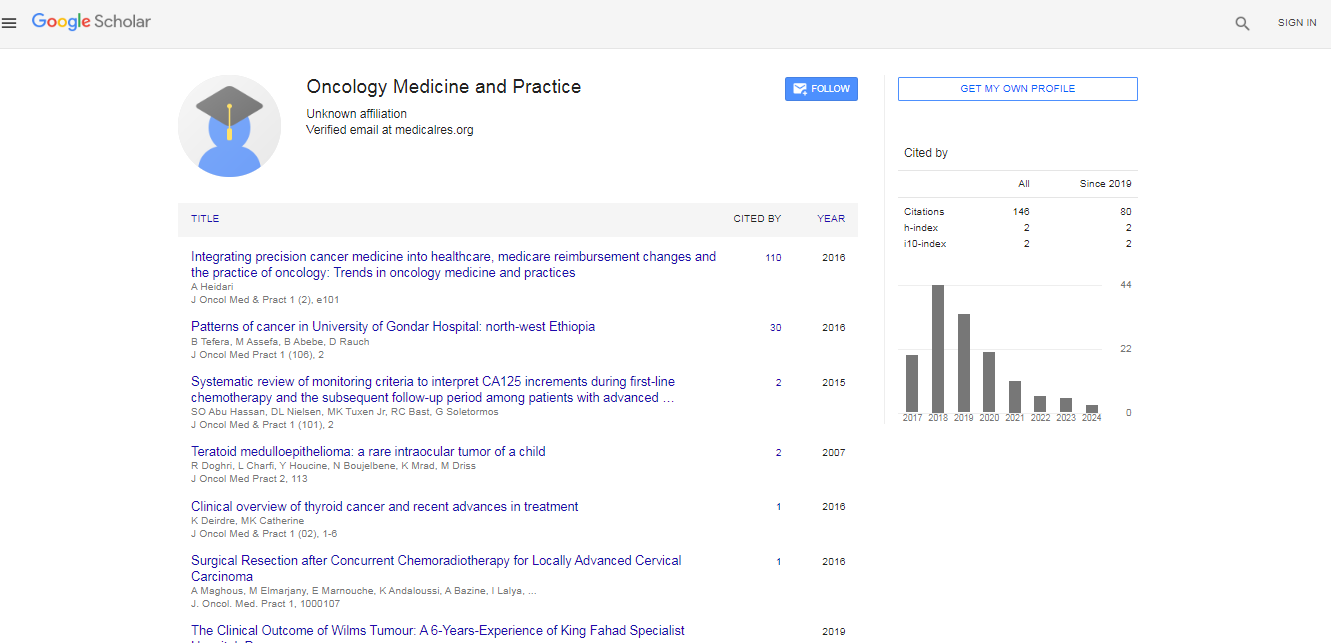
Journal of Oncology Medicine & Practice received 142 citations as per Google Scholar report