Opinion - (2025) Volume 13, Issue 5
Received: 01-Oct-2025, Manuscript No. JCMG-26-185556;
Editor assigned: 03-Oct-2025, Pre QC No. P-185556;
Reviewed: 17-Oct-2025, QC No. Q-185556;
Revised: 22-Oct-2025, Manuscript No. R-185556;
Published:
29-Oct-2025
, DOI: 10.37421/2472-128X.2025.13.364
Citation: Nkosi, Thandiwe. ”Genetic Counselors: Guiding Precision Medicine’s Future.” J Clin Med Genomics 13 (2025):364.
Copyright: © 2025 Nkosi T. This is an open-access article distributed under the terms of the Creative Commons Attribution License, which permits unrestricted use, distribution and reproduction in any medium, provided the original author and source are credited.
The landscape of modern healthcare is being profoundly reshaped by the advancements in precision medicine, a field that leverages an individual's unique genetic makeup to tailor medical interventions. Central to the effective implementation of this paradigm is the role of genetic counseling, which has evolved significantly to address the complexities of genomic data and its clinical applications. Genetic counselors are indispensable in interpreting intricate genomic information, clearly communicating potential risks and benefits, and empowering patients to make well-informed choices regarding genetic testing, preventative strategies, and treatment plans. They serve as a critical bridge, connecting cutting-edge genomic research with practical clinical care, always prioritizing ethical considerations and patient autonomy in their practice [1].
Pharmacogenomics, a cornerstone of personalized medicine, is increasingly being integrated into clinical workflows, with genetic counselors playing a pivotal role in its adoption. This integration enables the selection of medications and precise dosing tailored to an individual's genetic profile, thereby minimizing adverse drug reactions and optimizing therapeutic outcomes. This personalized approach is revolutionizing disease management across various specialties, including oncology and cardiology, by accurately predicting patient responses to pharmaceutical interventions. Genetic counselors are therefore essential for educating both patients and healthcare providers about the utility and implications of pharmacogenomic testing, ensuring its responsible and effective use [2].
The ethical, legal, and social implications (ELSI) of genetic information are at the forefront of genetic counseling within the context of precision medicine. Counselors are tasked with navigating a complex array of issues, including data privacy, the potential for genetic discrimination, ensuring equitable access to advanced genomic technologies, and addressing the psychological impact that genetic diagnoses can have on individuals and families. The responsible deployment of genomic medicine necessitates continuous dialogue and the establishment of robust policy frameworks, with genetic counselors positioned at the vanguard of these vital discussions [3].
The diagnostic capabilities for rare diseases have been dramatically enhanced by the advent of whole-exome and whole-genome sequencing technologies, and genetic counselors are integral to this progress. They are crucial in explaining the often-lengthy and complex diagnostic journey, managing patient expectations throughout this process, and facilitating access to appropriate support services and clinical trials for individuals affected by rare genetic conditions. Their expertise ensures that patients receive comprehensive care and guidance during their diagnostic odyssey [4].
In the realm of oncology, cancer genetic counseling has been significantly transformed by precision medicine. This transformation allows for the precise identification of hereditary cancer predispositions and guides the development of personalized treatment strategies. Genetic counselors are indispensable in assessing an individual's cancer risk, interpreting both germline and somatic mutation data, and facilitating informed decisions regarding prophylactic surgeries, targeted therapies, and cascade screening for at-risk family members, thereby enhancing proactive cancer care [5].
The proliferation of direct-to-consumer (DTC) genetic testing presents both unique challenges and significant opportunities for the field of genetic counseling. As DTC genetic tests become more accessible and widely used, genetic counselors are increasingly called upon to interpret the results, address consumer concerns, and guide individuals on the clinical utility and limitations of the genetic information they receive. This role is often situated within the broader framework of precision medicine initiatives, ensuring that individuals understand the implications of their genetic data [6].
The successful integration of genomic data into routine clinical care hinges on the availability of a skilled healthcare workforce, and genetic counselors are pivotal in this essential paradigm shift. Their specialized expertise in interpreting complex genetic reports, accurately communicating risk assessments, and facilitating shared decision-making processes ensures that precision medicine approaches are implemented ethically and effectively at the point of care, directly benefiting patients [7].
The escalating volume and intricate nature of genomic information necessitate the evolution and adaptation of genetic counseling service delivery models. Innovations such as telehealth genetic counseling, group genetic counseling sessions, and the development of digital tools are being implemented to enhance patient education, engagement, and accessibility in the context of precision medicine. These advancements aim to make genetic counseling services more efficient and widely available to diverse populations [8].
Navigating the rapidly advancing landscape of gene therapies and gene editing technologies requires specialized knowledge and expertise, which genetic counselors provide. They are crucial in informing patients about the potential benefits, inherent risks, and long-term implications of these emerging therapeutic modalities. This ensures that patients can make decisions about these innovative treatments with a thorough understanding of the scientific, ethical, and clinical considerations pertinent to precision medicine [9].
The application of polygenic risk scores (PRS) within precision medicine represents a frontier in predictive healthcare, where the guidance of genetic counselors is paramount. They assist individuals in comprehending their genetic predisposition to common complex diseases, interpreting the probabilistic nature of PRS, and integrating this nuanced information into actionable lifestyle modifications and preventative healthcare strategies. This process is designed to significantly enhance patient empowerment and proactive health management [10].
The pervasive advancement of precision medicine has underscored the critical and expanding role of genetic counseling in contemporary healthcare. As medical interventions become increasingly personalized, rooted in an individual's unique genetic blueprint, genetic counselors are at the forefront of translating complex genomic data into actionable clinical insights. Their expertise is fundamental in interpreting sophisticated genomic reports, effectively communicating the nuances of genetic risks to patients, and empowering individuals to make informed decisions about their health. This includes guidance on genetic testing, proactive preventative measures, and the selection of optimal treatment options, thereby bridging the gap between groundbreaking research and practical patient care while upholding the principles of ethical practice and patient autonomy [1].
Pharmacogenomics, a key component of personalized medicine, relies heavily on the expertise of genetic counselors for its successful integration into clinical practice. This integration allows for the precise tailoring of drug selection and dosage based on an individual's genetic profile, significantly reducing the likelihood of adverse drug reactions and maximizing the effectiveness of treatments. This personalized approach is revolutionizing the management of a wide spectrum of diseases, from cancer to cardiovascular conditions, by predicting how individuals will respond to specific medications. Genetic counselors are thus indispensable in educating both patients and healthcare providers about the utility and implications of pharmacogenomic testing, ensuring its safe and effective application [2].
Ethical, legal, and social implications (ELSI) are intrinsic to the practice of genetic counseling within the era of precision medicine. Genetic counselors are tasked with navigating a complex terrain of issues such as the privacy of genetic data, the potential for genetic discrimination in various settings, ensuring equitable access to advanced genomic technologies, and addressing the profound psychological impact of receiving genetic information. The responsible implementation of genomic medicine necessitates continuous dialogue and the development of robust policy frameworks, with genetic counselors playing a central role in these crucial discussions [3].
The diagnosis of rare diseases has been significantly accelerated by the capabilities of whole-exome and whole-genome sequencing, with genetic counselors playing a vital role in supporting patients through this process. They are instrumental in explaining the often protracted and complex diagnostic odyssey, managing patient expectations, and facilitating access to appropriate support services and clinical trials for individuals diagnosed with rare genetic conditions. Their guidance ensures patients are well-informed and supported throughout their diagnostic journey [4].
In the field of oncology, the advent of precision medicine has revolutionized cancer genetic counseling. This allows for the precise identification of hereditary cancer predispositions and informs the development of individualized treatment plans. Genetic counselors are crucial in assessing cancer risk, interpreting complex germline and somatic mutation data, and guiding patients through informed decision-making regarding prophylactic surgeries, targeted therapies, and cascade screening for at-risk family members, thereby enhancing personalized cancer care [5].
The increasing availability and popularity of direct-to-consumer (DTC) genetic testing introduce unique challenges and opportunities for genetic counseling. As more individuals utilize DTC tests, genetic counselors are increasingly involved in interpreting these results, addressing consumer concerns, and educating individuals about the clinical utility and limitations of their genetic information. This role is often integrated within broader precision medicine initiatives, ensuring that individuals can make sense of their genetic data [6].
The seamless integration of genomic data into everyday clinical practice requires a proficient healthcare workforce, and genetic counselors are essential to this fundamental shift. Their specialized skills in interpreting intricate genetic reports, communicating risk assessments clearly, and fostering shared decision-making ensure that precision medicine approaches are applied ethically and effectively at the patient's bedside, directly contributing to improved patient outcomes [7].
The growing volume and inherent complexity of genomic information necessitate the development of innovative genetic counseling delivery models. This includes the expansion of telehealth genetic counseling services, the implementation of group genetic counseling sessions, and the creation of digital tools designed to enhance patient education and engagement within precision medicine frameworks. These innovations aim to improve both the accessibility and efficiency of genetic counseling services [8].
The evolving field of gene therapies and gene editing technologies requires specialized genetic counseling to inform patients adequately. Counselors are vital in explaining the potential benefits, associated risks, and long-term implications of these cutting-edge treatments. This ensures that patients can make informed decisions about these novel therapeutic options, grounded in a comprehensive understanding of the scientific, ethical, and clinical considerations relevant to precision medicine [9].
The application of polygenic risk scores (PRS) in precision medicine is a rapidly developing area where genetic counselors play a crucial role. They guide individuals in understanding their genetic predisposition to common complex diseases, help them interpret the probabilistic nature of PRS, and assist in integrating this information into personalized lifestyle modifications and preventative healthcare strategies, ultimately enhancing patient empowerment and proactive health management [10].
Precision medicine is transforming healthcare by tailoring treatments based on individual genetic makeup. Genetic counselors are essential in this field, interpreting complex genomic data, communicating risks, and empowering patients. They facilitate the integration of pharmacogenomics for personalized drug therapies, address ethical, legal, and social implications of genetic information, and aid in the diagnosis and support for rare diseases. Their role extends to cancer genetic counseling, interpreting direct-to-consumer genetic tests, and workforce development for precision medicine. Innovations in service delivery and counseling for gene therapies are also key. Furthermore, genetic counselors guide individuals in understanding polygenic risk scores for disease prevention, highlighting their crucial role in advancing patient care and informed decision-making within the evolving landscape of genomic medicine.
None
None
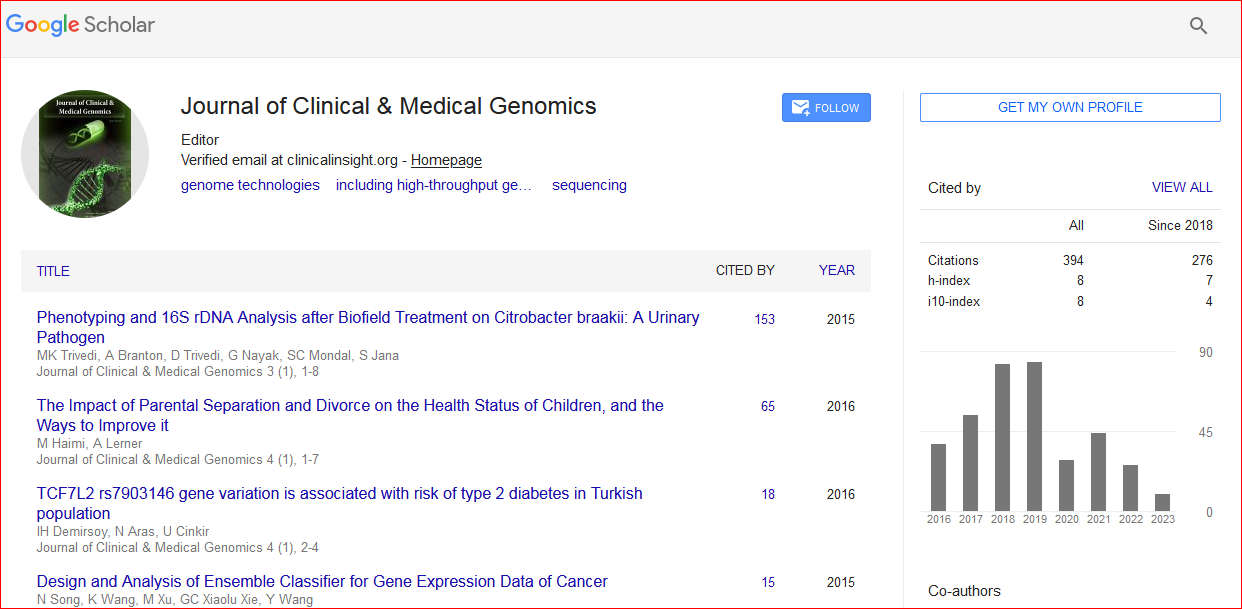
Journal of Clinical & Medical Genomics received 391 citations as per Google Scholar report