Perspective - (2026) Volume 16, Issue 2
Received: 28-Feb-2026, Manuscript No. jccr-26-191263;
Editor assigned: 02-Mar-2026, Pre QC No. P-191263;
Reviewed: 16-Mar-2026, QC No. Q-191263;
Revised: 23-Mar-2026, Manuscript No. R-191263;
Published:
30-Mar-2026
, DOI: 10.37421-2165-7920.2026.16.1714
Citation: Brooks, Daniel. ”Fulminant Hepatic Failure: Drug Toxicity Recognition, Management, Research.” J Clin Case Rep 16 (2026):1714.
Copyright: © 2026 Brooks D. This is an open-access article distributed under the terms of the Creative Commons Attribution License, which permits unrestricted use, distribution and reproduction in any medium, provided the original author and source are credited.
Fulminant hepatic failure (FHF) represents a severe and rapidly progressing form of liver damage, often stemming from drug toxicity, which necessitates urgent medical intervention to prevent fatal outcomes and minimize long-term complications. The clinical presentation of FHF underscores the critical need for early identification and prompt management strategies. This case report provides an in-depth look at a patient who developed FHF subsequent to exposure to an unspecified drug, illustrating the inherent diagnostic complexities and the therapeutic approaches that were implemented to manage the condition. The insights gained from this case strongly advocate for meticulous drug history-taking and the careful, judicious administration of potentially hepatotoxic agents. The management protocols for FHF frequently involve intensive supportive care measures, such as the correction of coagulopathy, the management of hepatic encephalopathy, and careful consideration for liver transplantation as a life-saving intervention [1].
Acetaminophen overdose stands out as a primary global cause of acute liver failure (ALF), a condition characterized by rapid deterioration of liver function. This comprehensive review delves into the intricate pathophysiology of acetaminophen-induced hepatotoxicity, with a particular emphasis on the pivotal role of N-acetylcysteine (NAC) as a vital antidote. It meticulously outlines optimal strategies for NAC dosing, recommended treatment durations, and the management of patients who present with delayed symptoms or exhibit severe toxicity. Furthermore, the review highlights the indispensable importance of continuous monitoring of liver function tests and coagulopathy parameters in guiding therapeutic decisions and optimizing patient outcomes [2].
Beyond the well-documented toxicity of acetaminophen, a broad spectrum of both prescription and over-the-counter medications are recognized culprits capable of precipitating drug-induced liver injury (DILI), with some cases escalating to fulminant hepatic failure. This extensive systematic review aims to delineate the diverse array of DILI, classifying implicated agents based on their distinct mechanisms of hepatotoxicity. It draws attention to frequently encountered offenders, including amoxicillin-clavulanate, nonsteroidal anti-inflammatory drugs (NSAIDs), and various herbal supplements. A significant focus is placed on identifying predisposing risk factors, recognizing early diagnostic indicators, and navigating the inherent challenges associated with attributing liver injury to specific drugs when patients are concurrently taking multiple medications [3].
The management of fulminant hepatic failure is inherently complex and typically demands a collaborative, multidisciplinary approach involving various medical specialties. This particular article centers on the critical care aspects pertinent to managing patients diagnosed with FHF, encompassing essential elements such as hemodynamic support, effective management of coagulopathy, proactive prevention and treatment of infections, and vigilant monitoring for potential complications, including cerebral edema. It also elaborates on the established criteria and the optimal timing for considering liver transplantation, which remains the definitive therapeutic option for a substantial number of patients experiencing irreversible liver failure [4].
Herbal and dietary supplements (HDS) are increasingly being identified as significant contributors to drug-induced liver injury (DILI), frequently presenting diagnostic hurdles due to their variable formulations and the absence of rigorous regulatory oversight. This study undertakes an investigation into the incidence and characteristic clinical features of HDS-induced liver injury, reporting on specific agents and the distinct patterns of hepatotoxicity they induce. The authors underscore the critical importance of systematically inquiring about HDS consumption in patients presenting with unexplained liver injury and acknowledge the considerable difficulties in definitively establishing a causal link between these supplements and liver damage [5].
Autoimmune hepatitis (AIH) can occasionally manifest with clinical features that closely mimic drug-induced liver injury, creating diagnostic challenges, particularly in acute presentations. This review critically examines the overlap and differential diagnostic considerations between AIH and DILI. It meticulously outlines the established diagnostic criteria for AIH, highlights the crucial role of serological markers in the diagnostic process, and proposes systematic approaches for managing cases where both conditions are suspected, including the potential for drug triggers exacerbating AIH flares [6].
Liver transplantation emerges as a life-saving intervention for individuals suffering from irreversible FHF, offering a chance for recovery and improved long-term survival. This article meticulously discusses the established selection criteria for liver transplantation specifically in the context of FHF, with a strong emphasis on prognostication using validated scoring systems such as the King's College criteria and the MELD score. Furthermore, it provides a detailed account of the perioperative management strategies tailored for these critically ill patients and examines the outcomes observed following transplantation for drug-induced FHF [7].
The ongoing pursuit of novel biomarkers for the early detection and accurate prediction of DILI severity is a dynamic and critical area of ongoing research. This study focuses on exploring the promising potential of circulating microRNAs as diagnostic biomarkers for drug-induced liver injury, rigorously evaluating their diagnostic accuracy and their correlation with various clinical outcomes. The findings derived from this investigation suggest that specific microRNA profiles could prove instrumental in identifying patients who are at an elevated risk of developing severe hepatotoxicity [8].
Drug-induced liver injury can present with an extraordinarily wide spectrum of clinical manifestations, ranging from subtle, transient elevations in liver enzymes to the most severe and life-threatening form of fulminant hepatic failure. This comprehensive review offers an updated and synthesized overview of the current understanding of the epidemiology, identified risk factors, and the diverse diagnostic approaches applicable to DILI. It powerfully emphasizes the paramount importance of obtaining a detailed patient history, critically including comprehensive information on medication and supplement use, alongside recognizing the valuable role that a liver biopsy may play in select cases for definitive diagnosis. The review also judiciously discusses management strategies tailored for the various distinct patterns of DILI [9].
The significant influence of genetic factors on an individual's susceptibility to DILI is progressively gaining recognition within the scientific community. This particular study undertakes an investigation into specific genetic polymorphisms that have been identified as being associated with an increased risk of developing severe hepatotoxicity following exposure to certain drugs. A deeper understanding of these genetic predispositions holds the potential to significantly enhance personalized risk assessments and, in turn, could guide more informed drug selection processes for individuals identified with known risk alleles, thereby optimizing therapeutic safety and efficacy [10].
Fulminant hepatic failure (FHF) is a critical condition characterized by rapid and severe liver damage, often a consequence of drug toxicity. Prompt recognition and intervention are paramount for patient survival and the mitigation of long-term sequelae. A case report details a patient experiencing FHF after exposure to an unspecified drug, highlighting diagnostic challenges and therapeutic strategies. The case emphasizes the importance of thorough drug histories and judicious use of hepatotoxic agents. Management includes intensive supportive care, coagulopathy correction, hepatic encephalopathy management, and potential liver transplantation [1].
Acetaminophen overdose is a leading cause of acute liver failure (ALF) globally. This article reviews the pathophysiology of acetaminophen-induced hepatotoxicity, stressing the critical role of N-acetylcysteine (NAC) as an antidote. It details optimal NAC dosing strategies, treatment duration, and the management of patients with late presentation or severe toxicity. Monitoring liver function tests and coagulopathy guides treatment decisions [2].
A wide range of prescription and over-the-counter drugs, beyond acetaminophen, can cause drug-induced liver injury (DILI), sometimes progressing to FHF. This systematic review categorizes DILI agents by their hepatotoxicity mechanisms and highlights common culprits like amoxicillin-clavulanate, NSAIDs, and herbal supplements. It emphasizes identifying risk factors, early diagnostic clues, and challenges in attributing injury when multiple medications are used [3].
The management of FHF is complex and requires a multidisciplinary approach. This article focuses on critical care aspects, including hemodynamic support, coagulopathy management, infection prevention, and monitoring for complications like cerebral edema. It also outlines criteria and timing for liver transplantation, the definitive treatment for irreversible liver failure [4].
Herbal and dietary supplements (HDS) are increasingly recognized as a cause of DILI, often presenting diagnostic difficulties due to variable composition and lack of stringent regulation. This study investigates the incidence and clinical features of HDS-induced liver injury, identifying specific agents and patterns of hepatotoxicity. It stresses the importance of inquiring about HDS use in unexplained liver injury cases and the challenges in proving causality [5].
Autoimmune hepatitis (AIH) can present with features mimicking DILI, posing diagnostic challenges, especially in acute settings. This review explores the overlap and differential diagnosis between AIH and DILI, discussing diagnostic criteria for AIH, the role of serological markers, and approaches to cases with suspected dual pathology, including drug triggers for AIH flares [6].
Liver transplantation is a life-saving option for patients with irreversible FHF. This article discusses selection criteria for transplantation in FHF, focusing on prognostication using scoring systems like King's College criteria and MELD score. It also covers perioperative management and outcomes following transplantation for drug-induced FHF [7].
Developing novel biomarkers for early detection and severity prediction of DILI is an active research area. This study explores circulating microRNAs as potential biomarkers for DILI, assessing their diagnostic accuracy and correlation with clinical outcomes. Findings suggest certain microRNA profiles may help identify patients at risk of severe hepatotoxicity [8].
DILI presents with a broad range of clinical manifestations, from mild enzyme elevations to FHF. This review offers an updated overview of DILI epidemiology, risk factors, and diagnostic approaches. It highlights the importance of detailed patient history, including medication and supplement use, and the role of liver biopsy in select cases, discussing management strategies for different DILI patterns [9].
Genetic factors influence susceptibility to DILI. This study investigates specific genetic polymorphisms associated with an increased risk of severe hepatotoxicity from certain drugs. Understanding these genetic predispositions can aid in personalized risk assessment and guide drug selection in individuals with known risk alleles [10].
Fulminant hepatic failure (FHF) is a severe complication of drug toxicity, requiring early recognition and prompt management. Causes range from acetaminophen overdose to various prescription drugs and herbal supplements. Diagnostic challenges arise due to polypharmacy and the variable presentation of drug-induced liver injury (DILI). Management involves intensive supportive care, correction of coagulopathy, management of hepatic encephalopathy, and consideration for liver transplantation. Research is ongoing into biomarkers and genetic factors to improve early detection and risk assessment.
None
None
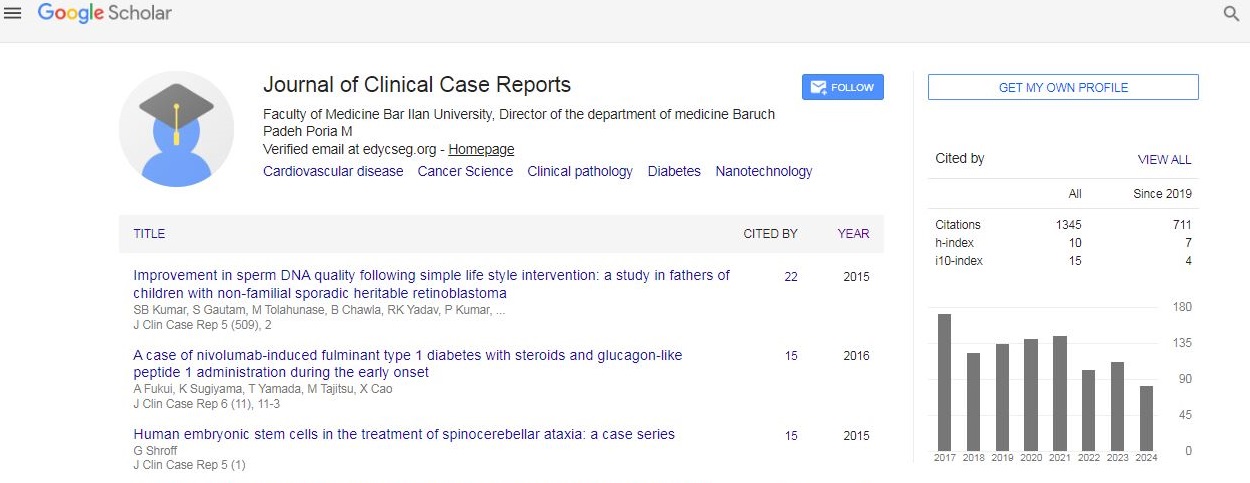
Journal of Clinical Case Reports received 1345 citations as per Google Scholar report