Brief Report - (2025) Volume 10, Issue 3
Received: 02-Jun-2025, Manuscript No. arwm-26-182714;
Editor assigned: 04-Jun-2025, Pre QC No. P-182714;
Reviewed: 18-Jun-2025, QC No. Q-182714;
Revised: 23-Jun-2025, Manuscript No. R-182714;
Published:
30-Jun-2025
Citation: Johnson, David K.. ”Sustainable Packaging: For Waste Reduction and Circularity.” Adv Recycling Waste Manag 10 (2025):404.
Copyright: © 2025 Johnson K. David This is an open-access article distributed under the terms of the Creative Commons Attribution License, which permits unrestricted use, distribution and reproduction in any medium, provided the original author and source are credited.
Sustainable packaging represents a fundamental shift in how we approach the lifecycle of product containment, with a primary focus on minimizing environmental impact. A critical strategy within this paradigm is the reduction of waste through the utilization of materials that are inherently recyclable, reusable, or compostable. This approach also emphasizes intelligent design to curtail material usage, thereby diverting substantial waste streams from landfills and incinerators, which consequently lessens pollution and conserves precious natural resources [1].
The adoption of circular economy principles is a cornerstone of sustainable packaging design, facilitating a systemic transition away from the linear 'take-make-dispose' model. The objective is to maintain materials in use for the longest possible duration, closing material loops and reducing the demand for virgin resources, ultimately lessening the burden on landfills [2].
Life Cycle Assessment (LCA) serves as an indispensable tool for a comprehensive evaluation of packaging's environmental footprint, spanning from the extraction of raw materials through to its end-of-life management. This detailed analysis is crucial for identifying key areas of waste generation and for informing strategic decisions regarding material selection, product design, and disposal methodologies, thereby guiding the development of more sustainable packaging solutions [3].
Biodegradable and compostable packaging options offer a compelling solution for waste reduction, particularly for items designed for single use. However, their successful integration into existing waste management systems hinges on clear labeling, robust consumer education, and the availability of accessible industrial composting facilities to ensure proper decomposition and prevent contamination of recycling streams [4].
Reducing food waste is inextricably linked to the advancement of sustainable packaging. The implementation of intelligent packaging solutions, capable of monitoring food freshness and extending shelf life, can significantly mitigate spoilage and, by extension, the volume of food waste destined for landfills, while also diminishing the environmental toll of wasted food production and disposal [5].
The pervasive issue of plastic packaging waste, particularly its detrimental impact on marine ecosystems, necessitates immediate and effective solutions. A pivotal step involves transitioning to alternative materials, augmenting recycling infrastructure, and enacting comprehensive waste management policies to curb plastic pollution [6].
Consumer behavior is a pivotal determinant in the successful implementation of sustainable packaging initiatives. Through comprehensive education on the advantages of reusable, recyclable, and compostable options, coupled with the provision of convenient disposal channels, consumer adoption rates can be substantially elevated, thereby maximizing the waste reduction potential [7].
The exploration and development of novel biodegradable materials, including those derived from agricultural byproducts or algae, present promising alternatives to conventional petroleum-based plastics. When managed appropriately, these materials can significantly decrease our reliance on fossil fuels and contribute to a more sustainable waste management framework [8].
The economic viability and scalability of sustainable packaging solutions are paramount for their widespread adoption and for achieving significant waste reduction. While initial investments may appear higher, the long-term advantages, such as reduced waste disposal costs and enhanced brand reputation, can provide substantial justification, often supported by government incentives and industry collaboration [9].
Advancements in material science are currently instrumental in the development of high-performance sustainable packaging. This includes the creation of bio-based plastics with properties comparable to conventional materials, improved barrier functions, and active packaging that prolongs product shelf life, all of which contribute to waste reduction and foster a more circular economy [10].
Sustainable packaging fundamentally involves a strategic approach to waste reduction, emphasizing materials that are recyclable, reusable, or compostable, and employing design principles to minimize overall material consumption. This paradigm shift is crucial for diverting significant volumes of waste from landfills and incinerators, thereby mitigating environmental pollution and the depletion of natural resources. Innovations such as biodegradable polymers, edible coatings, and smart packaging also play a vital role by extending product shelf-life and improving end-of-life management, contributing to a holistic waste reduction strategy [1].
Central to achieving waste reduction in the packaging sector is the embrace of circular economy principles. This entails a comprehensive transformation from a linear 'take-make-dispose' model to one that prioritizes keeping materials in circulation for as long as possible. Designing for disassembly, reusability, and effective recycling are key components in closing material loops, which in turn minimizes the need for virgin resources and reduces the accumulation of waste in landfills [2].
Life Cycle Assessment (LCA) stands out as an essential methodology for a thorough evaluation of the environmental impacts associated with packaging, covering its entire lifecycle from raw material acquisition to its final disposal. This analytical process is instrumental in pinpointing specific areas where waste is generated and provides critical data to inform decisions on material choices, product design, and disposal methods, ultimately guiding the industry towards more sustainable packaging solutions and effective waste reduction strategies [3].
Biodegradable and compostable packaging materials represent a promising pathway for tackling waste, particularly for single-use applications. However, their effective implementation necessitates clear consumer guidance, educational initiatives, and the establishment of accessible industrial composting facilities. Proper management is crucial to prevent these materials from contaminating recycling streams and to ensure they decompose as intended, thereby diverting organic waste from landfills [4].
There is a profound link between reducing food waste and the advancement of sustainable packaging. Intelligent packaging systems designed to monitor food freshness and extend product shelf life can significantly decrease food spoilage. This reduction in wasted food subsequently lowers the volume of waste entering landfills and diminishes the overall environmental footprint associated with food production and disposal [5].
The significant environmental damage caused by plastic packaging waste, especially to marine environments, demands urgent attention and innovative solutions. Key strategies include transitioning to alternative materials, enhancing recycling infrastructure, and implementing robust waste management policies. Alongside these measures, advancements in biodegradable plastics and increased public awareness campaigns are vital for combating plastic pollution [6].
Consumer engagement and behavior are critical factors that influence the success of sustainable packaging initiatives. Educating consumers about the benefits of opting for reusable, recyclable, and compostable packaging, and ensuring convenient disposal options are available, can substantially boost their adoption. This shift in consumer habits is fundamental to realizing the full waste reduction potential of sustainable packaging [7].
Novel biodegradable materials, including those derived from agricultural waste or marine sources like algae, are emerging as highly promising alternatives to traditional packaging. When managed correctly, these materials can substantially reduce dependence on fossil fuel-based plastics and contribute positively to a more sustainable waste management system, though ongoing research into their performance and scalability is essential [8].
The economic feasibility and the ability to scale up sustainable packaging solutions are critical considerations for their widespread adoption and for achieving meaningful waste reduction. Although initial costs might be higher, the long-term economic benefits, such as reduced waste disposal expenditures and an improved brand image, alongside adherence to evolving environmental regulations, can justify the investment, often facilitated by government support and collaborative industry efforts [9].
Material science innovations are at the forefront of developing sustainable packaging with enhanced performance characteristics. This includes the creation of bio-based plastics that match the functionality of conventional plastics, improved barrier properties to protect products, and active packaging technologies that extend shelf life, all of which contribute to reduced waste generation and the promotion of a circular economy [10].
Sustainable packaging strategies are crucial for waste reduction, focusing on recyclable, reusable, or compostable materials and minimalist design. This approach minimizes landfill waste and pollution. Circular economy principles guide a shift from linear models to material reuse, reducing virgin resource dependency. Life Cycle Assessment (LCA) is vital for evaluating environmental impacts and informing sustainable choices. Biodegradable and compostable packaging offer solutions, but require proper waste management. Intelligent packaging helps reduce food waste by extending shelf life. Addressing plastic pollution involves material alternatives, improved recycling, and waste policies. Consumer behavior is key, requiring education and convenient disposal options. Novel biodegradable materials from waste sources offer sustainable alternatives. Economic viability and scalability are critical for widespread adoption, with long-term benefits often outweighing initial costs. Material science innovations are driving the development of high-performance sustainable packaging, supporting a circular economy.
None
None
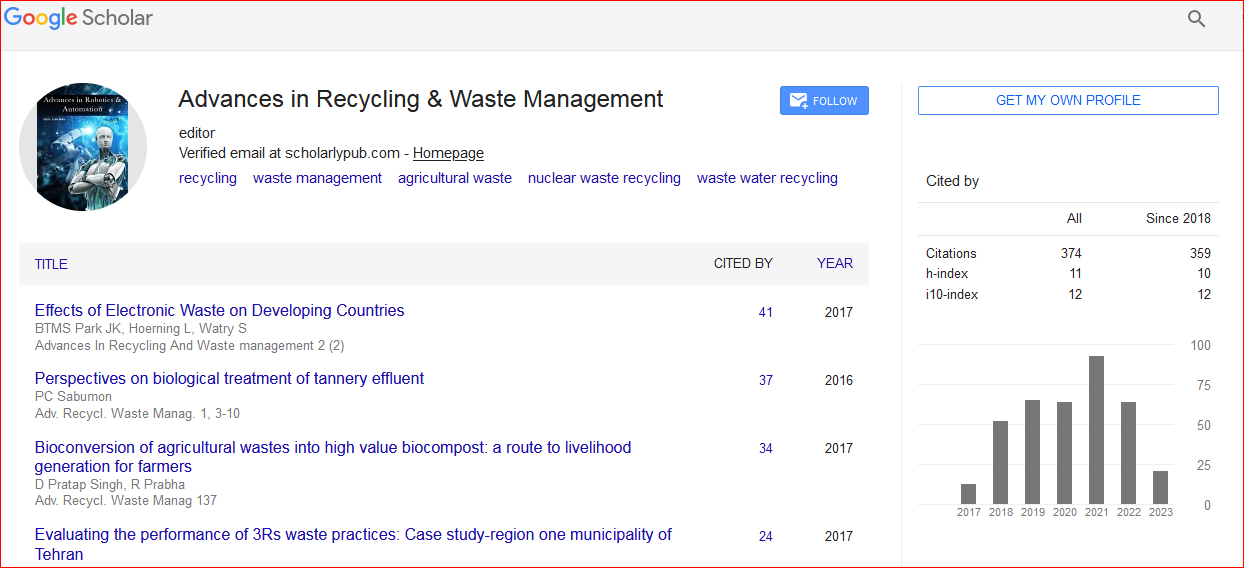
Advances in Recycling & Waste Management received 438 citations as per Google Scholar report