Brief Report - (2025) Volume 10, Issue 6
Received: 01-Nov-2025, Manuscript No. jfm-26-183007;
Editor assigned: 03-Nov-2025, Pre QC No. P-183007;
Reviewed: 17-Nov-2025, QC No. Q-183007;
Revised: 24-Nov-2025, Manuscript No. R-183007;
Published:
29-Nov-2025
, DOI: 10.37421/2472-1026.2025.10.444
Citation: Deshmukh, Nikhil R.. ”Forensic Autopsy: Unraveling Asphyxial Deaths.” J Forensic Med 10 (2025):444.
Copyright: © 2025 Deshmukh R. Nikhil This is an open-access article distributed under the terms of the Creative Commons Attribution License, which permits unrestricted use, distribution and reproduction in any medium, provided the original author and source are credited.
The forensic evaluation of asphyxial deaths represents a critical area within forensic pathology, demanding meticulous attention to detail and a comprehensive understanding of various mechanisms leading to impaired respiration [1].
This field relies heavily on autopsy findings, where morphological evidence plays a pivotal role in determining the cause and manner of death. The research in this domain consistently emphasizes the necessity of a systematic approach to postmortem examination to uncover subtle yet significant indicators of asphyxia [1].
Distinguishing between accidental, suicidal, and homicidal asphyxia often presents a significant challenge, underscoring the importance of integrating scene investigation, medical history, and toxicological reports for accurate conclusions [1].
Furthermore, the diagnostic utility of histological findings in differentiating various types of asphyxia at autopsy is a subject of ongoing investigation, as microscopic alterations can provide crucial corroborative evidence [2].
Specific microscopic changes in tissues like the lungs, brain, and heart are often critical for identifying subtle forms of asphyxia, such as positional asphyxia or suffocation, where macroscopic signs may be minimal [2].
The study of manual strangulation, a common form of homicide, highlights specific external and internal autopsy findings that are paramount in establishing this cause of death, though variability in these signs necessitates careful interpretation [3].
The presence of petechiae in the conjunctiva, ecchymosis on the neck, and internal findings such as hyoid bone fractures or damage to laryngeal cartilages are key indicators that require thorough examination [3].
In addition to traditional autopsy methods, postmortem imaging techniques, including CT and MRI, are increasingly being recognized for their utility in the forensic evaluation of asphyxial deaths [4].
These non-invasive methods can aid in the detection of subtle injuries that might be missed during conventional autopsy, offering a complementary diagnostic tool [4].
Positional asphyxia, a condition where an individual's position restricts breathing, presents unique diagnostic challenges due to potentially minimal external signs but significant internal findings related to airway obstruction [5].
Reconstructing the circumstances and position of the deceased at the scene is crucial for correctly interpreting autopsy findings in these cases [5].
Microscopic changes in the brain following asphyxia are particularly important, especially in cases with limited macroscopic findings, as they can help establish the cause of death and estimate the duration of hypoxic insult [6].
Features such as neuronal necrosis, edema, and petechial hemorrhages in the brain parenchyma are significant neuropathological indicators [6].
Drowning, a specific form of asphyxia, requires careful examination of characteristic postmortem changes, including external signs and internal findings such as pulmonary edema and the presence of diatoms in organs [7].
Distinguishing ante-mortem from post-mortem drowning adds another layer of complexity to the diagnostic process [7].
Suffocation and smothering deaths present with variable autopsy findings, often including petechial hemorrhages and congestion, necessitating meticulous examination and correlation with scene evidence [8].
The role of toxicology in the investigation of asphyxial deaths is also significant, particularly when autopsy findings are subtle or absent, as it can help rule out alternative causes of death and support an asphyxial diagnosis [9].
The detection of specific biomarkers and the interpretation of toxicological results in the context of asphyxia are crucial for a comprehensive forensic assessment [9].
Finally, the ongoing challenges and advancements in the forensic evaluation of asphyxial deaths are being addressed through a synthesis of current literature, emphasizing the growing importance of ancillary investigations alongside traditional autopsy methods [10].
The forensic autopsy serves as a cornerstone in the investigation of asphyxial deaths, providing a detailed morphological analysis to elucidate the cause and manner of death [1].
This comprehensive approach involves a meticulous examination of both external and internal postmortem evidence, with a particular focus on identifying characteristic findings such as petechial hemorrhages, cyanosis, and organ congestion [1].
However, differentiating between accidental, suicidal, and homicidal asphyxia based solely on autopsy results remains a complex task, often necessitating the integration of scene investigation, medical history, and toxicological data for a definitive conclusion [1].
Beyond gross findings, the diagnostic utility of histological examination in classifying various types of asphyxia is increasingly recognized [2].
Specific microscopic alterations observed in tissues like the lungs, brain, and heart can critically support an asphyxial diagnosis, especially in cases of subtle presentations like positional asphyxia or suffocation where macroscopic signs are minimal [2].
The study of manual strangulation, a frequent mechanism in homicidal asphyxia, focuses on specific external markers like conjunctival petechiae and cervical ecchymosis, alongside internal signs such as hyoid bone fractures or laryngeal cartilage damage [3].
A thorough examination of the neck structures is paramount in detecting evidence of manual strangulation, though the variability in these findings requires careful interpretation in conjunction with the circumstances [3].
Advancements in forensic medicine have led to the integration of postmortem imaging techniques, such as CT and MRI, which offer valuable insights in the evaluation of asphyxial deaths [4].
These non-invasive methods are particularly useful in identifying subtle injuries, including fractures and soft tissue damage, that might be overlooked in a conventional autopsy, thereby complementing the traditional examination [4].
Positional asphyxia, where an individual's posture impedes respiration, presents a unique diagnostic scenario often characterized by minimal external signs but significant internal findings related to airway compromise [5].
Accurate interpretation of autopsy findings in positional asphyxia is heavily reliant on the reconstruction of the deceased's circumstances and position at the scene [5].
Neuropathological examination plays a crucial role in asphyxial deaths, especially when macroscopic findings are inconclusive, by revealing microscopic changes in the brain like neuronal necrosis and edema [6].
These time-dependent changes can aid in establishing the cause of death and estimating the duration of the hypoxic insult [6].
In cases of drowning, a specific type of asphyxia, autopsy findings include characteristic external signs like 'washerwoman's hands' and internal evidence such as pulmonary edema and the presence of diatoms in internal organs [7].
The differentiation between ante-mortem and post-mortem drowning is a critical aspect of the diagnostic process [7].
The investigation of suffocation and smothering deaths involves identifying characteristic autopsy findings, which may include petechial hemorrhages and signs of facial obstruction, with the variability of these signs depending on the duration and nature of the obstruction [8].
Meticulous examination and correlation with scene evidence are essential for establishing these as causes of death [8].
Toxicology contributes significantly to the forensic investigation of asphyxial deaths, particularly in cases with subtle or absent autopsy findings, by helping to rule out other causes of death and supporting an asphyxial diagnosis [9].
The analysis of specific biomarkers and toxicological results provides valuable context for the interpretation of asphyxial mechanisms, especially when drugs or gases are involved [9].
Finally, a comprehensive review of the literature highlights the ongoing challenges and emerging advancements in the forensic evaluation of asphyxial deaths, emphasizing the increasing reliance on ancillary investigations beyond traditional autopsy methods [10].
This collection of studies provides a multi-faceted examination of asphyxial deaths through forensic autopsy. It details the importance of morphological findings, including macroscopic and microscopic evidence, in determining the cause and manner of death. Specific mechanisms like manual strangulation, drowning, positional asphyxia, suffocation, and smothering are explored, outlining characteristic autopsy findings for each. The research also highlights the complementary roles of postmortem imaging and toxicology in complex cases where traditional autopsy findings may be subtle or inconclusive. Challenges in differentiating between accidental, suicidal, and homicidal asphyxia are discussed, emphasizing the need for integrated investigative approaches. Overall, the studies underscore the critical importance of systematic autopsy procedures and advanced techniques for accurate diagnosis in asphyxial deaths.
None
None
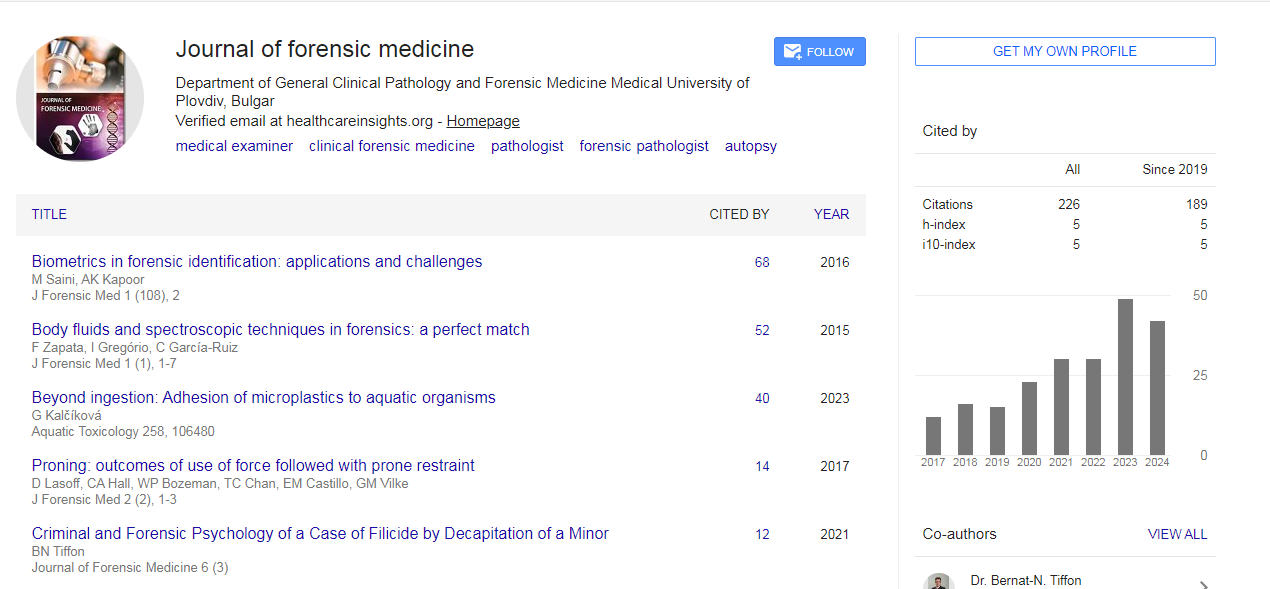
Journal of Forensic Medicine received 165 citations as per Google Scholar report