Short Communication - (2025) Volume 9, Issue 4
Received: 01-Jul-2025, Manuscript No. jma-26-184609;
Editor assigned: 03-Jul-2025, Pre QC No. P-184609;
Reviewed: 17-Jul-2025, QC No. Q-184609;
Revised: 22-Jul-2025, Manuscript No. R-184609;
Published:
29-Jul-2025
, DOI: 10.37421/2684-4265.2025.09.397
Citation: Paredes, Josh Manuel. ”Floral Morphology and Pollination: A Co-evolutionary Dance.” J Morphol Anat 09 (2025):397.
Copyright: © 2025 Paredes M. Josh This is an open-access article distributed under the terms of the Creative Commons Attribution License, which permits unrestricted use, distribution and reproduction in any medium, provided the original author and source are credited.
The complex and fascinating interplay between the physical form of flowers and the specialized animals that facilitate their reproduction has long been a cornerstone of ecological and evolutionary research. Floral morphology, encompassing an array of characteristics such as shape, color, scent, and even patterns visible in ultraviolet light, has evolved in concert with the sensory and behavioral capabilities of pollinators. This co-evolutionary dance ensures the efficient transfer of pollen, a vital process for the perpetuation of plant lineages and the maintenance of biodiversity across terrestrial ecosystems. The intricate adaptations observed in flowers are not merely aesthetic; they represent a sophisticated language of attraction and reward, finely tuned to the specific preferences and physical attributes of their animal partners [1].
Investigating the direct impact of these floral traits on pollinator attraction reveals a dynamic relationship where variations in visual cues like color, olfactory signals like scent, and tactile elements such as shape, demonstrably influence which pollinators choose to visit a particular flower and how effectively they perform the crucial task of pollen transfer. This exploration underpins the concept of pollination syndromes, where distinct sets of floral advertisements are strongly linked to specific groups of pollinators, including bees, butterflies, and hummingbirds. Such specialized interactions are not only fundamental for current reproductive success but also play a significant role in reproductive isolation and the subsequent process of speciation, thus driving the diversification of plant life [2].
The underlying genetic and developmental mechanisms that orchestrate the evolution of these floral traits and, consequently, the formation of pollination syndromes are increasingly coming under scrutiny. Research in this area endeavors to pinpoint the genes responsible for controlling key floral characteristics like petal shape, color pigmentation, and the biosynthesis of scent compounds. Understanding how alterations in these genetic pathways can lead to the emergence of novel pollination syndromes offers profound insights into the evolutionary trajectories that have sculpted the astonishing diversity of floral forms observed across the angiosperm phylogeny. This genetic perspective is critical for unraveling the very origins of floral diversity [3].
Floral scent, a potent yet often invisible signal, plays a particularly pivotal role in attracting pollinators and is the subject of dedicated investigation. Studies in this domain focus on identifying the specific volatile organic compounds (VOCs) emitted by flowers and correlating these chemical profiles with distinct pollinator preferences. The evolution of these complex scent bouquets is intricately linked with floral morphology, working in tandem to establish effective pollination syndromes, especially for specialized nocturnal pollinators like moths and bats. This research illuminates the sophisticated sensory communication networks that underpin plant-pollinator interactions [4].
Beyond scent and color, subtle visual cues, such as ultraviolet (UV) reflectance patterns, which are imperceptible to the human eye, serve as critical navigational guides for insect pollinators. These intricate UV patterns, often in conjunction with other floral attributes, contribute to the formation of specific pollination syndromes by directing pollinators towards the valuable nectar and pollen rewards. A comprehensive understanding of floral adaptations necessitates a consideration of insect visual perception, highlighting the importance of these often-unseen signals in mediating successful pollination events. This research broadens our understanding of how flowers communicate with their visitors [5].
The evolutionary divergence driven by pollination syndromes is a powerful mechanism shaping plant speciation. This phenomenon is characterized by how distinct floral morphologies and their associated pollinator communities can effectively prevent gene flow between plant populations. Instances where shifts in pollinator preferences or the independent evolution of novel floral traits occur can lead to pronounced reproductive divergence, ultimately contributing to the formation of new species. This underscores the profound influence of pollination ecology on the grand tapestry of plant diversity [6].
Functional morphology offers a lens through which to examine the physical architecture of flowers and its direct consequences for pollinator interactions. Specifically, the physical structure of floral components, such as the length of the corolla tube, the arrangement of stamens, and the position of the stigma, can either facilitate or impede the access of different pollinator types. Understanding this mechanical fit between floral structures and pollinator morphology provides critical insights into pollination efficiency and the very processes that lead to the establishment of pollination syndromes. This perspective highlights the structural basis of plant-pollinator relationships [7].
Environmental factors, including ambient light availability and temperature, exert a significant influence on the expression of floral traits and, consequently, on the characteristics of pollination syndromes. Variations in these environmental conditions can alter the visual and olfactory displays of flowers, such as the intensity of coloration or the emission rates of scent compounds, potentially shifting pollinator attraction patterns and impacting plant reproductive success. This dynamic interplay underscores the ever-changing nature of plant-pollinator relationships in response to environmental fluctuations [8].
Floral nectar, a primary reward offered by many flowering plants, plays a crucial role in shaping pollination syndromes through its composition and accessibility. The specific characteristics of nectar, including its sugar concentration, the presence and abundance of amino acids, and its secretion patterns, are often finely tuned to attract particular pollinators and to ensure the efficient transfer of pollen. This focus on nectar as a resource-based driver of floral adaptation provides a key piece of the puzzle in understanding the evolution of these specialized interactions [9].
Finally, biomechanical constraints impose physical forces that significantly influence floral morphology and the subsequent development of pollination syndromes. Factors such as wind, gravity, and the physical approach of pollinators can dictate the structural design of flowers, leading to adaptations that optimize pollination efficiency for specific vectors. This interdisciplinary approach, integrating principles of physics with biological processes, offers a unique perspective on the evolutionary pathways that have shaped floral forms and their interactions with the environment and pollinators [10].
The intricate relationship between floral morphology and pollination syndromes represents a fundamental aspect of plant reproduction and evolutionary biology. Flowers have evolved a diverse array of physical characteristics, including shape, color, scent, and UV patterns, which are finely tuned to attract and facilitate pollination by specific animal vectors such as insects, birds, and bats. These co-evolutionary adaptations are crucial for ensuring efficient pollen transfer, a process vital for plant reproduction and the maintenance of biodiversity across ecosystems. The study of these specialized interactions provides valuable insights into the drivers of floral diversification and the mechanisms that sustain ecosystem functionality [1].
A significant area of research focuses on how variation in floral traits, such as color intensity, scent profiles, and overall shape, directly influences pollinator visitation patterns and the effectiveness of pollen transfer. This line of inquiry explores the concept of pollination syndromes by linking specific floral advertisements to distinct pollinator groups, such as bees, butterflies, or hummingbirds. Understanding these linkages is critical, as they not only facilitate reproductive success but also play a substantial role in reproductive isolation and speciation, thereby contributing to the ongoing diversification of plant species [2].
The genetic and developmental underpinnings of floral evolution are being actively investigated to understand how changes in floral morphology are intimately linked to the formation of pollination syndromes. This research seeks to identify the specific genes that control key floral features like petal shape, color development, and the production of volatile scent compounds. By examining how mutations or alterations in these genes can lead to the emergence of new pollination syndromes, scientists are gaining a deeper appreciation for the evolutionary pathways that have generated the vast diversity of floral forms observed in angiosperms. This knowledge is essential for comprehending the evolutionary history of flowering plants [3].
Floral scent chemistry is another critical component in the complex web of plant-pollinator interactions. Research in this field aims to identify the precise volatile organic compounds (VOCs) emitted by flowers and to establish a clear connection between these chemical signals and the preferences of particular pollinators. The evolutionary trajectory of floral scent profiles is often seen to be closely intertwined with floral morphology, working in concert to create effective pollination syndromes, particularly for nocturnal pollinators like moths and bats. This work highlights the sophisticated sensory cues that govern these interactions [4].
Beyond scent, UV reflectance patterns on floral surfaces, which are invisible to the human eye, serve as crucial signaling mechanisms for insect pollinators. These patterns, in concert with other floral traits, contribute to the establishment of specific pollination syndromes by guiding pollinators towards nectar and pollen resources. By emphasizing the importance of insect visual perception, this research underscores the intricate visual communication that occurs between flowers and their insect visitors, providing a more complete picture of floral adaptations [5].
The evolution of reproductive isolation, a key driver of speciation, is often influenced by the formation of pollination syndromes. This occurs as distinct floral morphologies and their associated pollinator communities can effectively limit gene flow between plant populations. Cases where shifts in pollinator preference or the independent evolution of novel floral traits occur can lead to significant reproductive divergence, ultimately contributing to the process of speciation. This demonstrates the pivotal role of pollination ecology in shaping plant diversity [6].
Functional morphology provides a framework for understanding how the physical structure of flowers, including features like corolla tube length, stamen arrangement, and stigma position, directly impacts pollinator interactions. The mechanical fit between floral structures and the morphology of pollinators is a critical factor that influences pollination efficiency and the formation of pollination syndromes. This perspective offers valuable insights into the biomechanical aspects of plant-pollinator relationships [7].
Environmental factors, such as variations in light availability and ambient temperature, can significantly influence floral traits and, in turn, affect the characteristics of pollination syndromes. Changes in these environmental conditions can alter floral displays, including color intensity and scent emission rates, which can lead to shifts in pollinator attraction and ultimately impact plant reproductive success. This highlights the dynamic and context-dependent nature of plant-pollinator interactions [8].
Floral nectar, as a primary pollinator reward, plays a significant role in shaping pollination syndromes through its chemical composition and the ease with which it can be accessed. The specific attributes of nectar, such as sugar concentration, amino acid content, and secretion patterns, are often adapted to attract particular pollinators and to ensure efficient pollen transfer. This understanding of nectar as a resource-based driver contributes to a more comprehensive view of floral adaptations [9].
Finally, biomechanical constraints are integral to shaping floral morphology and the resultant pollination syndromes. Physical forces, including wind, gravity, and the mechanics of pollinator approach, influence the structural design of flowers. These adaptations are optimized to enhance pollination efficiency for specific vectors, showcasing the interplay between physics and evolutionary biology in the context of floral design and function [10].
This collection of research explores the intricate relationship between floral morphology and pollination syndromes, detailing how specific flower structures are adapted to attract particular animal pollinators. Studies examine the influence of traits like color, scent, UV patterns, and nectar composition on pollinator attraction and pollen transfer efficiency. The research also delves into the genetic and developmental mechanisms underlying these adaptations, as well as the impact of environmental factors and biomechanical constraints. Key themes include co-evolutionary dynamics, reproductive isolation driven by pollination syndromes, and the role of these interactions in plant diversification and ecosystem functionality. The functional morphology of flowers and their biomechanical properties are also considered in relation to optimizing pollination success for specific vectors.
None
None
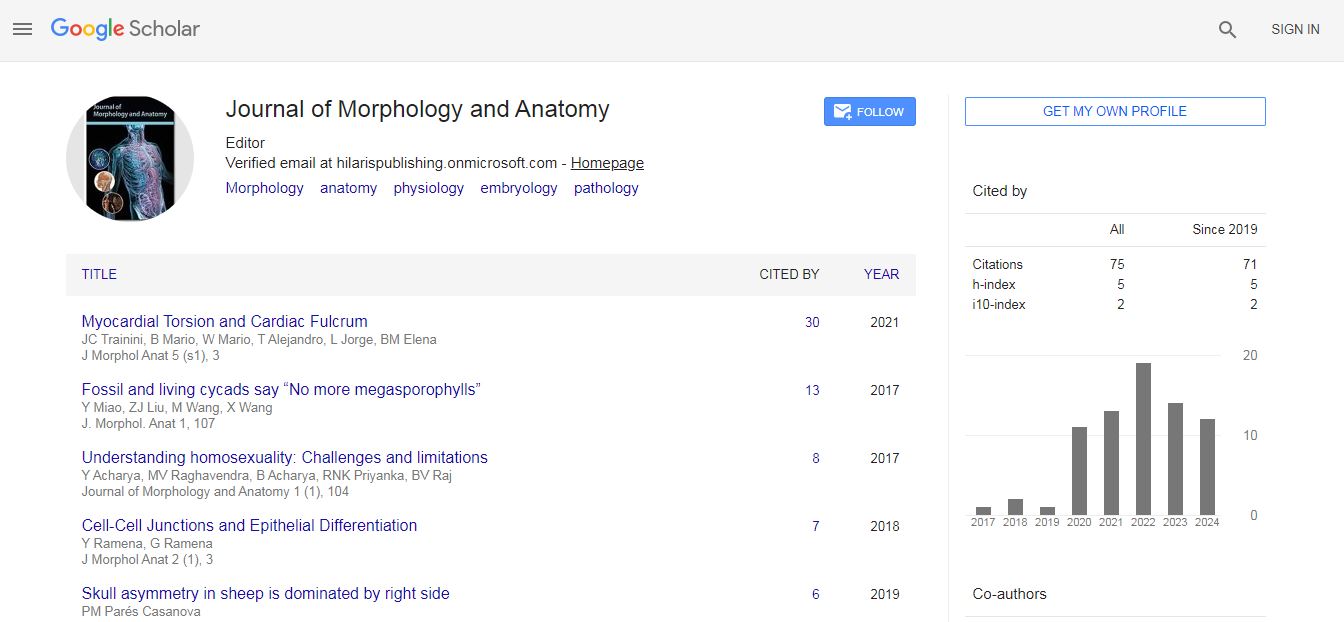
Journal of Morphology and Anatomy received 63 citations as per Google Scholar report