Commentary - (2025) Volume 14, Issue 5
Received: 01-Sep-2025, Manuscript No. jio-26-184828;
Editor assigned: 03-Sep-2025, Pre QC No. P-184828;
Reviewed: 17-Sep-2025, QC No. Q-184828;
Revised: 22-Sep-2025, Manuscript No. R-184828;
Published:
29-Sep-2025
, DOI: 10.37421/2329-6771.2025.14.577
Citation: Morales, Victor. ”Acupuncture: Managing Cancer Symptoms And Improving Well-being.” J Integr Onco 14 (2025):577.
Copyright: © 2025 Morales V. This is an open-access article distributed under the terms of the Creative Commons Attribution License, which permits unrestricted use, distribution and reproduction in any medium, provided the original author and source are credited.
Acupuncture has emerged as a promising complementary therapy in oncology care, offering significant potential for managing various side effects associated with cancer treatment. Its application spans the mitigation of chemotherapy-induced nausea and vomiting (CINV) and the alleviation of cancer-related pain. The growing body of evidence suggests that acupuncture can serve as a valuable adjunctive treatment, substantially improving patient quality of life by reducing symptom burden and lessening the reliance on pharmacological interventions [1].
The precise mechanisms by which acupuncture exerts its therapeutic effects are complex and are believed to involve the modulation of neurotransmitters and inflammatory pathways within the body, contributing to a holistic approach to symptom management [1].
In the realm of cancer pain management, acupuncture is increasingly recognized as a viable option, particularly in cases where traditional analgesics prove insufficient or lead to undesirable side effects. It provides a non-pharmacological avenue for pain relief, which is crucial for enhancing symptom control and ultimately contributing to better patient outcomes in the challenging landscape of oncology care [2].
The integration of acupuncture into routine practice offers a pathway to improved patient well-being and a more comprehensive approach to symptom management within cancer care settings [2].
The specific role of acupuncture in both preventing and treating chemotherapy-induced nausea and vomiting (CINV) is a focal point of considerable research. Studies have highlighted its potential to diminish the severity and incidence of these distressing symptoms, underscoring its therapeutic value in a critical aspect of chemotherapy side effect management. The research delves into the selection of specific acupuncture points and the various stimulation techniques employed in clinical practice to optimize these benefits [3].
Furthermore, investigations have extended to the management of chemotherapy-induced peripheral neuropathy (CIPN) pain, a common and often debilitating consequence of cancer treatment. Electroacupuncture, a specific modality of acupuncture, has shown considerable promise in this area. Studies indicate that electroacupuncture can provide significant relief from CIPN pain and may even contribute to the improvement of nerve function, offering a novel therapeutic avenue for this challenging condition [4].
A comprehensive overview of acupuncture's application in supportive cancer care has been presented, with a particular emphasis on its efficacy in addressing CINV and pain. This broader perspective includes an examination of the existing evidence base, potential underlying mechanisms of action, and practical considerations for the seamless integration of acupuncture into the standard of care within oncology practice [5].
Such integration aims to optimize the patient experience and improve overall treatment outcomes [5].
The effectiveness of acupuncture in reducing nausea and vomiting specifically in patients undergoing chemotherapy for breast cancer has been rigorously examined. Randomized controlled trials in this context suggest that acupuncture can indeed function as an effective complementary therapy for managing CINV, providing a valuable option for patients facing this common and impactful side effect [6].
The findings offer strong support for its inclusion in breast cancer treatment protocols [6].
In parallel, the effectiveness of acupuncture in alleviating cancer-related pain has been systematically assessed through the synthesis of evidence from multiple studies. This collective evidence strongly indicates that acupuncture can offer significant pain relief, leading to a notable improvement in the quality of life for cancer patients who are often burdened by persistent pain [7].
The consistent findings underscore its broad applicability in pain management [7].
The underlying neurobiological mechanisms through which acupuncture exerts its effects on CINV and pain are a subject of ongoing exploration. Research is shedding light on how acupuncture may interact with endogenous opioid systems, serotonin pathways, and other critical neurotransmitters to effectively modulate these complex symptoms. Understanding these mechanisms is key to further refining acupuncture's therapeutic applications [8].
Beyond symptom management, acupuncture's role in improving the overall quality of life for cancer patients undergoing chemotherapy is being investigated. Studies suggest that by effectively reducing distressing symptoms such as nausea and pain, acupuncture can significantly enhance the general well-being and psychological state of these patients, contributing to a more positive treatment experience [9].
Finally, rigorous randomized controlled trials have been conducted to evaluate the effectiveness of acupuncture specifically for chemotherapy-induced pain. Comparative studies, such as those contrasting real acupuncture with sham acupuncture, have yielded findings that indicate real acupuncture provides superior pain relief. This evidence strengthens the argument for its use as a primary or adjunctive therapy for managing this specific type of cancer pain [10].
Acupuncture presents a promising avenue for managing the complex and often debilitating side effects associated with cancer treatment, particularly chemotherapy. Its established efficacy in mitigating chemotherapy-induced nausea and vomiting (CINV) and alleviating cancer-related pain positions it as a valuable adjunctive therapy. By offering a non-pharmacological approach, acupuncture contributes to an improved quality of life for patients by reducing symptom burden and minimizing dependence on traditional pain and anti-emetic medications. The underlying mechanisms are thought to involve the intricate modulation of neurotransmitters and inflammatory pathways, offering a multifaceted approach to symptom relief [1].
In the critical area of cancer pain management, acupuncture stands out as a viable and effective option, especially when conventional analgesics are either insufficient or associated with significant adverse effects. This modality provides a crucial non-pharmacological pathway to pain relief, which is instrumental in achieving better symptom control and fostering improved patient outcomes within the demanding context of oncology care. Its integration can lead to a more patient-centered approach to pain management [2].
The specific contribution of acupuncture to the prevention and treatment of chemotherapy-induced nausea and vomiting (CINV) is an area of extensive research. Evidence consistently points to its capacity to reduce both the intensity and frequency of nausea and vomiting, thereby significantly enhancing patient comfort during chemotherapy. The exploration of various acupuncture points and stimulation techniques further refines its clinical application for CINV management [3].
Chemotherapy-induced peripheral neuropathy (CIPN) pain, a common and often persistent challenge for cancer survivors, is another area where acupuncture is demonstrating efficacy. Specifically, electroacupuncture has been investigated for its ability to manage CIPN pain, with findings suggesting that it can offer substantial relief and potentially improve nerve function. This opens new possibilities for managing this specific neuropathy-related pain [4].
Comprehensive reviews of acupuncture in supportive cancer care underscore its broad applicability in managing treatment-related side effects. Beyond CINV and pain, its utility in supportive care is being recognized. The existing evidence base, explored mechanisms, and practical integration strategies are crucial for its adoption into routine oncology practice, aiming for enhanced patient well-being throughout their treatment journey [5].
The effectiveness of acupuncture in managing CINV in patients undergoing chemotherapy for breast cancer has been the subject of dedicated research. Randomized controlled trials have specifically investigated this application, providing evidence that acupuncture can serve as an effective complementary therapy, offering significant relief from nausea and vomiting for this patient population [6].
Furthermore, the alleviation of cancer-related pain remains a cornerstone of acupuncture's utility in oncology. Systematic reviews and meta-analyses have consolidated evidence from numerous studies, consistently demonstrating that acupuncture can provide substantial pain relief. This relief translates into a marked improvement in the quality of life for individuals living with cancer pain [7].
The scientific exploration into the neurobiological underpinnings of acupuncture's effects on CINV and pain is continuously advancing. Research is elucidating how acupuncture may interact with endogenous opioid pathways, serotonin systems, and other neurochemical mediators to influence pain perception and the emetic reflex. This deeper understanding facilitates more targeted therapeutic strategies [8].
The impact of acupuncture on the overall quality of life for cancer patients undergoing chemotherapy is a critical area of focus. By effectively addressing distressing symptoms such as nausea and pain, acupuncture contributes significantly to enhancing patients' general well-being, emotional state, and overall capacity to cope with the rigors of cancer treatment [9].
Finally, randomized controlled trials specifically comparing acupuncture to sham acupuncture for chemotherapy-induced pain have provided robust evidence of its efficacy. These studies indicate that genuine acupuncture treatment offers superior pain relief compared to sham interventions, solidifying its role as a legitimate and effective therapy for managing chemotherapy-induced pain [10].
Acupuncture is recognized as a valuable complementary therapy in oncology for managing chemotherapy-induced nausea and vomiting (CINV) and cancer-related pain. It offers a non-pharmacological approach to improve patient quality of life by reducing symptom burden and reliance on medications. Studies highlight its effectiveness in preventing and treating CINV, alleviating cancer pain, and managing chemotherapy-induced peripheral neuropathy pain. Research also explores its neurobiological mechanisms and its positive impact on patients' overall well-being. Evidence from randomized controlled trials supports its efficacy as an adjunctive treatment, suggesting it can provide superior pain relief compared to sham interventions.
None
None
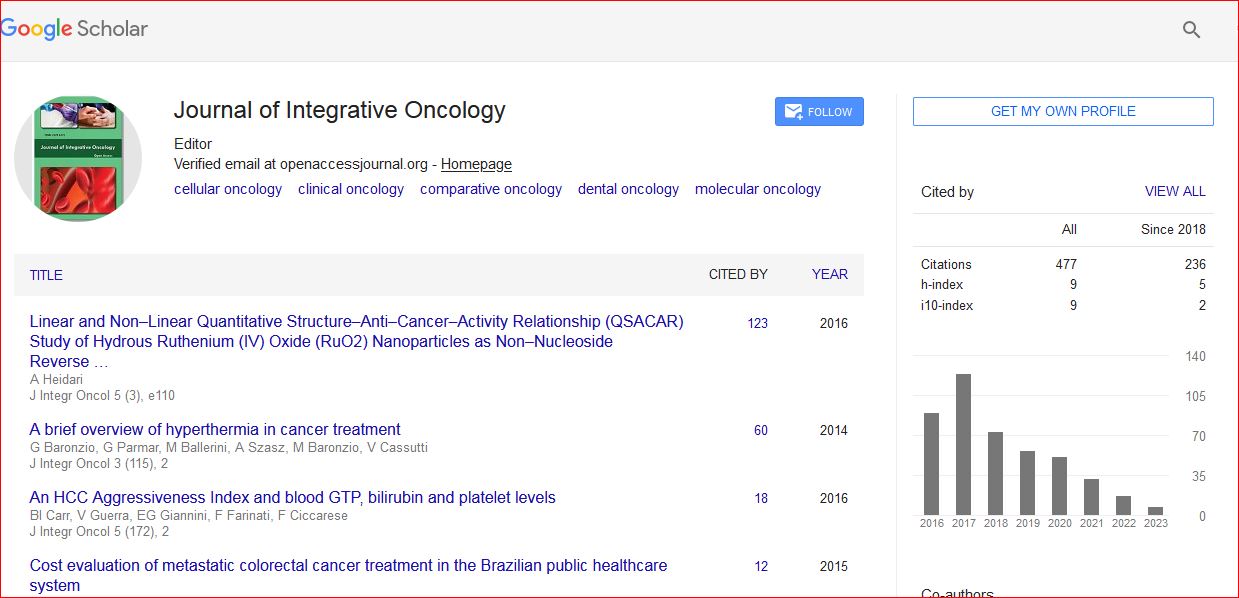
Journal of Integrative Oncology received 495 citations as per Google Scholar report