Opinion - (2025) Volume 12, Issue 4
Received: 02-Aug-2025, Manuscript No. fmoa-26-187934;
Editor assigned: 04-Aug-2025, Pre QC No. P-187934;
Reviewed: 18-Aug-2025, QC No. Q-187934;
Revised: 25-Aug-2025, Manuscript No. R-187934;
Published:
29-Aug-2025
, DOI: 10.37421/2476-2296.2025.12.350
Citation: Wilson, Emily. ”Estuarine Dynamics: Flows, Mixing, and Prediction.” Fluid Mech Open Acc 12 (2025):350.
Copyright: © 2025 Wilson E. This is an open-access article distributed under the terms of the Creative Commons Attribution License, which permits unrestricted use, distribution and reproduction in any medium, provided the original author and source are credited.
Estuarine environments represent intricate and dynamic mixing zones where the confluence of freshwater from rivers and saltwater from oceans creates complex fluid flow patterns influenced by a variety of forces. These patterns are notably shaped by tidal forces, riverine discharge, wind stress, and the estuary's specific bathymetry, all of which contribute to the unique characteristics of estuarine circulation [1].
Understanding these intricate flow dynamics is paramount for accurately predicting crucial processes such as sediment transport, the dispersal of pollutants, nutrient cycling, and ultimately, the overall ecological health of these vital coastal ecosystems [1].
The bathymetric complexity of an estuary significantly impacts its flow dynamics; irregular coastlines, meandering channels, and the presence of islands can generate localized eddies, recirculation zones, and areas with altered mixing characteristics [2].
These bathymetric features, which are often simplified or overlooked in generalized models, play a critical role in determining sediment deposition patterns and the spatial distribution of marine organisms within the estuary [2].
Wind-driven currents are a major factor influencing surface and near-surface flows in estuaries, especially in those with expansive surface areas and shallow depths, inducing substantial horizontal and vertical transports that affect stratification and mixing [3].
These winds can significantly modify established tidal circulation patterns and enhance the exchange of water masses between the main estuarine channel and adjacent intertidal areas [3].
The density gradient, primarily a consequence of salinity differences between freshwater inflow and saltwater intrusion, is a fundamental driver of estuarine flow, establishing stratification and a characteristic two-layer flow system [4].
Turbulence is another critical element in estuarine systems, playing a pivotal role in the mixing and transport of dissolved and suspended materials; understanding its generation and dissipation is essential for accurate predictions of pollutant fate and ecological processes [5].
Finally, the interplay between tidal and subtidal flows is a fundamental aspect of estuarine hydrodynamics, with tidal flows driving much of the mixing and transport, while subtidal flows modulate this circulation through longer-term processes like river discharge [6].
Estuarine environments are characterized by their dynamic nature as mixing zones where freshwater rivers meet saltwater oceans, resulting in complex fluid flow patterns. These intricate patterns are governed by a multitude of factors including the powerful influence of tidal forces, the continuous input of riverine discharge, the stress exerted by wind, and the underlying bathymetry of the estuary itself [1].
A thorough comprehension of these fluid flows is indispensable for accurately forecasting sediment transport dynamics, the dispersal pathways of pollutants, the intricate nutrient cycling processes, and the overall ecological well-being of these critical ecosystems [1].
The significant impact of bathymetric complexity on estuarine flow dynamics cannot be overstated; features such as irregular coastlines, winding channel meanders, and the presence of islands can foster localized eddies, create recirculation zones, and lead to regions of both enhanced and reduced mixing [2].
These bathymetric characteristics, which are frequently underestimated or simplified in less detailed models, exert a profound influence on shaping sediment deposition patterns and dictating the distribution of marine organisms within the estuarine habitat [2].
Wind-driven currents serve as a primary driver for surface and near-surface flow dynamics in many estuaries, particularly those with expansive surface areas and relatively shallow depths, thereby inducing significant horizontal and vertical transports that impact stratification and mixing [3].
These wind-induced stresses have the capacity to substantially alter prevailing tidal circulation patterns and augment the exchange of water masses between the main channel of the estuary and its intertidal zones [3].
The density gradient, principally driven by the salinity differentials between incoming freshwater and intruding saltwater, constitutes a fundamental element in the establishment of estuarine flow, leading to stratification and a distinctive two-layer flow system [4].
Turbulence plays a pivotal role in the mixing processes and the transport of both dissolved and suspended materials within estuarine systems; consequently, understanding the mechanisms of turbulence generation and dissipation is essential for precise predictions of pollutant fate and ecological functions [5].
The interaction between oscillating tidal flows and more persistent subtidal flows represents a fundamental characteristic of estuarine hydrodynamics, with tidal flows responsible for a considerable amount of mixing and transport, while subtidal flows modulate this circulation through longer-term drivers [6].
Estuarine environments are dynamic mixing zones influenced by tidal forces, river discharge, wind, and bathymetry. Understanding these flows is crucial for predicting sediment transport, pollutant dispersal, and nutrient cycling. Bathymetric complexity, such as irregular coastlines and channel meanders, creates localized eddies and recirculation zones, impacting sediment deposition and organism distribution. Wind-driven currents significantly affect surface flows, inducing horizontal and vertical transports that influence stratification and mixing. Density gradients, driven by salinity differences, create stratification and a two-layer flow. Turbulence plays a key role in mixing and material transport. The interplay of tidal and subtidal flows is fundamental, with tidal flows driving mixing and subtidal flows modulating circulation. Numerical modeling is an essential tool for studying these complex systems and predicting the impact of environmental changes. Human modifications like dredging can profoundly alter estuarine hydrodynamics. Small-scale eddies and meanders enhance lateral mixing and retention times. Estuarine front dynamics are vital for nutrient exchange and ecological hotspots.
None
None
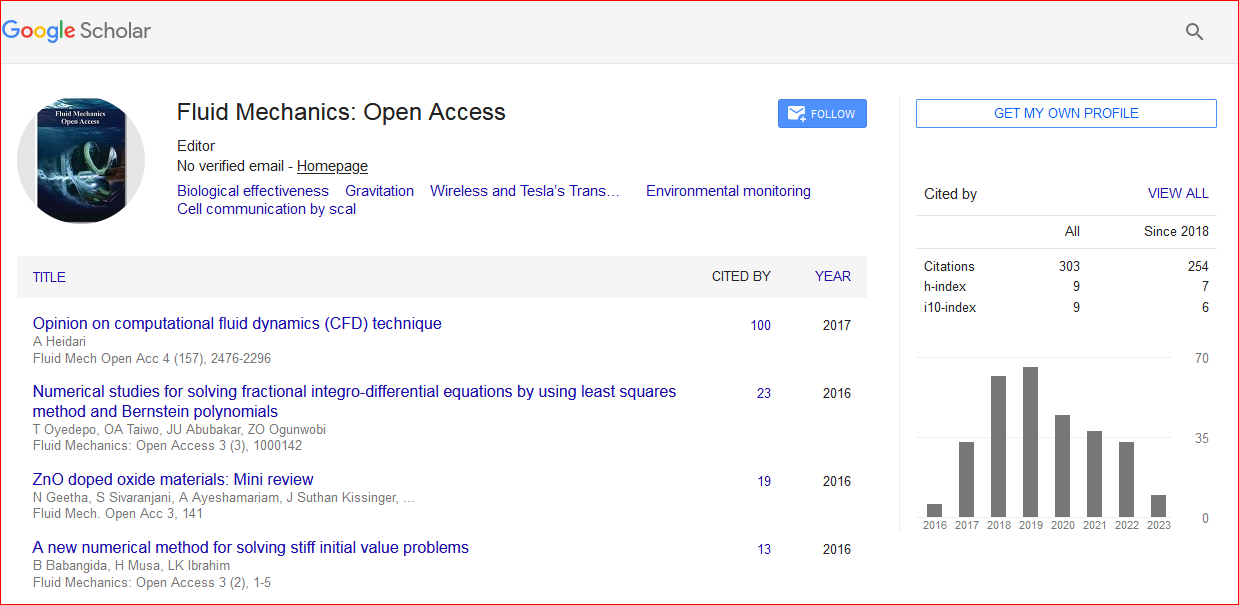
Fluid Mechanics: Open Access received 291 citations as per Google Scholar report