Short Communication - (2025) Volume 8, Issue 2
Received: 01-Apr-2025, Manuscript No. pollution-25-176598;
Editor assigned: 03-Apr-2025, Pre QC No. P-176598;
Reviewed: 17-Apr-2025, QC No. Q-176598;
Revised: 22-Apr-2025, Manuscript No. R-176598;
Published:
29-Apr-2025
, DOI: 10.37421/2684-4958.2025.8.377
Citation: Peterson, Samuel. ”Environmental Contaminants: Critical Public Health Threat.” Pollution 08 (2025):377.
Copyright: © 2025 Peterson S. This is an open-access article distributed under the terms of the Creative Commons Attribution License, which permits unrestricted use,
distribution and reproduction in any medium, provided the original author and source are credited.
The modern environment presents a complex array of chemical exposures, many of which pose significant risks to human health. A substantial body of systematic reviews and research syntheses has emerged to delineate these threats, providing crucial insights into the mechanisms of toxicity, epidemiological links, and the pervasive nature of various pollutants. This collection of studies underscores a collective scientific effort to understand, quantify, and ultimately mitigate the health impacts associated with environmental contaminants. The findings span a wide range of substances, each presenting unique challenges and demanding tailored policy responses for public protection. These reviews collectively highlight an urgent global imperative to prioritize environmental health in policy-making and preventive strategies. One such critical area of focus involves the widespread exposure to toxic chemicals embedded in plastic products. A recent review meticulously examines the far-reaching health consequences of these exposures, identifying a broad spectrum of adverse health outcomes for human health. The authors strongly advocate for a more concentrated approach on policy development and proactive prevention measures to effectively reduce these ubiquitous environmental exposures[1].
In parallel, extensive epidemiological evidence has been compiled concerning Per- and polyfluoroalkyl substances (PFAS), widely known as 'forever chemicals.' These substances are linked to various human health concerns, with findings consolidating how they detrimentally affect different physiological systems. The research emphasizes a continuous need for vigilance and dedicated investigation into the long-term effects of PFAS, given their persistence in the environment and human body. Such pervasive contamination demands sustained scientific scrutiny and regulatory attention[2].
The persistent environmental and health hazards posed by lead in paints also receive updated attention in systematic reviews. These studies illuminate lead's pervasive impact, tracing its effects from broad environmental contamination to severe health issues observed in exposed populations. The collective evidence strongly reinforces the critical need for unified global efforts aimed at the complete elimination of lead paint, recognizing its enduring threat, especially to children's development and neurological health[3].
A rising global concern centers on microplastics and nanoplastics. These minute particles are extensively explored in current literature, detailing their alarming infiltration into both our natural environment and human biological systems. Research outlines their potential toxicity and the broader implications for human health, suggesting that these emerging contaminants represent a significant and complex challenge requiring innovative solutions across multiple sectors, including waste management, materials science, and public health policy[4].
Furthermore, a comprehensive review and meta-analysis diligently consolidates evidence on the direct link between pesticide exposure and an increased risk of cancer. This seminal work provides a much clearer picture of how specific types of pesticides may contribute to various malignancies. It critically highlights the paramount importance of adopting safer agricultural practices and implementing robust protective measures for individuals frequently exposed to these chemicals, pushing for a reevaluation of current agricultural methodologies[5].
Our understanding of phthalates, a group of commonly used industrial chemicals, and their profound effects on human health continues to evolve. Recent papers update this knowledge by combining extensive epidemiological observations with detailed mechanistic insights. They show how these compounds can significantly disrupt endocrine systems and adversely impact reproductive and developmental health, compelling a crucial reevaluation of their widespread presence and utility in consumer products. The systemic nature of this disruption is a serious concern for public health regulators[6].
Systematic reviews have also zeroed in on recent epidemiological findings concerning Bisphenol A (BPA) exposure and its associated adverse health outcomes. This research synthesizes compelling evidence suggesting that even low-level exposure to this pervasive chemical can have substantial implications for metabolic, reproductive, and neurological health. Such findings continue to fuel ongoing debates about BPA's overall safety profile and the necessity for more stringent regulations or suitable alternatives in manufacturing[7].
The scientific literature also includes a systematic review specifically connecting mercury exposure to adverse neurological health outcomes in humans. This detailed analysis elucidates the precise mechanisms of mercury neurotoxicity and meticulously identifies populations that are particularly vulnerable to its effects. The cumulative evidence reinforces the critical urgency of implementing measures to significantly reduce environmental mercury release and subsequently limit human exposure to this potent and well-documented neurotoxin[8].
Another systematic review meticulously compiles human studies on the impact of Polycyclic Aromatic Hydrocarbons (PAHs) on reproductive health. This body of work convincingly reveals how exposure to these common environmental pollutants, which frequently originate from combustion processes, can directly impair fertility and compromise a range of reproductive outcomes. The findings underscore a pressing need for better and more comprehensive exposure control strategies to protect reproductive capacities globally[9].
Finally, addressing the evolving challenge of emerging contaminants in drinking water, a key paper discusses their diverse sources, advanced detection methods, and profound potential health implications. This particular article outlines the current limitations prevalent in existing water treatment technologies and proactively proposes future research directions essential for ensuring universally safe and clean water supplies in the face of increasing chemical complexities and environmental changes. The ongoing struggle for clean water remains a critical public health and environmental challenge[10].
Collectively, these systematic reviews and scientific articles paint a comprehensive picture of the environmental health landscape. They identify persistent and emerging chemical threats, detail their impact on various physiological systems, and consistently call for stronger policy frameworks, improved preventive measures, and continued research. The accumulated evidence serves as a powerful foundation for informed public health interventions and environmental protection initiatives, aiming to reduce the burden of chemically induced diseases worldwide.
The critical examination of environmental contaminants reveals a landscape of escalating concerns regarding human health. Systematic reviews across various scientific disciplines consistently highlight the pervasive nature of toxic chemicals and their far-reaching health consequences. These comprehensive analyses serve as crucial foundations for understanding the complex interplay between environmental pollution and human well-being, driving the imperative for robust policy and preventive strategies. The scope of these investigations ranges from ubiquitous industrial compounds to less-understood emerging threats, each demanding specific attention and mitigation efforts.
First, the health impacts associated with exposure to toxic chemicals embedded in plastic products are a significant focus. This area of research underscores a broad spectrum of adverse health outcomes and advocates for a focused policy approach to effectively mitigate these widespread exposures [1]. Complementing this, the emerging threat of microplastics and nanoplastics garners global concern. Studies detail how these tiny particles infiltrate environments and human bodies, outlining their potential toxicity and implications for human health. These emerging contaminants represent a significant challenge requiring innovative solutions to protect public health from pervasive plastic pollution [4].
Several studies concentrate on chemicals known for their endocrine-disrupting potential. Per- and polyfluoroalkyl substances (PFAS), often dubbed 'forever chemicals,' have extensive epidemiological evidence linking them to various human health concerns. Research consolidates findings on how PFAS affect different physiological systems, emphasizing ongoing vigilance and research into their long-term effects [2]. Similarly, phthalates, commonly used chemicals, are updated in our understanding, combining epidemiological observations with mechanistic insights. These compounds disrupt endocrine systems, impacting reproductive and developmental health, prompting a reevaluation of their widespread use [6]. Bisphenol A (BPA) exposure is another area under scrutiny, with systematic reviews synthesizing evidence that even low-level exposure can have significant implications for metabolic, reproductive, and neurological health, fueling debates about its safety [7].
Heavy metal contamination also remains a persistent threat. The environmental and health hazards posed by lead in paints are highlighted in an updated systematic review, reinforcing the critical need for global lead paint elimination efforts due to its pervasive impact and severe health issues in exposed populations [3]. In a similar vein, mercury exposure and its connection to adverse neurological health outcomes in humans are detailed. This systematic review identifies mechanisms of neurotoxicity and vulnerable populations, reinforcing the urgency of reducing environmental mercury release and human exposure to this potent neurotoxin [8].
Other organic pollutants present distinct health risks. A comprehensive review and meta-analysis consolidates evidence on the link between pesticide exposure and increased cancer risk. It clarifies how specific pesticide types contribute to various malignancies, emphasizing safer agricultural practices and protective measures for exposed individuals [5]. Furthermore, Polycyclic Aromatic Hydrocarbons (PAHs), common environmental pollutants from combustion, impact reproductive health. A systematic review of human studies reveals how PAH exposure can impair fertility and compromise reproductive outcomes, stressing the need for better exposure control strategies [9].
Finally, the evolving challenge of emerging contaminants in drinking water is a critical area. This research discusses their sources, detection, and potential health implications, outlining current limitations in treatment technologies. It also proposes future research directions essential for ensuring safe and clean water supplies amidst increasing chemical complexities, underscoring a continuous need for vigilance in water quality management [10].
Collectively, these studies emphasize that a multifaceted approach involving policy, prevention, and ongoing research is vital to address the complex and interwoven threats posed by environmental contaminants to human health.
The scientific literature comprehensively highlights the profound and multifaceted impacts of various environmental contaminants on human health. Reviews consistently point to severe health consequences arising from exposure to toxic chemicals found in plastics, urging stronger policy and preventive measures to combat widespread exposure. The pervasive nature of Per- and polyfluoroalkyl substances (PFAS), known as 'forever chemicals,' is extensively documented, with epidemiological evidence linking them to diverse physiological system disruptions and underscoring the necessity for sustained research into their long-term effects. Similarly, the persistent environmental and health hazards associated with lead in paints reinforce the critical importance of global elimination initiatives. Emerging threats like microplastics and nanoplastics are increasingly recognized for their ability to infiltrate both the environment and human bodies, posing potential toxicity and significant health challenges. Beyond these, specific organic pollutants such as pesticides have been linked to increased cancer risk, emphasizing the need for safer agricultural practices and protective measures. Phthalates, another common chemical group, are shown to disrupt endocrine systems, affecting reproductive and developmental health, which calls for a reevaluation of their ubiquitous presence. Bisphenol A (BPA) also presents concerns, with even low-level exposures having substantial implications for metabolic, reproductive, and neurological health. Furthermore, heavy metal contaminants like mercury are systematically reviewed for their connection to adverse neurological outcomes, reinforcing the urgency of reducing environmental release and human exposure. Polycyclic Aromatic Hydrocarbons (PAHs), often byproducts of combustion, are implicated in impairing fertility and compromising reproductive health, demanding better exposure control. Finally, the evolving challenge of emerging contaminants in drinking water underscores the continuous need for research into their sources, detection, and health implications, alongside advancements in treatment technologies. This collective body of research paints a clear picture: environmental chemical exposures are a critical public health issue requiring integrated, proactive strategies.
None
None
Indexed at, Google Scholar, Crossref
Indexed at, Google Scholar, Crossref
Indexed at, Google Scholar, Crossref
Indexed at, Google Scholar, Crossref
Indexed at, Google Scholar, Crossref
Indexed at, Google Scholar, Crossref
Indexed at, Google Scholar, Crossref
Indexed at, Google Scholar, Crossref
Indexed at, Google Scholar, Crossref
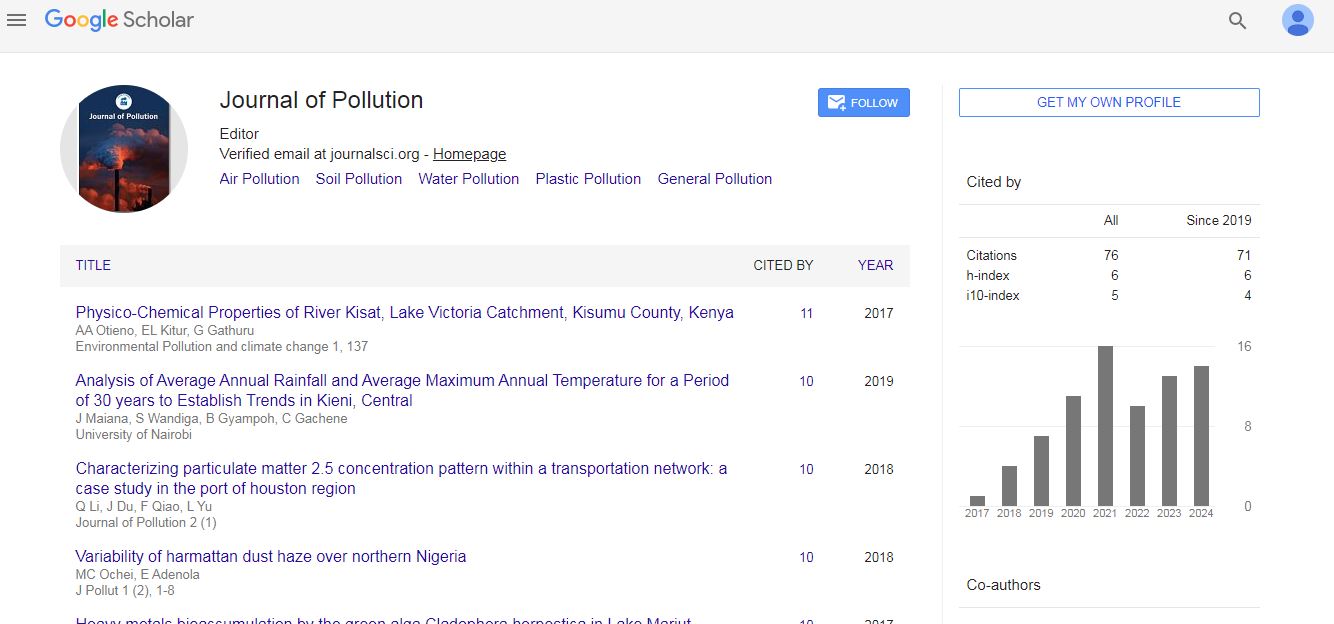
Journal of Pollution received 64 citations as per Google Scholar report