Brief Report - (2026) Volume 10, Issue 1
Received: 01-Feb-2026, Manuscript No. cmcr-25-186118;
Editor assigned: 03-Feb-2026, Pre QC No. P-186118;
Reviewed: 17-Feb-2026, QC No. Q-186118;
Revised: 23-Feb-2026, Manuscript No. R-186118;
Published:
02-Mar-2026
, DOI: 10.37421/2684-4915.2025.9.415
Citation: Bennett, Oliver. "Diverse Clinical Scenarios: Case Reports." Clin Med Case Rep 10 (2026):415.
Copyright: © 2026 Bennett O. This is an open-access article distributed under the terms of the Creative Commons Attribution License, which permits unrestricted use,
distribution and reproduction in any medium, provided the original author and source are credited
The landscape of medicine is continually enriched by case reports that illuminate rare presentations and diagnostic challenges, thereby expanding our understanding of various diseases and their management. These detailed accounts serve as invaluable educational tools for clinicians, fostering a deeper appreciation for the nuances of patient care. One such instance involves a rare case of IgG4-related disease presenting as massive pancreatic pseudocysts, a situation that necessitates careful consideration within the differential diagnosis of pancreatic cystic lesions, particularly when typical etiological factors are absent. The complexities of diagnosis and management in such scenarios are significant, underscoring the critical role of biopsy and therapeutic response to steroids [1].
Furthermore, the intricate interplay between underlying hematological malignancies and the side effects of therapeutic agents is a recurring theme in clinical practice. A notable case highlighted severe neutropenia in an elderly patient with multiple myeloma who had received lenalidomide and dexamethasone. This case underscores the critical need for vigilant monitoring of hematological parameters in individuals undergoing treatment with immunomodulatory drugs, especially when a pre-existing hematological malignancy is present [2].
Respiratory medicine also presents its share of diagnostic complexities, with certain inflammatory conditions mimicking more aggressive diseases. A challenging case of cryptogenic organizing pneumonia (COP) was reported, which bore a striking resemblance to lung cancer. The diagnostic process, involving advanced imaging such as high-resolution computed tomography (HRCT) and histopathological examination via transbronchial lung biopsy, was crucial. The successful resolution with corticosteroid therapy emphasized the recognition of COP as a treatable inflammatory lung disorder [3].
Genetic and autoimmune disorders often manifest with a broad spectrum of clinical signs, some of which can be atypical and pose diagnostic dilemmas. Familial Mediterranean fever (FMF), a genetic autoinflammatory disorder, was illustrated through a case exhibiting unusual presentations, including serositis and joint involvement. This report emphasized the inherent variability in FMF manifestations and the indispensable role of genetic testing and prompt initiation of colchicine therapy for effective disease control [4].
Thrombotic disorders, particularly in the context of autoimmune conditions, represent another area where meticulous diagnosis and management are paramount. Antiphospholipid syndrome (APS) was the focus of a case report detailing recurrent arterial and venous thrombotic events that persisted despite standard anticoagulant therapy. The authors delved into the diagnostic criteria for APS and the significant challenges encountered in managing refractory thrombotic episodes, exploring potential roles for novel anticoagulants and immunosuppressive agents [5].
Autoimmune hemolytic anemia (AIHA) can present in a refractory form, demanding alternative therapeutic strategies when conventional treatments fail. A case report described the successful management of refractory AIHA in a young adult using rituximab. This account highlighted the therapeutic efficacy of rituximab in AIHA cases that do not respond to established treatments like corticosteroids and splenectomy, offering a crucial alternative for such patients [6].
Metabolic disorders affecting the liver and neurological systems can also present with confounding symptoms. Wilson's disease, a genetic disorder of copper metabolism, was described in a patient who exhibited atypical neurological symptoms alongside liver dysfunction. The diagnostic pathway, involving specific biochemical tests like ceruloplasmin levels, urinary copper excretion, and genetic analysis, was crucial. The report stressed the imperative of early diagnosis and swift treatment with chelating agents to avert irreversible organ damage [7].
Drug-induced nephropathies are an important consideration in the etiology of acute kidney injury. A case of acute interstitial nephritis secondary to minocycline use was reported, drawing attention to the potential for such drug-induced reactions. The case underlined the necessity of suspecting interstitial nephritis in patients presenting with acute kidney injury and a relevant medication history. Confirmation via renal biopsy and subsequent recovery upon drug discontinuation underscored the diagnostic and therapeutic approach [8].
Chronic liver diseases, such as primary biliary cholangitis (PBC), can sometimes present with challenging clinical courses. A case report detailed a patient with PBC who experienced recurrent cholestasis and pruritus despite adequate treatment with ursodeoxycholic acid. The authors discussed strategies for managing refractory PBC, including the potential addition of obeticholic acid, and emphasized the need for personalized treatment plans to address individual patient needs [9].
Rheumatological conditions in the elderly can exhibit distinct patterns of progression and response to therapy. A case report focused on an elderly patient diagnosed with a new-onset rheumatoid arthritis (RA) who experienced unusually rapid joint damage progression. The authors explored factors contributing to aggressive RA in older adults and underscored the importance of timely initiation of disease-modifying antirheumatic drugs (DMARDs) and biologic therapies to mitigate disease severity and impact [10].
The initial case report details a rare manifestation of IgG4-related disease where it presented as massive pancreatic pseudocysts. This specific presentation challenges conventional diagnostic paradigms for pancreatic cystic lesions, especially when the typical causative factors are not evident. The authors highlight the complexities involved in both diagnosing and managing such cases, emphasizing that a biopsy and observation of the patient's response to corticosteroid therapy are pivotal in reaching a definitive diagnosis and guiding treatment [1].
Transitioning to hematology, a case report describes severe neutropenia occurring in an elderly patient diagnosed with multiple myeloma who was undergoing treatment with lenalidomide and dexamethasone. This clinical scenario serves as a critical reminder of the potential hematological toxicities associated with immunomodulatory drugs. The report stresses the absolute necessity for continuous and careful monitoring of blood cell counts, particularly in patients with pre-existing hematological malignancies, to detect and manage such adverse events promptly [2].
In the realm of pulmonary medicine, a report discusses a case of cryptogenic organizing pneumonia (COP) that proved diagnostically challenging due to its resemblance to lung cancer. The diagnostic journey involved detailed interpretation of high-resolution computed tomography (HRCT) scans and confirmation through transbronchial lung biopsy. The successful treatment outcome with corticosteroids highlighted the importance of considering COP as a treatable inflammatory condition that can mimic more sinister pathologies [3].
Genetic disorders can exhibit significant phenotypic variability, as exemplified by a case of familial Mediterranean fever (FMF). This report focused on a patient presenting with atypical symptoms, including serositis and joint involvement, deviating from the classic presentation. The authors emphasized the wide spectrum of FMF manifestations and the crucial role of genetic testing in establishing the diagnosis, alongside the efficacy of colchicine therapy for disease management [4].
The complexities of autoimmune thrombotic disorders are brought to light in a case report on antiphospholipid syndrome (APS). The patient experienced recurrent thrombotic events in both arterial and venous systems, despite being on anticoagulant therapy. The authors reviewed the diagnostic criteria for APS and discussed the significant hurdles in managing patients with refractory thrombotic episodes, exploring the potential utility of newer anticoagulants and immunosuppressive treatments [5].
Another significant case in hematology involved refractory autoimmune hemolytic anemia (AIHA) in a young adult. The report details a successful treatment regimen utilizing rituximab, a monoclonal antibody. This case underscores the effectiveness of rituximab as a therapeutic option for patients with AIHA who have shown unresponsiveness to traditional treatments such as corticosteroids and splenectomy, thereby offering a vital therapeutic avenue [6].
Metabolic disorders, such as Wilson's disease, can present with a diverse range of clinical signs. A case report described a patient with Wilson's disease who presented with unusual neurological symptoms in conjunction with liver dysfunction. The diagnostic process relied on a combination of biochemical markers, including ceruloplasmin levels and urinary copper excretion, alongside genetic testing. The report strongly advocated for early diagnosis and prompt treatment with chelating agents to prevent irreversible organ damage [7].
Drug-induced kidney injury is a critical consideration in clinical practice. A case report presented acute interstitial nephritis that was attributed to minocycline use. This report serves as a reminder of the potential for drug-induced interstitial nephritis and the importance of maintaining a high index of suspicion in patients with acute kidney injury who have a compatible medication history. Confirmation via renal biopsy and resolution upon drug withdrawal were key aspects of this case [8].
In hepatology, primary biliary cholangitis (PBC) can sometimes present with refractory symptoms. A case report focused on a patient with PBC who experienced persistent cholestasis and pruritus despite receiving ursodeoxycholic acid therapy. The authors explored management strategies for refractory PBC, including the potential benefit of adding obeticholic acid, and stressed the necessity of tailored treatment approaches for optimal patient outcomes [9].
Finally, rheumatology cases in the elderly can be particularly challenging. A report detailed a patient with a new diagnosis of rheumatoid arthritis (RA) in older age who exhibited an unusually rapid progression of joint damage. The authors discussed factors that may predispose older adults to aggressive RA and emphasized the importance of initiating disease-modifying antirheumatic drugs (DMARDs) and biologic therapies without delay to effectively manage the disease course [10].
This collection of case reports highlights diverse and challenging clinical scenarios across various medical disciplines. It includes a rare presentation of IgG4-related disease as pancreatic pseudocysts, severe neutropenia in a multiple myeloma patient treated with immunomodulatory drugs, and cryptogenic organizing pneumonia mimicking lung cancer. The reports also cover atypical manifestations of familial Mediterranean fever, recurrent thrombotic events in antiphospholipid syndrome, and refractory autoimmune hemolytic anemia successfully treated with rituximab. Additionally, the cases address Wilson's disease with unusual symptoms, drug-induced acute interstitial nephritis, refractory primary biliary cholangitis, and rapidly progressive rheumatoid arthritis in an elderly patient. Collectively, these reports underscore the importance of considering rare differentials, vigilant monitoring, early diagnosis, and individualized treatment strategies in complex medical cases.
None
None
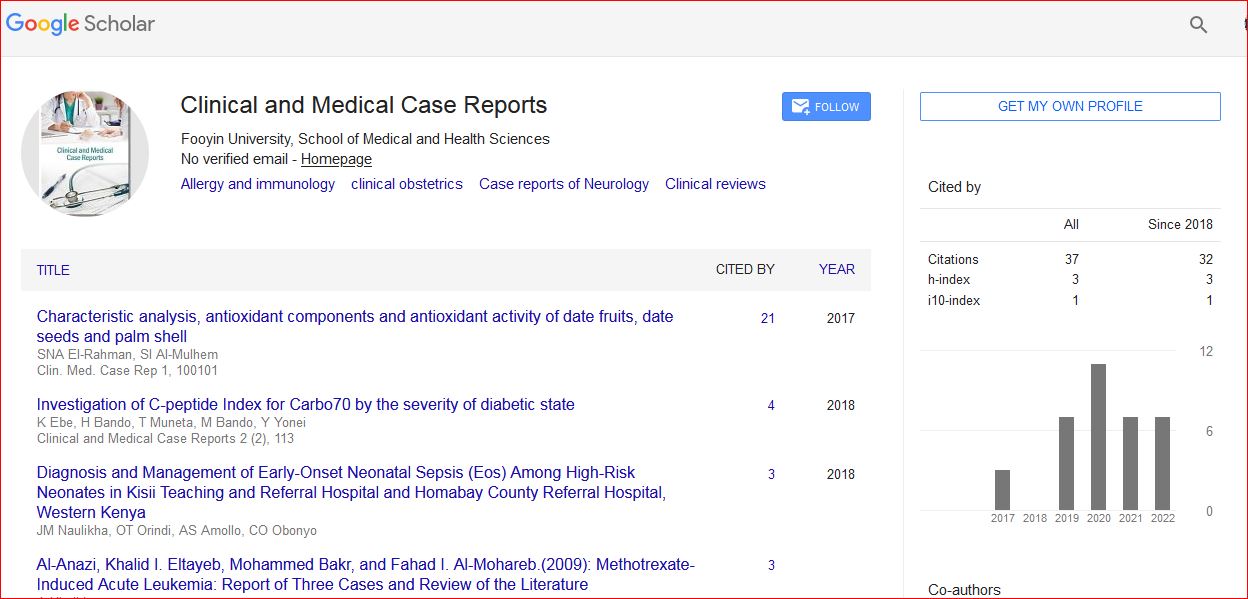
Clinical and Medical Case Reports received 53 citations as per Google Scholar report