Commentary - (2025) Volume 10, Issue 4
Received: 01-Aug-2025, Manuscript No. jdcm-26-182206;
Editor assigned: 04-Aug-2025, Pre QC No. P-182206;
Reviewed: 18-Aug-2025, QC No. Q-182206;
Revised: 22-Aug-2025, Manuscript No. R-182206;
Published:
29-Aug-2025
, DOI: 10.37421/2475-3211.2025.10.325
Citation: Okeke, Josephine A.. ”Diabetic Gastroparesis: Diagnosis, Management, and Emerging Therapies.” J Diabetic Complications Med 10 (2025):325.
Copyright: © 2025 Okeke A. Josephine This is an open-access article distributed under the terms of the Creative Commons Attribution License, which permits unrestricted use, distribution and reproduction in any medium, provided the original author and source are credited.
Diabetic gastroparesis (DG) is a serious complication of diabetes mellitus, characterized by delayed gastric emptying without mechanical obstruction. Its diagnosis involves assessing symptoms and objective measures like gastric emptying studies, with management strategies encompassing glycemic control, dietary adjustments, prokinetics, and antiemetics, and more invasive options for refractory cases [1].
The intricate pathophysiology of DG involves autonomic neuropathy, enteric nerve dysfunction, and abnormalities in interstitial cells of Cajal, highlighting the disease's heterogeneity and the need for personalized treatment, including evaluation of gastric motility patterns [2].
Diagnosing gastroparesis, including DG, often utilizes multiple modalities, with scintigraphic gastric emptying studies, breath tests, and wireless motility capsules being examined for their utility and limitations in assessing gastric motility, emphasizing the need for standardized diagnostic criteria [3].
Optimizing glycemic control is fundamental in managing DG, with studies indicating that intensive blood glucose management can mitigate disease progression and improve symptom severity and gastric emptying [4].
Dietary modifications are paramount for alleviating gastroparesis symptoms, with recommendations including smaller, more frequent meals, low-fat, low-fiber diets, and the potential use of liquid nutrition based on individual tolerance [5].
Prokinetic agents, such as metoclopramide and domperidone, are frequently the initial pharmacological treatment for gastroparesis, with meta-analyses evaluating their efficacy and safety in improving gastric emptying and relieving symptoms in DG patients [6].
Antiemetic medications are crucial for managing the nausea and vomiting associated with gastroparesis, and studies assess the effectiveness of various antiemetic classes to guide optimal therapeutic choices for symptom control [7].
For individuals with refractory gastroparesis, advanced interventions like gastric electrical stimulation, jejunal feeding tubes, and surgical options such as gastrectomy are reviewed for selected cases, focusing on patient selection and outcomes [8].
Understanding the patient's perspective is vital for effective DG management, with studies exploring the lived experiences of individuals with DG, focusing on symptom burden, treatment satisfaction, and quality of life to inform clinical practice [9].
The role of neuromodulation in gastroparesis is an emerging field, with research investigating non-invasive vagal nerve stimulation as a potential therapeutic option for symptomatic relief and improved gastric motility in DG patients [10].
Diabetic gastroparesis (DG) is defined as delayed gastric emptying in the absence of mechanical obstruction, representing a significant complication of diabetes mellitus. Diagnosis typically involves a combination of symptomatic assessment and objective methods, such as gastric emptying studies. Management is comprehensive, involving meticulous glycemic control, tailored dietary modifications, and pharmacological interventions including prokinetic and antiemetic agents. For cases that do not respond to initial treatments, more invasive therapeutic options are considered, and ongoing research continues to advance our understanding and treatment approaches for this complex condition [1].
The pathophysiology of DG is multifaceted, involving damage to autonomic nerves, dysfunction of enteric neurons, and alterations in interstitial cells of Cajal. This review highlights the inherent heterogeneity of the disease and stresses the importance of individualized treatment plans, which may include assessing specific patterns of gastric motility [2].
The diagnostic process for gastroparesis, including DG, often requires a range of methods. This article examines the effectiveness and limitations of common diagnostic tools such as scintigraphic gastric emptying studies, non-radioactive breath tests, and wireless motility capsules for evaluating gastric function, emphasizing the ongoing need for standardized diagnostic criteria [3].
A cornerstone of DG management is achieving optimal glycemic control. Research in this area investigates the impact of intensive blood glucose management on symptom severity and gastric emptying rates, providing evidence that well-controlled blood sugar levels can indeed help slow the progression of the disease [4].
Dietary interventions are crucial for symptom relief in gastroparesis. This review consolidates evidence-based dietary recommendations, advocating for smaller, more frequent meals, diets low in fat and fiber, and the consideration of liquid nutrition to suit individual patient tolerances and needs [5].
Pharmacological treatment for gastroparesis commonly begins with prokinetic agents like metoclopramide and domperidone. This meta-analysis provides an evaluation of the efficacy and safety profiles of various prokinetic drugs in improving both gastric emptying and symptom relief among patients diagnosed with DG [6].
Managing nausea and vomiting, common distressing symptoms of gastroparesis, is often achieved through antiemetic medications. This study critically assesses the effectiveness of different classes of antiemetics in controlling these symptoms, aiming to provide guidance for selecting the most appropriate therapeutic interventions [7].
In situations where gastroparesis is refractory to conventional treatments, more advanced therapeutic strategies become necessary. This paper reviews the current options, including gastric electrical stimulation, the use of jejunal feeding tubes, and surgical interventions like gastrectomy in select patient populations, with a focus on appropriate patient selection and expected outcomes [8].
From a patient-centered perspective, understanding the lived experiences of individuals with DG is essential for effective care. This study delves into the challenges faced by patients, focusing on symptom burden, satisfaction with treatments, and overall quality of life, with the goal of informing and improving clinical practice [9].
Neuromodulation represents a developing frontier in gastroparesis treatment. This research explores the potential of non-invasive vagal nerve stimulation as a therapeutic modality to alleviate symptoms and enhance gastric motility in patients diagnosed with DG [10].
Diabetic gastroparesis (DG) is a complication of diabetes marked by delayed gastric emptying. Its diagnosis involves symptom assessment and objective studies, with management including glycemic control, diet, prokinetics, and antiemetics, with advanced options for refractory cases. The pathophysiology involves nerve dysfunction and interstitial cell abnormalities, necessitating personalized treatment. Diagnostic tools like gastric emptying studies and motility capsules are used, though standardized criteria are needed. Optimal glycemic control and dietary modifications, such as smaller, low-fat, low-fiber meals, are crucial. Prokinetic and antiemetic agents are common pharmacological treatments. For severe cases, advanced therapies like gastric electrical stimulation or feeding tubes may be employed. Patient perspectives are vital for effective management, and neuromodulation, including vagal nerve stimulation, is an emerging area of research.
None
None
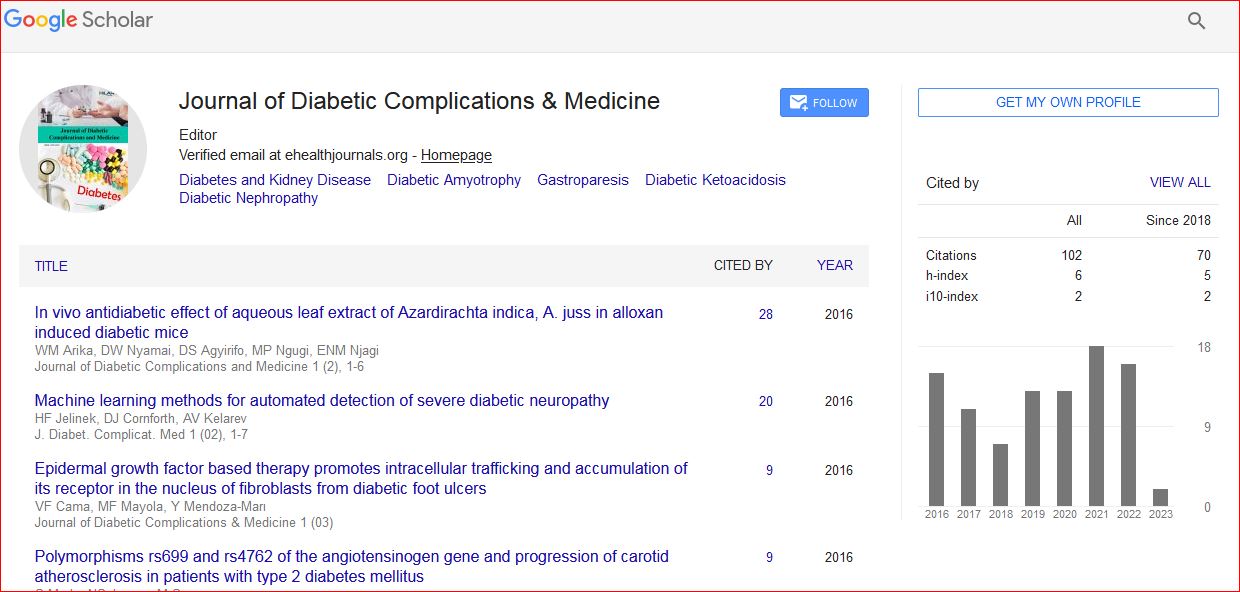
Journal of Diabetic Complications & Medicine received 102 citations as per Google Scholar report