Commentary - (2025) Volume 9, Issue 1
Received: 01-Jan-2025, Manuscript No. jma-25-172654;
Editor assigned: 03-Jan-2025, Pre QC No. P-172654;
Reviewed: 17-Jan-2025, QC No. Q-172654;
Revised: 22-Jan-2025, Manuscript No. R-172654;
Published:
29-Jan-2025
, DOI: 10.37421/2684-4265.2025.09.357
Citation: Vasiliev, Elena M.. ”Comparative Morphology: Structure, Function, Evolution, Application.” J Morphol Anat 09 (2025):357.
Copyright: © 2025 Vasiliev M. Elena This is an open-access article distributed under the terms of the Creative Commons Attribution License, which permits unrestricted use, distribution and reproduction in any medium, provided the original author and source are credited.
Comparative morphological analysis stands as a cornerstone in biological research, offering profound insights into evolutionary pathways, functional adaptations, and the intricate relationships among diverse species. This approach allows scientists to dissect the underlying structural blueprints that dictate an organism's life strategies, from its feeding habits to its navigation skills and reproductive success. The power of comparative morphology lies in its ability to highlight both conserved features and divergent specializations across the tree of life, illuminating the forces that have shaped biological diversity. One area where comparative morphology proves invaluable is in tracing evolutionary trajectories. For instance, research has deeply investigated the evolution of the dentary-squamosal jaw joint, a pivotal structure for understanding mammalian feeding mechanics. By undertaking a detailed comparative morphological analysis across various extant amniotes, researchers pinpointed key developmental shifts and structural adaptations that have allowed for a vast array of dietary strategies. What this really means is, the specific way our jaws articulate tells a story of deep evolutionary change, not just in mammals but across all vertebrates [1].
Similarly, understanding functional adaptations is a recurring theme. A study focusing on the pharynx and related structures in five different species of perciform fish utilized comparative morphological analysis to elucidate how their feeding apparatus is functionally adapted. This work helps us grasp the diverse ecological niches these fish occupy. Basically, how these fish are built in their throat region directly reflects what they eat and how they catch it [2].
The field also extends its reach into neuroanatomy, providing crucial information for veterinary medicine and basic biological understanding. For example, a study compared the stellate ganglion, a vital component of the autonomic nervous system, in ruminants (sheep) and solipeds (horses). Comprehending these differences has significant implications for both veterinary medicine and comparative neuroanatomy. Here's the thing: slight anatomical variations in this nerve cluster can lead to substantial differences in physiological responses between these distinct animal groups [3].
This neuroanatomical exploration isn't limited to farm animals; another study performed a comparative morphological analysis on the stellate ganglion in common companion animals, dogs and cats. This work contributes foundational knowledge in veterinary neurology, meticulously highlighting species-specific anatomical nuances. Essentially, even in these familiar animals, the structure of this important nerve bundle exhibits subtle differences that impact how we understand their nervous systems [8].
Comparative morphology is also indispensable for taxonomy, especially when distinguishing between closely related species where external appearance might be deceptive. Researchers meticulously examined the external genitalia of two closely related earwig species, Euborellia moesta and E. annulata. This detailed comparative morphological analysis helps clarify species differentiation, which is often challenging in insects based solely on external appearance. What this really means is, tiny structural differences in reproductive organs are crucial for distinguishing species that look very similar otherwise [4].
This principle is echoed in a study on two sister species within the genus Physopelta, which included a redescription of P. gutta. This detailed analysis proved instrumental in clarifying taxonomic relationships and morphological distinctions between these closely related insect species. Basically, by looking closely at their body forms, we can better understand how these specific insects relate to each other evolutionarily [6].
Furthermore, the detailed examination of female genitalia in the Apterona genus of moths across Europe was a primary focus for accurate species identification and understanding their evolutionary relationships. What this really means is, tiny differences in reproductive anatomy are crucial clues for figuring out which moth is which and how they're related [9].
Beyond structural identification, comparative morphology sheds light on sensory adaptations vital for survival in challenging environments. A study explored the comparative morphology and histology of the olfactory system in three species of deep-sea grenadiers. Understanding these specialized sensory structures offers profound insight into how these fish navigate and find food in their challenging, lightless environment. Let's break it down: the specialized noses of these deep-sea fish are perfectly adapted for detecting chemical cues where sight is useless [5].
The clinical relevance of comparative morphology also emerges in human health. Research provided a detailed comparative morphological analysis of the human lumbar multifidus muscle, with a particular emphasis on its innervation. Understanding the precise nerve supply to this key spinal muscle is vital for clinical applications, especially in treating lower back pain. It comes down to this: knowing exactly how these deep back muscles are wired helps doctors better diagnose and treat pain in that area [7].
Lastly, the internal systems of less-studied organisms also benefit from this rigorous approach. Researchers investigated the comparative morphology of the heart in two species of mygalomorph spiders, Macrothele calpeiana and Brachypelma hamorii. This work provides valuable insight into the cardiovascular adaptations unique to these ancient spider lineages. Basically, the hearts of these particular spiders show us how their circulatory systems have adapted over a long evolutionary history [10].
Collectively, these studies underscore the profound and multifaceted contributions of comparative morphology to our understanding of the biological world. From the grand sweep of evolutionary history to the intricate details of species identification and the direct implications for clinical practice, the methodical comparison of anatomical structures remains an indispensable tool for uncovering biological truths.
Comparative morphological studies offer a rich tapestry of biological insights, spanning from the deep evolutionary history of vertebrates to the intricate distinctions between closely related insect species and critical implications for clinical medicine. At its core, this discipline systematically examines anatomical structures across different organisms to reveal patterns of similarity and difference, which in turn inform our understanding of function, adaptation, and phylogeny. The breadth of its application is evident in recent investigations that shed light on a variety of biological questions.
Delving into evolutionary biology, one significant study focused on the dentary-squamosal jaw joint, an essential structure for mammalian feeding mechanics. Through a comparative morphological analysis of extant amniotes, researchers identified key developmental shifts and structural adaptations that have facilitated diverse dietary strategies. This work fundamentally explains how the articulation of our jaws is a product of deep evolutionary change, not just within mammals but across the entire vertebrate lineage [1]. Complementing this, research into fish anatomy investigated the pharynx and associated structures in five distinct species of perciform fish. This comparative morphological analysis provided crucial insights into the functional adaptations of their feeding apparatus, thereby illuminating the diverse ecological niches these fish inhabit. Essentially, the structural makeup of these fishes' throat regions directly correlates with their specific feeding behaviors and prey capture methods [2].
Neuroanatomical investigations also form a critical component of comparative morphology, holding significant implications for veterinary and human medicine. A comparative study examined the stellate ganglion, a key part of the autonomic nervous system, in both ruminants, specifically sheep, and solipeds, represented by horses. Understanding the variations in this nerve cluster is vital for veterinary practice and contributes to comparative neuroanatomy, as even subtle anatomical differences can lead to notable physiological response disparities between these animal groups [3]. Expanding on this, a similar comparative morphological study focused on the stellate ganglion in common companion animals, dogs, and cats. This research enhances foundational knowledge in veterinary neurology, emphasizing species-specific anatomical nuances and how these subtle structural differences impact our understanding of their nervous systems [8]. In a human context, another study meticulously analyzed the human lumbar multifidus muscle, particularly its innervation. This research is clinically vital because a precise understanding of the nerve supply to this critical spinal muscle directly aids in diagnosing and treating lower back pain, illustrating how anatomical insights directly translate into practical medical applications [7].
Comparative morphology is an indispensable tool for resolving taxonomic complexities, particularly within the vast and diverse world of insects. One study meticulously examined the external genitalia of two closely related earwig species, Euborellia moesta and E. annulata. This detailed analysis was instrumental in clarifying species differentiation, a task often challenging when relying solely on external insect appearance. Here's the thing: minute structural differences in reproductive organs are often the definitive characteristics for distinguishing outwardly similar species [4]. Further reinforcing this, a comparative morphological study of two sister species within the genus Physopelta, including a redescription of P. gutta, was conducted. This detailed work clarified taxonomic relationships and morphological distinctions between these closely related insect species, demonstrating how careful examination of body forms helps unravel their evolutionary kinship [6]. Similarly, an investigation into the comparative morphology of female genitalia in the Apterona genus of moths across Europe proved essential for accurate species identification and understanding their broader evolutionary relationships. What this really means is, tiny differences in reproductive anatomy provide crucial clues for distinguishing between moth species and tracing their ancestral connections [9].
Beyond these areas, comparative morphology also explores specialized sensory systems and internal organ adaptations that enable organisms to thrive in their unique environments. For example, a study explored the comparative morphology and histology of the olfactory system in three species of deep-sea grenadiers. This research provides valuable insights into how these fish navigate and locate food in their challenging, lightless habitats. Let's break it down: the specialized olfactory systems of these deep-sea fish are perfectly adapted for detecting chemical cues where visual perception is impossible [5]. Concluding this diverse exploration, another study investigated the comparative morphology of the heart in two species of mygalomorph spiders, Macrothele calpeiana and Brachypelma hamorii. This work offers a window into the unique cardiovascular adaptations present in these ancient spider lineages, illustrating how their circulatory systems have evolved over vast periods of evolutionary history [10].
The collective body of these studies powerfully illustrates that comparative morphology is not merely descriptive but is a dynamic, analytical field essential for unraveling the complexities of life, from the smallest anatomical detail to the grand narrative of evolution and the practicalities of clinical intervention.
This compilation of recent research highlights the expansive utility of comparative morphological analysis across various biological disciplines. Studies delve into fundamental evolutionary processes, such as the development of the dentary-squamosal jaw joint, revealing deep evolutionary changes across vertebrates and mammals alike. Understanding how structures like the pharynx in perciform fish are built offers insight into their feeding adaptations and ecological niches. Beyond evolution, comparative morphology is crucial for precise species differentiation, particularly in insects where external appearance can be misleading. For instance, detailed examinations of external genitalia in earwigs and female genitalia in Apterona moths prove vital for accurate taxonomy and discerning evolutionary relationships. The research also extends into neuroanatomy, comparing the stellate ganglion in different domestic animals like ruminants, solipeds, dogs, and cats, which informs veterinary medicine and offers foundational knowledge of species-specific anatomical nuances. Even within human anatomy, this approach is applied, with a study on the lumbar multifidus muscle's innervation demonstrating its clinical significance for treating lower back pain. Furthermore, the field explores specialized sensory structures, like the olfactory system in deep-sea grenadiers, showcasing adaptations for survival in extreme environments. Finally, investigations into internal organs, such as the heart in mygalomorph spiders, reveal unique cardiovascular adaptations within ancient lineages. What this all means is, comparative morphology is an indispensable tool, revealing the intricate relationships between structure, function, evolution, and practical application across the animal kingdom.
None
None
Indexed at, Google Scholar, Crossref
Indexed at, Google Scholar, Crossref
Indexed at, Google Scholar, Crossref
Indexed at, Google Scholar, Crossref
Indexed at, Google Scholar, Crossref
Indexed at, Google Scholar, Crossref
Indexed at, Google Scholar, Crossref
Indexed at, Google Scholar, Crossref
Indexed at, Google Scholar, Crossref
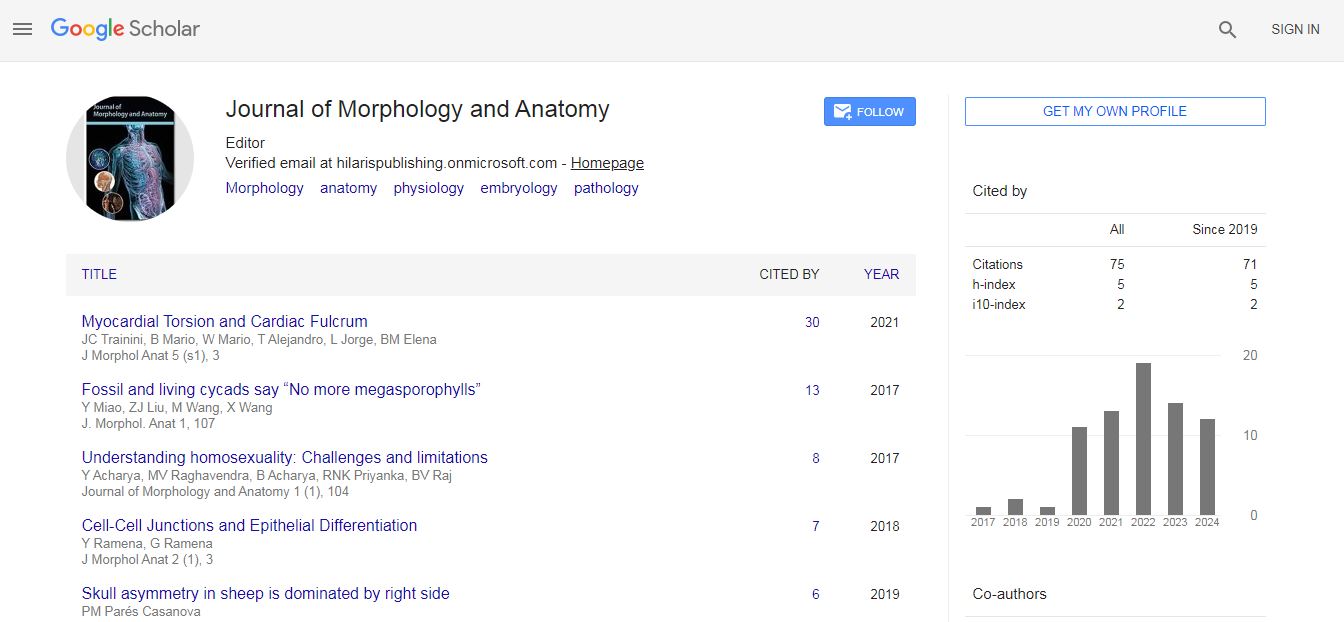
Journal of Morphology and Anatomy received 63 citations as per Google Scholar report