Commentary - (2025) Volume 13, Issue 4
Received: 01-Aug-2025, Manuscript No. jpgeb-26-184312;
Editor assigned: 04-Aug-2025, Pre QC No. P-184312;
Reviewed: 18-Aug-2025, QC No. Q-184312;
Revised: 22-Aug-2025, Manuscript No. R-184312;
Published:
29-Aug-2025
, DOI: 10.37421/2329-9002.2025.13.394
Citation: Mensberg, Isaac K.. "Comparative Genomics: Unlocking Evolutionary Histories and Innovations." J Phylogenetics Evol Biol 13 (2025):394.
Copyright: © 2025 Mensberg K. Isaac This is an open-access article distributed under the terms of the Creative Commons Attribution License, which permits unrestricted use, distribution and reproduction in any medium, provided the original author and source are credited.
Comparative genomics stands as a cornerstone in our quest to unravel the intricate tapestry of evolutionary processes, offering a powerful analytical framework to decipher the historical trajectories of life. By meticulously aligning and scrutinizing the genomic blueprints of a diverse array of species, scientists can identify conserved genetic regions that bear the imprints of shared ancestry, meticulously track the accumulation of genetic changes over vast evolutionary timescales, and robustly infer the phylogenetic relationships that connect all living organisms. This comprehensive approach has proven instrumental in illuminating the genetic underpinnings of adaptation, the complex mechanisms driving speciation, and the evolutionary pathways that have given rise to sophisticated biological traits. Specifically, the examination of orthologous genes, those that share a common ancestral gene, and the analysis of their divergence patterns enable researchers to reconstruct ancestral genomic states and pinpoint the pivotal mutations that have catalyzed evolutionary innovation, leading to the emergence of novel biological functions and forms. The profound insights gleaned from comparative genomics are not confined to theoretical pursuits but are of critical importance across a wide spectrum of scientific disciplines, ranging from the fundamental exploration of evolutionary biology to the practical applications in conservation genetics, where understanding genetic diversity is paramount for preserving endangered species. The study of large-scale genomic rearrangements, encompassing phenomena such as inversions and translocations, through the lens of comparative genomics provides invaluable insights into their substantial influence on the architecture of genomes and their role as potent drivers of evolutionary divergence among lineages. These rearrangements can profoundly alter gene regulation, foster the creation of novel gene fusions with potentially new functionalities, and significantly contribute to the establishment of reproductive isolation, thereby acting as powerful evolutionary forces that shape species boundaries. The meticulous analysis of comparative maps detailing these genomic events across related species is instrumental in understanding their prevalence, fixation patterns within populations, and their ultimate functional consequences on organismal evolution. Gene duplication, a fundamental mechanism in molecular evolution, is a primary engine for the generation of evolutionary novelty, and comparative genomics provides the essential tools to trace the historical accumulation and functional ramifications of these duplication events. By systematically identifying duplicated genes across different species, researchers are empowered to investigate the intricate processes through which novel gene functions emerge, ultimately leading to the evolution of more complex biological systems and pathways. A thorough understanding of how duplicated genes are retained in the genome and how they acquire new functions through processes like neofunctionalization offers critical insights into the dynamic nature of evolutionary innovation and the generation of biological diversity. Comparative genomics is indispensable for comprehending the evolutionary dynamics of gene regulation, a critical aspect of biological complexity. Subtle differences in regulatory elements, such as promoters and enhancers, which control gene expression, can lead to substantial phenotypic variations between species, driving adaptation and diversification. By comparing these regulatory elements across diverse genomes, scientists can precisely identify the specific regulatory changes that have underpinned evolutionary adaptations and developmental differences, shedding light on how organisms fine-tune their gene expression in response to environmental pressures and developmental cues. The application of comparative genomics to the study of host-pathogen interactions offers crucial insights into the ongoing evolutionary arms race that characterizes these relationships, a dynamic interplay of adaptation and counter-adaptation. By comparing the genomes of hosts and their associated pathogens, researchers can identify specific genes that confer resistance in the host or virulence in the pathogen, thereby elucidating the evolutionary strategies employed by both parties. This detailed understanding of the evolutionary dynamics that shape these intricate relationships is of vital importance for the development of novel and more effective strategies to combat infectious diseases and mitigate their impact on human and animal health. Comparative genomics has fundamentally revolutionized our understanding of molecular evolution, particularly in its capacity to identify unambiguous signatures of positive selection, a key driver of adaptive evolution. By meticulously analyzing patterns of nucleotide substitution rates across related species, scientists can pinpoint specific genes and genomic regions that have undergone adaptive evolution, meaning they have been favored by natural selection. This analytical power allows for the identification of the molecular basis of traits that have conferred a survival or reproductive advantage, providing direct evidence for the adaptive significance of genetic changes and the evolutionary mechanisms that shape organismal fitness. The field of phylogenomics, which represents a powerful integration of comparative genomics techniques with sophisticated phylogenetic inference methods, allows for the reconstruction of evolutionary histories with an unprecedented level of accuracy and resolution. By analyzing multiple conserved genomic loci or even entire genomes, researchers can resolve complex and often ambiguous evolutionary relationships between species, identify instances of horizontal gene transferâ??the movement of genetic material between unrelated organismsâ??and accurately infer the timing and nature of speciation events. This advanced methodological approach is therefore crucial for constructing a more robust and accurate tree of life, providing a foundational understanding of the historical relationships among all known organisms. Comparative genomics plays an indispensable and vital role in understanding the evolutionary trajectories of genome size and structure, two fundamental aspects of organismal diversity. By systematically examining variations in chromosome number, the order of genes along chromosomes, and the abundance of repetitive DNA elements across different species, researchers can elucidate the underlying mechanisms that drive these substantial genomic changes and assess their profound impact on organismal diversity, complexity, and evolutionary potential. The comparative analysis of non-coding regions of the genome, which include critical regulatory elements like promoters and enhancers, as well as transposable elements, is of paramount importance for uncovering the mechanisms of evolutionary innovation. While these regions have historically been considered less critical than protein-coding genes, they harbor a wealth of evolutionary information, including the emergence of novel regulatory networks that control gene expression and the significant impact of mobile genetic elements on genome evolution, plasticity, and adaptation. Comparative genomics provides a powerful and versatile framework for identifying genes that have been under strong selection pressure, particularly those related to environmental adaptation, enabling us to understand how organisms respond to diverse ecological challenges. By comparing the genomes of populations or species that inhabit vastly different environments, researchers can detect specific genetic variants that have been shaped by natural selection, offering profound insights into the molecular basis of adaptation to a wide array of ecological niches, including those defined by variations in temperature, altitude, salinity, and dietary resources.
Comparative genomics provides a powerful lens for understanding evolutionary processes by enabling the alignment and analysis of diverse species' genomes to identify conserved regions, track genetic changes, and infer phylogenetic relationships. This approach has been instrumental in uncovering the genetic basis of adaptation, speciation, and the evolution of complex traits. Specifically, the examination of orthologous genes and their divergence patterns allows for the reconstruction of ancestral states and the pinpointing of key mutations that drove evolutionary innovation, offering crucial insights for fields ranging from evolutionary biology to conservation genetics [1].
The study of large-scale genomic rearrangements, such as inversions and translocations, through comparative genomics reveals their significant role in shaping genome architecture and driving evolutionary divergence. These rearrangements can affect gene regulation, create novel gene fusions, and contribute to reproductive isolation, acting as potent evolutionary forces. Analyzing comparative maps of these events across related species helps in understanding their fixation patterns and functional consequences [2].
Gene duplication serves as a primary source of evolutionary novelty, and comparative genomics facilitates the tracing of the history and functional impact of these events. By identifying duplicated genes across species, researchers can investigate how new functions emerge, leading to the evolution of complex biological systems. Understanding the retention and neofunctionalization of duplicates provides critical insights into evolutionary innovation [3].
Comparative genomics is essential for understanding the evolution of gene regulation, as differences in regulatory elements like promoters and enhancers can lead to significant phenotypic variation between species. By comparing these elements across genomes, researchers can identify the regulatory changes that underlie evolutionary adaptations and developmental differences [4].
The application of comparative genomics to study host-pathogen interactions provides crucial insights into the co-evolutionary arms race. By comparing the genomes of hosts and their pathogens, researchers can identify genes involved in resistance and virulence and understand the evolutionary dynamics that shape these relationships, which is vital for developing new strategies to combat infectious diseases [5].
Comparative genomics has revolutionized our understanding of molecular evolution, particularly in identifying signatures of positive selection. By analyzing patterns of nucleotide substitution across related species, we can pinpoint genes and genomic regions that have experienced adaptive evolution, allowing us to identify the molecular basis of traits that conferred a survival or reproductive advantage [6].
The field of phylogenomics, integrating comparative genomics with phylogenetic inference, enables the reconstruction of evolutionary histories with unprecedented accuracy. By analyzing multiple conserved genomic loci or whole genomes, researchers can resolve complex evolutionary relationships, identify instances of horizontal gene transfer, and infer speciation events, making this method crucial for understanding the tree of life [7].
Comparative genomics plays a vital role in understanding the evolution of genome size and structure. Examining variations in chromosome number, gene order, and the abundance of repetitive elements across species helps elucidate the mechanisms driving these changes and their impact on organismal diversity and complexity [8].
The comparative analysis of non-coding regions, such as regulatory elements and transposable elements, is crucial for uncovering evolutionary innovation. While often overlooked, these regions harbor significant evolutionary information, including the emergence of new regulatory networks and the impact of mobile genetic elements on genome evolution and adaptation [9].
Comparative genomics offers a powerful framework for identifying genes under selection related to environmental adaptation. By comparing genomes of populations or species inhabiting different environments, researchers can detect genetic variants shaped by natural selection, providing insights into the molecular basis of adaptation to diverse ecological niches, including temperature, altitude, and diet [10].
Comparative genomics is a vital tool for understanding evolution, enabling the analysis of genomes to reveal conserved regions, track genetic changes, and reconstruct evolutionary histories. It has been instrumental in deciphering the genetic basis of adaptation, speciation, and the evolution of complex traits, including insights from gene duplication, large-scale genomic rearrangements, and regulatory element evolution. The field also plays a crucial role in understanding host-pathogen interactions and identifying genes under selection related to environmental adaptation. Phylogenomics, a subfield, enhances the accuracy of evolutionary history reconstruction. Furthermore, comparative genomics sheds light on the evolution of genome size and structure, and the significance of non-coding DNA in evolutionary innovation. Its applications span from fundamental evolutionary biology to practical conservation genetics and the development of strategies against infectious diseases.
None
None
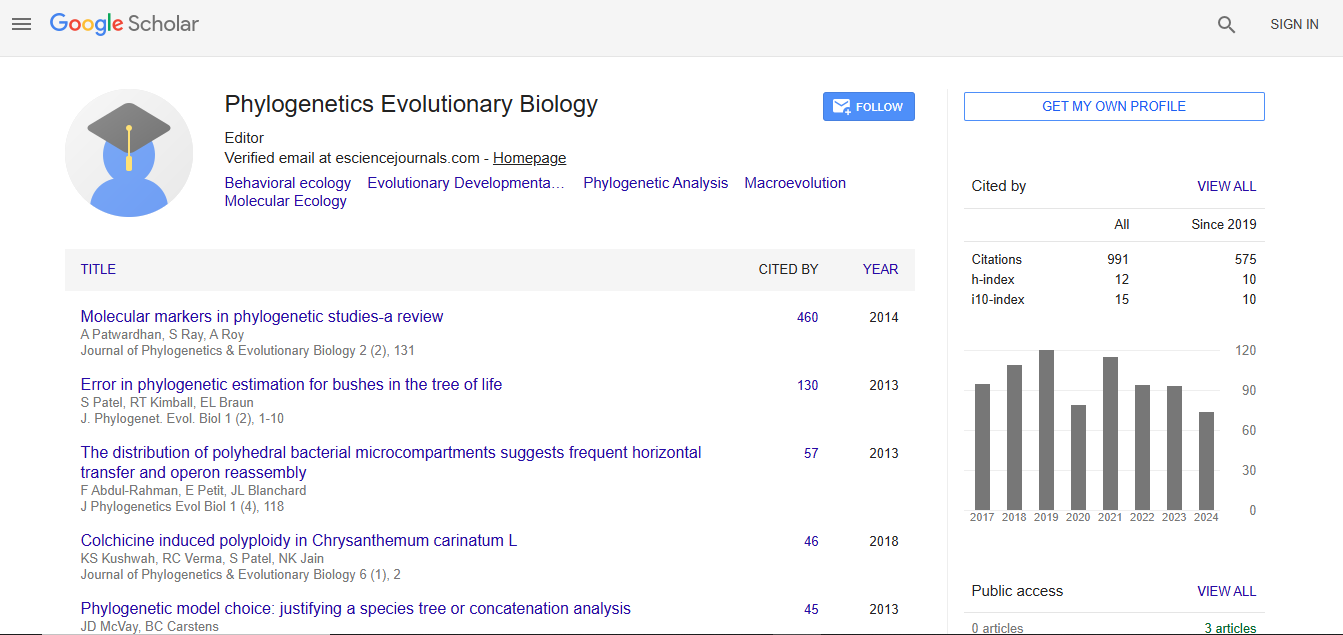
Journal of Phylogenetics & Evolutionary Biology received 911 citations as per Google Scholar report