Perspective - (2025) Volume 9, Issue 4
Received: 01-Dec-2025, Manuscript No. rrms-25-175079;
Editor assigned: 03-Dec-2025, Pre QC No. P-175079;
Reviewed: 17-Dec-2025, QC No. Q-175079;
Revised: 22-Dec-2025, Manuscript No. R-175079;
Published:
29-Dec-2025
, DOI: 10.37421/2952-8127.2025.9.241
Citation: Dimitrov, Ivan. ”Chronic Disease: Holistic Prevention and Management.” Res Rep Med Sci 09 (2025):241.
Copyright: © 2025 Dimitrov I. This is an open-access article distributed under the terms of the Creative Commons Attribution License, which permits unrestricted use, distribution and reproduction in any medium, provided the original author and source are credited.
The 2021 European Society of Cardiology Guidelines offer a comprehensive framework for preventing cardiovascular disease in clinical practice. These guidelines emphasize the critical need for personalized risk assessment, effectively combining lifestyle modifications with targeted pharmacotherapy. Interventions are specifically tailored based on individual patient risk profiles, integrating evidence-based strategies for managing key risk factors such as hypertension, dyslipidemia, and diabetes, promoting a truly holistic approach to cardiovascular health [1].
Moreover, the joint consensus report from the American Diabetes Association (ADA) and the European Association for the Study of Diabetes (EASD) in 2022 provides updated recommendations for managing hyperglycemia in type 2 diabetes. This report strongly advocates for a patient-centered approach, meticulously considering various factors including comorbidities, overall cardiovascular risk, and specific drug effects. It also presents practical algorithms for treatment selection, advocating for early intensive therapy and the strategic use of newer agents that offer significant cardiovascular and renal benefits [2].
Chronic Kidney Disease (CKD) continues to be recognized as a pressing global epidemic, characterized by its increasing prevalence, substantial morbidity, and a significant mortality burden. A detailed review sheds light on this growing crisis, discussing major risk factors and diagnostic challenges. It underscores the urgent necessity for improved early detection and the implementation of robust management strategies, especially within low- and middle-income countries, calling for concerted global efforts to effectively address this public health challenge [3].
The intricate comorbidity between mental and physical disorders represents a significant area of concern. Research highlights that chronic physical diseases markedly increase the risk of developing mental health conditions, and conversely, mental health issues can impact physical well-being. This understanding emphasizes the profound importance of integrated care models designed to simultaneously address both physical and mental health needs, recognizing their powerful bidirectional influence on patient outcomes and overall quality of life [4].
Lifestyle interventions are critical for both the prevention and effective management of chronic diseases. A key article reviews how crucial elements such as diet, regular physical activity, smoking cessation, and effective stress management can profoundly impact disease progression and lead to improved overall health outcomes. The authors passionately advocate for integrating personalized lifestyle counseling into routine clinical practice, aiming to empower patients to adopt healthier habits and significantly mitigate their chronic disease risks [5].
Health disparities in chronic disease prevention and management remain a significant challenge. A comprehensive review specifically examines how factors like socioeconomic status, race/ethnicity, and geographic location contribute significantly to unequal health outcomes across populations. It identifies various structural determinants of health and proposes multi-level interventions at policy, community, and clinical levels, all geared towards promoting health equity. This requires emphasizing tailored approaches to address the unique and complex challenges faced by vulnerable populations [6].
The advent of digital health interventions offers promising avenues for individuals managing chronic conditions. A systematic review and meta-analysis evaluates the effectiveness of these digital tools, including mobile applications and telehealth platforms. Findings indicate that these technologies can significantly improve self-management capabilities, enhance medication adherence, and contribute to better clinical outcomes across a range of chronic diseases. This highlights the substantial potential of digital health to improve access to care and support continuous disease management effectively [7].
Polypharmacy, particularly in older adults with chronic conditions, poses a considerable health risk. A systematic review delves into the various definitions of polypharmacy and its associated health outcomes. It reveals inconsistencies in how polypharmacy is defined but consistently links it to severe adverse effects, such as increased hospitalizations, a higher incidence of falls, and elevated mortality rates. The review underscores the urgent need for standardized definitions and collaborative, interdisciplinary approaches to optimize medication regimens and effectively mitigate the risks inherent in polypharmacy for this vulnerable demographic [8].
Chronic inflammation is recognized as a pervasive and fundamental factor in the development and progression of a wide array of diseases throughout the human lifespan. An important article discusses its underlying molecular mechanisms, genetic predispositions, and environmental factors that collectively contribute to persistent inflammatory states. The authors highlight inflammation as a common pathological pathway implicated in conditions ranging from cardiovascular disease and neurodegenerative disorders to various cancers, thereby suggesting potent therapeutic avenues specifically targeting these inflammatory processes [9].
Finally, the economic burden imposed by chronic diseases in the United States is staggering, as summarized by a recent systematic review. This review meticulously quantifies the substantial direct and indirect costs associated with chronic conditions, which include significant healthcare expenditures, considerable productivity losses, and the tragic impact of premature mortality. These findings unequivocally underscore the immense financial strain that chronic diseases place on individuals, healthcare systems, and the national economy, reinforcing the critical need for highly effective prevention and comprehensive management strategies to alleviate this burden [10].
Modern guidelines prioritize proactive health management and personalized care. The 2021 ESC Guidelines, for example, outline a comprehensive framework for cardiovascular disease prevention, integrating lifestyle changes with pharmacotherapy based on individual risk profiles. These guidelines incorporate evidence-based strategies for managing hypertension, dyslipidemia, and diabetes, fostering a holistic approach to heart health [1]. Similarly, the 2022 ADA and EASD consensus report provides updated recommendations for hyperglycemia management in type 2 diabetes. It emphasizes a patient-centered approach, considering comorbidities, cardiovascular risk, and drug effects, offering algorithms for treatment selection and advocating early intensive therapy with newer agents offering cardiovascular and renal benefits [2]. Fundamental lifestyle interventionsâ??diet, physical activity, smoking cessation, and stress managementâ??are consistently critical for preventing and managing chronic diseases. They empower patients to adopt healthier habits, significantly mitigating risks [5]. These integrated approaches form the core of effective chronic disease management.
Despite medical advancements, global health faces substantial challenges. Chronic Kidney Disease (CKD) is a global epidemic with rising prevalence, morbidity, and mortality, particularly in low- and middle-income countries. This demands urgent improvements in early detection and management strategies, requiring concerted global efforts [3]. Furthermore, significant health disparities persist in chronic disease prevention and management, driven by socioeconomic status, race/ethnicity, and geographic location, leading to unequal health outcomes. Addressing these inequalities requires tailored interventions at policy, community, and clinical levels to promote health equity for vulnerable populations [6].
Understanding the intricate interplay of health conditions is crucial. The complex comorbidity between mental and physical disorders highlights that chronic physical illnesses increase mental health risks, and vice versa. This bidirectional relationship necessitates integrated care models addressing both aspects simultaneously for improved patient outcomes and quality of life [4]. For older adults, polypharmacy, though defined inconsistently, consistently links to adverse effects such as increased hospitalizations, falls, and mortality. Standardized definitions and interdisciplinary approaches are vital to optimize medication regimens and mitigate these risks [8]. Underlying many of these complexities is chronic inflammation, a pervasive factor in the development and progression of various diseases across the lifespanâ??from cardiovascular conditions to neurodegenerative disorders and cancerâ??suggesting potential therapeutic targets [9].
Innovative solutions are emerging alongside a clearer understanding of economic impact. Digital health interventions, including mobile apps and telehealth, prove effective in improving self-management, medication adherence, and clinical outcomes for chronic conditions, thereby enhancing access to care and supporting continuous disease management [7]. However, the substantial direct and indirect costs associated with chronic conditions, including healthcare expenditures and productivity losses, reveal an immense financial strain on individuals, healthcare systems, and the US national economy. This reinforces the critical need for effective prevention and management strategies to alleviate this profound economic burden [10].
Preventing cardiovascular disease involves personalized risk assessment, combining lifestyle modifications with pharmacotherapy, and tailoring interventions based on individual risk profiles to manage hypertension, dyslipidemia, and diabetes. Current guidelines promote a holistic approach to cardiovascular health. Managing hyperglycemia in type 2 diabetes emphasizes a patient-centered approach, considering comorbidities, cardiovascular risk, and drug-specific effects, with algorithms for treatment selection advocating for early intensive therapy and newer agents with cardiovascular and renal benefits. Chronic kidney disease (CKD) represents a global epidemic with increasing prevalence and significant morbidity. Addressing CKD requires improved early detection and management strategies globally. The complex comorbidity between mental and physical disorders highlights that chronic physical diseases increase the risk of mental health conditions, and vice versa. Integrated care models addressing both simultaneously are crucial for better patient outcomes. Lifestyle interventions, including diet, physical activity, smoking cessation, and stress management, play a critical role in preventing and managing chronic diseases by significantly impacting progression and health outcomes. Integrating personalized counseling into clinical practice empowers patients to adopt healthier habits. Health disparities in chronic disease prevention and management, influenced by socioeconomic status, race/ethnicity, and geographic location, lead to unequal health outcomes. Interventions at policy, community, and clinical levels, with tailored approaches, are necessary to promote health equity for vulnerable populations. Digital health interventions, such as mobile apps and telehealth platforms, effectively improve self-management, medication adherence, and clinical outcomes for individuals with chronic conditions. These tools enhance access to care and support continuous disease management. Polypharmacy in older adults with chronic conditions is consistently linked to adverse effects like increased hospitalizations and mortality. Standardized definitions and interdisciplinary approaches are needed to optimize medication regimens and mitigate these risks. Chronic inflammation is a pervasive factor in the development and progression of various diseases across the lifespan, from cardiovascular to neurodegenerative disorders and cancer. Understanding its molecular mechanisms suggests therapeutic avenues targeting inflammatory processes. The economic burden of chronic diseases in the United States is substantial, encompassing healthcare expenditures, productivity losses, and premature mortality. Effective prevention and management strategies are vital to alleviate this immense financial strain on individuals, healthcare systems, and the national economy.
None
None
Frank LJV, François M, Y. AKT. "2021 ESC Guidelines on cardiovascular disease prevention in clinical practice".Eur Heart J 42 (2021):3227-3337.
Indexed at, Google Scholar, Crossref
Melanie JD, Vanita RA, Nikolaus M. "Management of hyperglycaemia in type 2 diabetes, 2022. A consensus report by the American Diabetes Association (ADA) and the European Association for the Study of Diabetes (EASD)".Diabetologia 65 (2022):1923-1967.
Indexed at, Google Scholar, Crossref
Vivek J, Guillermo G, Kunitoshi I. "Chronic kidney disease: the global epidemic".Lancet 397 (2021):1299-1309.
Indexed at, Google Scholar, Crossref
Davy V, Brendon S, Ai K. "The comorbidity of mental and physical disorders".Lancet Psychiatry 9 (2022):347-349.
Indexed at, Google Scholar, Crossref
Abdulnasser NA, Mohammed SA, Saleh A. "The role of lifestyle interventions in the prevention and management of chronic diseases".J Clin Med 10 (2021):1173.
Indexed at, Google Scholar, Crossref
Roland JTJ, Jessica GW, LaShaune J. "Addressing health disparities in chronic disease prevention and management".Annu Rev Public Health 42 (2021):255-276.
Indexed at, Google Scholar, Crossref
Roelof vdK, Lisanne JvdA, Monique RH. "Digital health interventions for people with chronic conditions: a systematic review and meta-analysis".Lancet Digit Health 4 (2023):e132-e144.
Indexed at, Google Scholar, Crossref
Natasha M, Stephen JWM, Janet LKC. "Polypharmacy in older adults with chronic conditions: a systematic review of definitions and associated health outcomes".BMC Geriatr 20 (2020):364.
Indexed at, Google Scholar, Crossref
David F, Cornelia MvD, David FB. "Chronic inflammation in the etiology of disease across the life course".Nat Med 29 (2023):795-807.
Indexed at, Google Scholar, Crossref
Meng S, Yiting L, Rui W. "The economic burden of chronic diseases in the United States: a systematic review of the recent literature".Value Health 23 (2020):1663-1672.
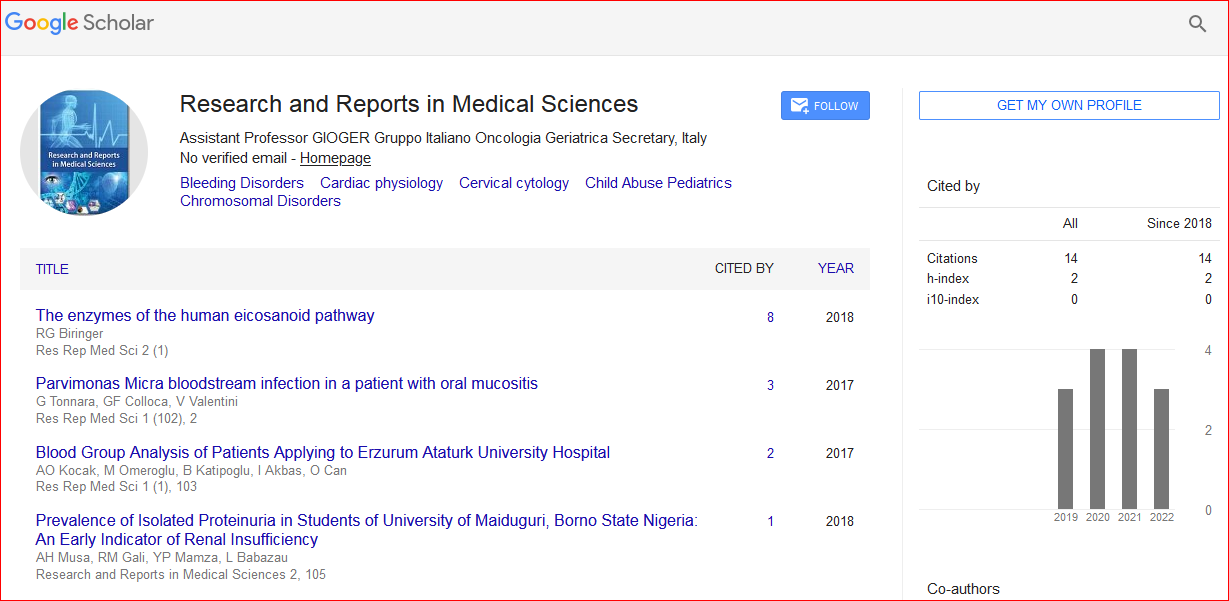
Research and Reports in Medical Sciences received 13 citations as per Google Scholar report