Commentary - (2025) Volume 10, Issue 6
Received: 01-Dec-2025, Manuscript No. jdcm-26-182225;
Editor assigned: 03-Dec-2025, Pre QC No. P-182225;
Reviewed: 17-Dec-2025, QC No. Q-182225;
Revised: 22-Dec-2025, Manuscript No. R-182225;
Published:
29-Dec-2025
, DOI: 10.37421/2475-3211.2025.10.343
Citation: Neumann, Claudia F.. ”CGM: Revolutionizing Diabetes Management And Complication Prevention.” J Diabetic Complications Med 10 (2025):343.
Copyright: © 2025 Neumann F. Claudia This is an open-access article distributed under the terms of the Creative Commons Attribution License, which permits unrestricted use, distribution and reproduction in any medium, provided the original author and source are credited.
Continuous Glucose Monitoring (CGM) has fundamentally transformed diabetes management, offering real-time glucose data that facilitates prompt interventions and significantly reduces glycemic variability. This technological advancement plays a direct role in preventing and better managing long-term diabetic complications, including retinopathy, nephropathy, and neuropathy. By promoting tighter glycemic control and more effectively identifying hypo- and hyperglycemic events, CGM integration with advanced analytics further enhances its preventative capabilities in managing these chronic conditions [1].
The emergence of real-time CGM (rtCGM) systems has provided unparalleled insights into glycemic patterns, empowering individuals with diabetes to make informed decisions regarding their diet, exercise, and medication. This continuous data stream is critical for minimizing exposure to hyperglycemia and hypoglycemia, thereby mitigating the risk and progression of microvascular and macrovascular complications. The increasing accessibility and accuracy of newer CGM devices are contributing to their widespread adoption in complication prevention strategies [2].
Intermittently scanned CGM (isCGM) devices have expanded the accessibility of glucose monitoring, presenting a more affordable and user-friendly alternative. Despite the absence of real-time alerts, the capability to scan and review glucose history empowers individuals to understand their glycemic trends and implement necessary adjustments to avert complications. Research indicates that isCGM use is associated with improved glycemic control and a diminished risk of long-term diabetes-related issues [3].
CGM data offers a comprehensive overview of glucose fluctuations, enabling the identification of specific patterns associated with the development of diabetic retinopathy. By facilitating tighter glycemic control and early detection of problematic trends, CGM plays a crucial role in preventing or slowing the progression of this prevalent complication. Sophisticated algorithms that analyze CGM data can further refine risk stratification and personalize treatment approaches for optimal outcomes [4].
The established link between glycemic control and diabetic nephropathy underscores the importance of effective glucose management. CGM provides a potent tool for achieving and maintaining optimal glucose levels, thereby reducing the strain on the kidneys and preventing or delaying the onset of nephropathy. The capacity to track glucose excursions and comprehend their impact on kidney function is central to developing personalized strategies for complication prevention [5].
Diabetic neuropathy, a frequently debilitating complication, can be managed more effectively and its progression slowed through sustained good glycemic control, which CGM facilitates. By providing detailed data on glucose levels, CGM allows for the early detection of patterns linked to neuropathy development, enabling proactive interventions and lifestyle modifications aimed at preserving nerve health [6].
CGM devices are increasingly incorporated into closed-loop insulin delivery systems, commonly referred to as artificial pancreases. This technological synergy enables automated adjustments to insulin therapy based on real-time glucose readings, leading to markedly improved glycemic control and a significant reduction in the frequency and severity of both hypoglycemia and hyperglycemia. This robust protection is vital against long-term complications [7].
The psychological advantages of CGM are considerable and indirectly contribute to complication prevention. A reduction in diabetes-related distress, enhanced confidence in glucose management, and a better understanding of how lifestyle factors influence blood glucose levels can foster greater adherence to treatment plans and promote healthier behaviors. These factors collectively contribute to a reduced risk of complications [8].
The cost-effectiveness of CGM in preventing long-term diabetic complications is an area of expanding research. While there is an initial investment in CGM technology, studies suggest that this cost can be recuperated through reduced healthcare expenditures associated with managing complications, including hospitalizations, emergency room visits, and treatments for retinopathy, nephropathy, and neuropathy [9].
Future advancements in CGM technology are anticipated to include enhanced predictive analytics, miniaturization of devices, and improved integration with broader wearable health ecosystems. These developments are expected to yield even more sophisticated tools for proactive complication prevention, offering personalized insights and early warnings to individuals managing diabetes [10].
Continuous Glucose Monitoring (CGM) has revolutionized diabetes management by providing real-time glucose data, enabling timely interventions and significantly reducing glycemic variability. This technology directly contributes to the prevention and better management of long-term diabetic complications such as retinopathy, nephropathy, and neuropathy by promoting tighter glycemic control and identifying hypo- and hyperglycemic events more effectively. The integration of CGM with advanced analytics and feedback systems further enhances its role in complication prevention [1].
The advent of real-time CGM (rtCGM) systems offers unprecedented insights into glycemic patterns, allowing individuals with diabetes to make informed decisions about diet, exercise, and medication. This continuous data stream is crucial for minimizing exposure to hyperglycemia and hypoglycemia, thereby mitigating the risk and progression of microvascular and macrovascular complications. The accessibility and accuracy of newer CGM devices are further supporting their widespread adoption in complication prevention strategies [2].
Intermittently scanned CGM (isCGM) devices have broadened the reach of glucose monitoring, offering a more affordable and user-friendly option. Even without real-time alerts, the ability to scan and review glucose history empowers individuals to understand their glycemic trends and make necessary adjustments to prevent complications. Studies indicate that isCGM use is associated with improved glycemic control and a reduced risk of long-term diabetes-related issues [3].
CGM data provides a comprehensive picture of glucose fluctuations, allowing for the identification of specific patterns linked to the development of diabetic retinopathy. By enabling tighter glycemic control and early detection of problematic trends, CGM plays a pivotal role in preventing or slowing the progression of this common complication. Advanced algorithms analyzing CGM data can further refine risk stratification and personalized treatment approaches [4].
The link between glycemic control and diabetic nephropathy is well-established. CGM offers a powerful tool to achieve and maintain optimal glucose levels, thereby reducing the burden on the kidneys and preventing or delaying the onset of nephropathy. The ability to track glucose excursions and understand their impact on kidney function is key to personalized complication prevention strategies [5].
Diabetic neuropathy, a debilitating complication, can be effectively managed and its progression slowed through sustained good glycemic control facilitated by CGM. By providing granular data on glucose levels, CGM allows for the early identification of patterns associated with neuropathy development, enabling proactive interventions and lifestyle modifications that protect nerve health [6].
CGM devices are increasingly integrated into closed-loop insulin delivery systems (artificial pancreas). This synergy of technology allows for automated adjustments to insulin therapy based on real-time glucose readings, leading to significantly improved glycemic control and a marked reduction in the frequency and severity of both hypoglycemia and hyperglycemia, thereby offering robust protection against long-term complications [7].
The psychological benefits of CGM are substantial, contributing indirectly to complication prevention. Reduced diabetes-related distress, increased confidence in glucose management, and a better understanding of how lifestyle factors impact blood glucose can lead to greater adherence to treatment plans and healthier behaviors, ultimately reducing complication risk [8].
The cost-effectiveness of CGM in preventing long-term diabetic complications is a growing area of research. Studies indicate that the initial investment in CGM technology can be offset by reduced healthcare expenditures related to managing complications, such as hospitalizations, emergency room visits, and treatments for retinopathy, nephropathy, and neuropathy [9].
Future directions in CGM technology involve enhanced predictive analytics, miniaturization, and improved integration with wearable health devices. These advancements promise even more sophisticated tools for proactive complication prevention by providing personalized insights and early warnings for individuals with diabetes [10].
Continuous Glucose Monitoring (CGM) has significantly advanced diabetes management by providing real-time glucose data. This technology aids in the prevention and management of long-term complications like retinopathy, nephropathy, and neuropathy through improved glycemic control and identification of glucose excursions. Both real-time (rtCGM) and intermittently scanned (isCGM) systems offer benefits, with rtCGM providing continuous insights and isCGM offering a more accessible option. CGM's ability to track glucose patterns helps in managing specific complications and optimizing kidney and nerve health. Integration with artificial pancreas systems further enhances glycemic control. Beyond physiological benefits, CGM also offers psychological advantages, reducing distress and increasing confidence. While initial costs exist, CGM is becoming more cost-effective by reducing long-term complication-related expenses. Future advancements in CGM technology promise even greater capabilities for proactive complication prevention.
None
None
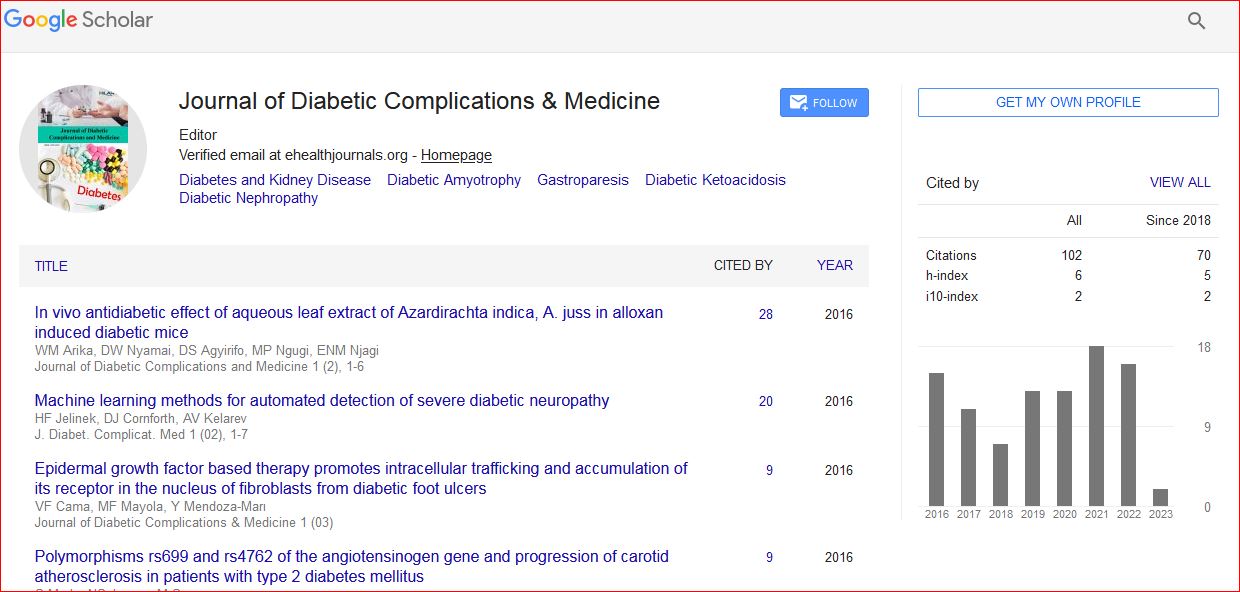
Journal of Diabetic Complications & Medicine received 102 citations as per Google Scholar report