Brief Report - (2025) Volume 9, Issue 6
Received: 01-Dec-2025, Manuscript No. cmcr-25-178325;
Editor assigned: 03-Dec-2025, Pre QC No. P-178325;
Reviewed: 17-Dec-2025, QC No. Q-178325;
Revised: 22-Dec-2025, Manuscript No. R-178325;
Published:
29-Dec-2025
, DOI: 10.37421/2684-4915.2025.9.403
Citation: Wright, Mia. ”CDSS: Driving Smarter Healthcare Decisions and Outcomes.” Clin Med Case Rep 09 (2025):403.
Copyright: © 2025 Wright M. This is an open-access article distributed under the terms of the Creative Commons Attribution License, which permits unrestricted use, distribution and reproduction in any medium, provided the original author and source are credited.
This review explores how clinical decision support systems (CDSS) enhance medication safety. It highlights their critical role in reducing errors in prescribing and dispensing by offering real-time alerts and guidelines. The study emphasizes that for maximum impact on patient outcomes, these systems need to be well-integrated and easy for users to navigate[1].
This systematic review investigates the role of explainable artificial intelligence (XAI) within clinical decision support systems. It discusses various XAI methods designed to boost the transparency and reliability of AI-driven recommendations for clinicians, which is key for their adoption in practice. The review also points out current challenges and future directions for making AI in healthcare more understandable[2].
This scoping review looks at how clinical decision support systems (CDSS) affect the quality of care in different healthcare settings. It brings together evidence on the impact of CDSS across various quality measures, including patient safety, effectiveness, and efficiency. The findings suggest that CDSS can improve care quality, but successful implementation truly depends on how well they are designed and integrated for specific contexts[3].
This systematic review and meta-analysis evaluates how effective clinical decision support systems are in improving diabetes care. It assesses their influence on patient outcomes, blood sugar control, and adherence to clinical guidelines. The analysis shows that CDSS can significantly enhance diabetes management, highlighting their potential for supporting chronic disease care[4].
This systematic review centers on clinical decision support's role in promoting antimicrobial stewardship. It examines how CDSS can guide appropriate antibiotic prescribing, reduce unnecessary use, and help combat antimicrobial resistance. The conclusion is that CDSS are valuable tools for improving prescribing practices, but their design needs to align with specific clinical workflows to be truly effective[5].
This systematic review looks at clinical decision support systems designed for early sepsis detection and management. It evaluates how these systems use patient data to provide timely alerts and recommendations, aiming to improve outcomes for a condition where time is critical, like sepsis. The findings highlight how CDSS can potentially reduce mortality and morbidity by enabling earlier interventions[6].
This systematic review explores artificial intelligence (AI) applications in clinical decision support for critical care. It discusses how AI algorithms can analyze complex patient data to predict critical events, assist with diagnosis, and optimize treatment plans. The review points out both the promise and the hurdles of integrating AI-powered CDSS in intensive care units[7].
This systematic review examines clinical decision support systems used in primary care to manage non-communicable diseases (NCDs). It investigates their impact on improving screening, diagnosis, and long-term care for conditions like hypertension and diabetes. The review suggests that CDSS can help primary care providers deliver more consistent and evidence-based NCD care[8].
This scoping review explores how clinical decision support systems are integrated into telemedicine platforms. It identifies how CDSS can improve virtual consultations by giving remote clinicians relevant patient data, guidelines, and alerts. The review highlights that CDSS are increasingly important for expanding access to quality healthcare through telemedicine[9].
This systematic review investigates the effectiveness of clinical decision support systems in promoting evidence-based prescribing in primary care. It examines how CDSS can guide healthcare providers in choosing appropriate medications, dosages, and monitoring strategies. The review concludes that well-designed CDSS can significantly improve the quality of prescribing and reduce risks related to medication[10].
Clinical decision support systems (CDSS) are transformative tools in modern healthcare. These systems play a critical role in enhancing medication safety, effectively reducing errors in prescribing and dispensing by providing real-time alerts and comprehensive guidelines [1]. For CDSS to truly maximize their impact on patient outcomes, they need to be seamlessly integrated into existing workflows and designed for intuitive user navigation. Beyond medication-specific applications, CDSS profoundly influence the overall quality of care across various healthcare environments [3]. Studies consistently highlight their positive effects on key quality indicators, including patient safety, treatment effectiveness, and operational efficiency. What this really means is that successful CDSS implementation isn't just about technology; it hinges significantly on thoughtful design and appropriate integration for specific clinical contexts.
CDSS demonstrate particular effectiveness in managing chronic conditions. For example, their utility in improving diabetes care is well-documented, showing clear benefits in patient outcomes, blood sugar regulation, and adherence to established clinical guidelines [4]. This underscores their immense potential for robust chronic disease management. Similarly, in time-critical scenarios, CDSS are specifically engineered for early detection and proactive management of acute conditions like sepsis [6]. These systems meticulously analyze patient data, generating timely alerts and crucial recommendations. By enabling earlier interventions, CDSS can substantially reduce mortality and morbidity associated with such conditions.
A core application area for CDSS involves promoting judicious prescribing and antimicrobial stewardship [5]. They offer invaluable guidance for appropriate antibiotic prescribing, actively working to curtail unnecessary use and, in turn, combating the growing threat of antimicrobial resistance. For these tools to achieve peak effectiveness in refining prescribing practices, their underlying design absolutely must align with specific clinical workflows. Here's the thing: CDSS are also pivotal in championing evidence-based prescribing within primary care settings [10]. They equip healthcare providers with the insights needed to select optimal medications, determine correct dosages, and establish robust monitoring strategies, leading to higher quality prescribing and minimized medication-related risks.
The evolution of CDSS increasingly involves advanced technologies like explainable Artificial Intelligence (XAI) [2]. XAI methods are specifically crafted to boost both the transparency and reliability of AI-driven recommendations, a factor absolutely crucial for their widespread adoption by clinicians. While challenges persist, the ongoing focus is on making AI in healthcare more understandable and trustworthy. Concurrently, Artificial Intelligence (AI) applications are being rigorously explored within clinical decision support for critical care [7]. These sophisticated AI algorithms analyze complex patient data to predict critical events, provide diagnostic assistance, and optimize intricate treatment plans. Integrating AI-powered CDSS into intensive care units presents a dual landscape of considerable promise and significant implementation hurdles. Within primary care, CDSS serve a vital function in managing non-communicable diseases (NCDs) [8]. They notably improve screening protocols, diagnostic accuracy, and long-term care for common conditions like hypertension and diabetes, ultimately enabling primary care providers to deliver more consistent, evidence-based NCD management.
Finally, an increasingly important domain for CDSS integration is within telemedicine platforms [9]. This strategic integration substantially enhances virtual consultations by providing remote clinicians with immediate access to relevant patient data, essential guidelines, and timely alerts. The real takeaway here is that CDSS are becoming indispensable for expanding access to quality healthcare through telemedicine, effectively bridging geographical barriers and ensuring consistent care delivery.
Clinical decision support systems (CDSS) significantly enhance medication safety, critically reducing errors in prescribing and dispensing through real-time alerts and guidelines. For optimal patient outcomes, these systems require seamless integration and user-friendly navigation. CDSS notably affect the quality of care in diverse healthcare settings, improving patient safety, effectiveness, and efficiency. Successful implementation hinges on design and contextual integration. CDSS prove effective in improving diabetes care, enhancing patient outcomes, blood sugar control, and adherence to guidelines, underscoring their potential in chronic disease management. They also play a crucial role in promoting antimicrobial stewardship by guiding appropriate antibiotic prescribing, reducing unnecessary use, and combating resistance. Their effectiveness depends on alignment with clinical workflows. Moreover, CDSS are designed for early sepsis detection and management, using patient data for timely alerts and recommendations to reduce mortality and morbidity through earlier interventions. In primary care, CDSS help manage non-communicable diseases (NCDs), improving screening, diagnosis, and long-term care for conditions like hypertension and diabetes, enabling more consistent, evidence-based care. Furthermore, CDSS promote evidence-based prescribing in primary care, guiding healthcare providers in medication choices, dosages, and monitoring strategies, ultimately improving prescribing quality and reducing medication risks. Explainable Artificial Intelligence (XAI) within CDSS boosts transparency and reliability of AI-driven recommendations, crucial for clinician adoption, though challenges remain. Artificial Intelligence (AI) applications in critical care CDSS analyze complex patient data for predicting events, assisting diagnosis, and optimizing treatment, showing promise despite integration hurdles. Finally, CDSS are increasingly important for expanding access to quality healthcare through telemedicine, improving virtual consultations with relevant patient data and alerts.
None
None
Indexed at, Google Scholar, Crossref
Indexed at, Google Scholar, Crossref
Indexed at, Google Scholar, Crossref
Indexed at, Google Scholar, Crossref
Indexed at, Google Scholar, Crossref
Indexed at, Google Scholar, Crossref
Indexed at, Google Scholar, Crossref
Indexed at, Google Scholar, Crossref
Indexed at, Google Scholar, Crossref
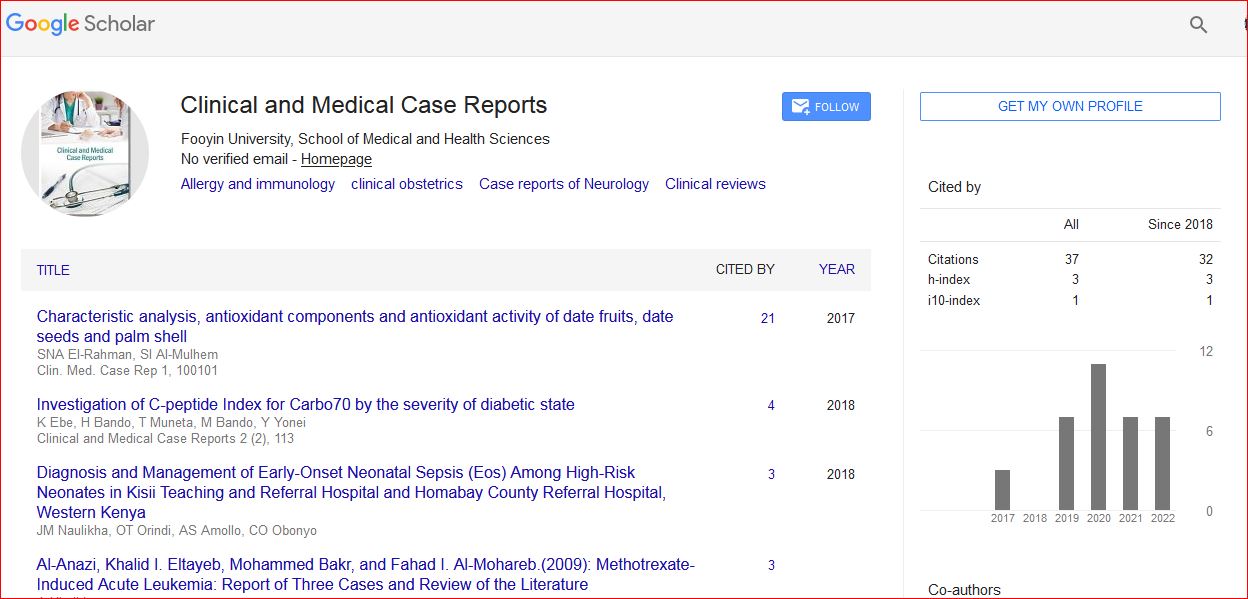
Clinical and Medical Case Reports received 53 citations as per Google Scholar report