Perspective - (2025) Volume 16, Issue 5
Received: 01-Oct-2025, Manuscript No. jvst-26-188126;
Editor assigned: 03-Oct-2025, Pre QC No. P-188126;
Reviewed: 17-Oct-2025, QC No. Q-188126;
Revised: 22-Oct-2025, Manuscript No. R-188126;
Published:
29-Oct-2025
, DOI: 10.37421/2157-7579.2025.16.320
Citation: Abdullahi, Bashir. ”Advancing Animal Welfare Through
Science and Ethics.” J Vet Sci Techno 16 (2025):320.
Copyright: © 2025 Abdullahi B. This is an open-access article distributed under the terms of the Creative Commons Attribution License, which permits unrestricted use,
distribution and reproduction in any medium, provided the original author and source are credited.
The field of veterinary science and technology is undergoing rapid advancements aimed at significantly enhancing animal welfare across a diverse range of species. These developments span innovative diagnostic tools, sophisticated therapeutic interventions, and refined management strategies, all contributing to improved animal health, reduced suffering, and a better quality of life. A significant emphasis is placed on the integration of modern technological solutions for precise monitoring, early disease detection, and tailored care, which ultimately benefits not only the animals themselves but also strengthens the human-animal bond [1].
Within the realm of animal research, the impact of environmental enrichment on laboratory rodents has been a critical area of investigation. Studies have meticulously examined behavioral, physiological, and immunological indicators to ascertain the benefits of tailored enrichment programs. The findings consistently demonstrate a substantial reduction in stress responses and an overall improvement in well-being, underscoring the importance of scientifically informed enrichment strategies to uphold the highest welfare standards in research settings [2].
The application of advanced sensor technologies is revolutionizing the monitoring of livestock welfare, providing real-time insights into animal well-being. Wearable devices and sophisticated environmental sensors collect crucial data on animal activity levels, physiological status, and social interactions. This continuous stream of information allows for the prompt identification of distress signals, early signs of disease, and suboptimal living conditions, thereby enabling timely veterinary interventions and enhancing farm management practices [3].
Improving the welfare of companion animals hinges significantly on the effective assessment of pain. Research dedicated to the development and validation of pain assessment tools for various species and conditions offers veterinarians practical and reliable guidance for accurately diagnosing and managing pain. This meticulous approach to pain evaluation is paramount for ensuring humane treatment, promoting effective recovery, and ultimately enhancing the overall well-being of pets [4].
Ethical considerations form a fundamental pillar of contemporary veterinary practice, with a growing focus on advocating for animal welfare. Veterinarians are increasingly tasked with balancing the needs of clients with the interests of the animals under their care, navigating complex ethical dilemmas with professionalism and empathy. Continuous professional development in ethical decision-making is crucial for elevating the standard of animal care and ensuring responsible practice [5].
Handling techniques employed in the care of farm animals have a profound impact on their welfare. Research evaluating different methods of restraint and movement in livestock has provided critical insights into their effects on stress hormones, behavior, and the incidence of injuries. The outcomes of such studies offer evidence-based recommendations for implementing humane handling practices that minimize fear and distress during essential routine procedures [6].
Precision livestock farming technologies are increasingly being leveraged to proactively ensure the welfare of animals within commercial settings. By utilizing data-driven approaches, including sophisticated automated monitoring systems and artificial intelligence, these technologies optimize critical aspects of animal husbandry such as feeding, housing, and health management. This allows for the welfare of individual animals within larger herds and flocks to be more effectively monitored and managed [7].
Transportation can present significant welfare challenges for companion animals, particularly during rehoming processes. Research in this area meticulously assesses the effects of varying transport durations, environmental conditions, and handling methodologies on animal stress levels and behavioral responses. The findings contribute to the development of essential guidelines aimed at minimizing transport-related stress and safeguarding the well-being of animals as they transition to new homes [8].
Telemedicine is emerging as a valuable tool in veterinary practice, extending the reach and capabilities of animal welfare support. Through remote consultations, diagnostic assistance, and continuous monitoring, telemedicine can facilitate timely interventions for animal health issues, especially in geographically underserved areas. This innovative approach holds substantial potential for improving access to veterinary care and consequently enhancing overall welfare outcomes [9].
Veterinary behaviorists play a crucial role in addressing complex animal welfare concerns related to behavioral problems. Their specialized expertise encompasses diagnostic and therapeutic approaches to manage issues such as anxiety, aggression, and phobias across a wide range of animal species. The study and application of this specialized knowledge are vital for resolving behavioral challenges that significantly compromise an animal's quality of life and welfare [10].
The evolution of veterinary science and technology is critically important for advancing animal welfare, encompassing improvements in diagnostics, therapeutics, and management. The integration of technology facilitates monitoring, early disease detection, and precision care, benefiting animals and strengthening human-animal interactions [1].
Environmental enrichment has been shown to significantly improve the welfare of laboratory rodents. Behavioral, physiological, and immunological indicators confirm that tailored enrichment reduces stress and enhances overall well-being, supporting the implementation of best practices in animal research settings [2].
Sensor technologies are transforming livestock welfare monitoring by providing real-time data on animal activity, physiology, and social behavior. This enables early detection of distress and disease, allowing for timely interventions and improved farm management [3].
The development and validation of pain assessment tools are essential for improving the welfare of companion animals. These tools provide veterinarians with reliable methods for diagnosing and managing pain, ensuring humane treatment and supporting recovery [4].
Ethical frameworks in veterinary practice are increasingly focused on animal welfare advocacy. Veterinarians must navigate the balance between client needs and animal interests, with ongoing professional development in ethical decision-making being paramount for high-quality animal care [5].
Research into handling techniques for farm animals provides evidence-based recommendations for minimizing stress and injury. Evaluating different restraint and movement methods helps to reduce fear and distress during routine procedures [6].
Precision livestock farming employs data-driven approaches, including automated monitoring and AI, to optimize feeding, housing, and health management. This proactive strategy ensures the welfare of individual animals within larger populations [7].
Companion animal transport, especially during rehoming, poses welfare challenges. Studies assess the impact of transport conditions and handling on stress levels, offering guidelines to minimize adverse effects and promote well-being during transitions [8].
Telemedicine in veterinary practice expands access to care and improves animal welfare. Remote consultations and monitoring enable timely interventions, particularly in underserved areas, and facilitate better health management [9].
Veterinary behaviorists specialize in diagnosing and managing behavioral disorders that compromise animal welfare. Their expertise is crucial for addressing issues like anxiety and aggression, thereby enhancing the quality of life for affected animals [10].
This collection of research highlights the significant advancements in veterinary science and technology aimed at improving animal welfare. Key areas include the application of technology for monitoring and diagnostics in various animal settings, from companion animals to livestock. Studies emphasize the importance of environmental enrichment, effective pain assessment, and humane handling techniques to reduce stress and suffering. Ethical considerations are increasingly integrated into veterinary practice, guiding decisions that prioritize animal well-being. Furthermore, emerging fields like precision livestock farming and telemedicine are expanding the capacity for proactive welfare management and accessible veterinary care. The contributions of veterinary behaviorists are also recognized for their role in addressing complex behavioral issues that impact animal quality of life. Collectively, these efforts underscore a comprehensive approach to ensuring and enhancing animal welfare through scientific innovation and ethical practice.
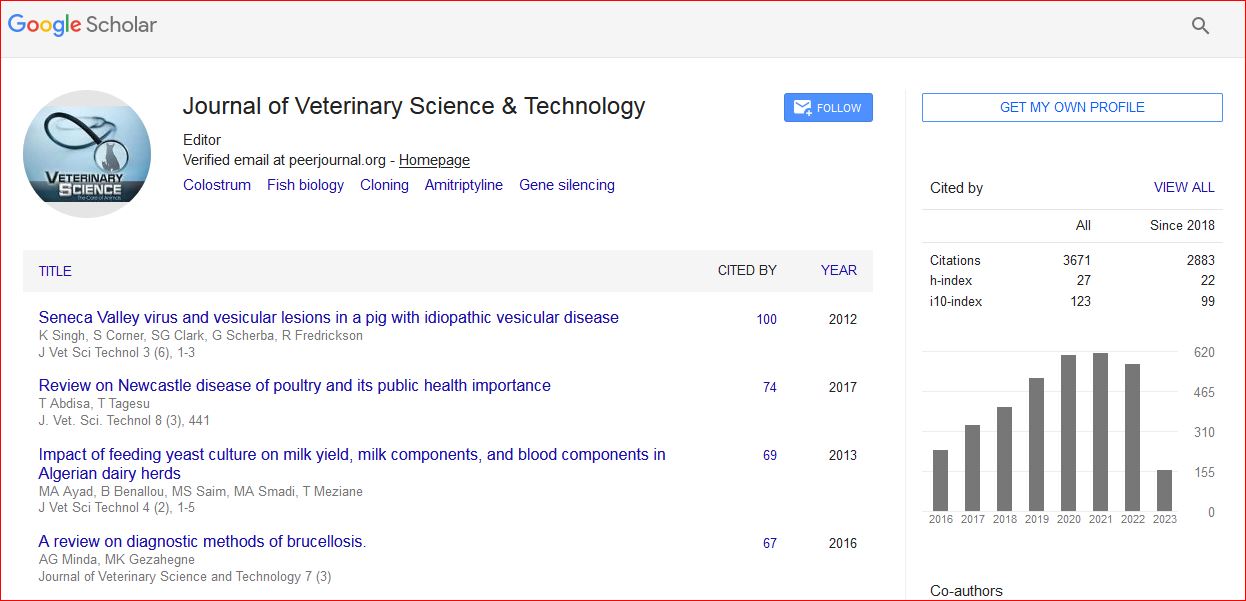
Veterinary Science & Technology received 4472 citations as per Google Scholar report