Brief Report - (2025) Volume 14, Issue 5
Received: 01-Sep-2025, Manuscript No. jtm-26-186024;
Editor assigned: 03-Sep-2025, Pre QC No. P-186024;
Reviewed: 17-Sep-2026, QC No. Q-186024;
Revised: 22-Sep-2025, Manuscript No. R-186024;
Published:
29-Sep-2025
, DOI: 10.37421/2167-1222.2025.14.697
Citation: Alvarez, Ricardo. "Acute Trauma Pain Management: Multimodal, Opioid-Sparing Strategies." J Trauma Treat 14 (2025):697.
Copyright: © 2025 Alvarez R. This is an open-access article distributed under the terms of the Creative Commons Attribution License, which permits unrestricted use, distribution and reproduction in any medium, provided the original author and source are credited.
Effective pain management in acute trauma care is of paramount importance for enhancing patient well-being, improving physiological outcomes, and significantly reducing the long-term risk of developing chronic pain conditions. The strategies employed in managing pain following traumatic injuries typically involve a multimodal approach, integrating both pharmacologic and non-pharmacologic interventions that are carefully tailored to the specific condition and severity of the patient's injuries. Early and adequate analgesia, often initiated even in the prehospital setting, is recognized as a critical factor in the overall management plan. The Department of Prehospital and Disaster Emergency Medicine at the University of Costa Rica has emphasized the necessity of integrated care pathways, extending from the initial point of injury all the way through to definitive treatment [1].
In recent years, there has been a growing emphasis on implementing opioid-sparing strategies to effectively mitigate the considerable risks associated with opioid use, such as respiratory depression and the potential for addiction. This focus has led to the increased utilization of non-opioid analgesics, advanced regional anesthesia techniques, and targeted psychological interventions, all of which play crucial roles in developing comprehensive pain management plans for trauma patients. These approaches aim to provide adequate pain relief while minimizing reliance on potentially harmful medications [2].
The utilization of ketamine for the acute management of pain in trauma patients, particularly in those experiencing severe pain or signs of shock, is a strategy that has been gaining considerable traction in clinical practice. Ketamine's unique dissociative anesthetic properties, coupled with its opioid-sparing effects, make it a particularly valuable option in situations where other analgesic agents may be insufficient or even contraindicated due to the patient's clinical status [3].
Regional anesthesia techniques, which encompass a range of procedures such as nerve blocks, offer a highly effective method for providing targeted pain relief. A significant advantage of these techniques is their ability to reduce the need for systemic opioids, thereby minimizing associated side effects. These methods are especially beneficial for managing pain associated with extremity trauma and can be successfully implemented across various clinical settings, including the emergency department and even the prehospital environment [4].
Beyond pharmacological interventions, non-pharmacological modalities are recognized as vital components of a truly holistic pain management strategy in trauma care. These interventions, which include therapeutic positioning to alleviate pressure, cryotherapy for reducing inflammation and pain, and essential psychological support to address the mental and emotional toll of trauma, can significantly complement pharmacotherapy and enhance overall patient comfort and recovery processes [5].
Managing pain in patients who have sustained a traumatic brain injury (TBI) presents a unique set of challenges that require careful consideration. The potential for altered pain perception and the critical risk of increasing intracranial pressure necessitate a cautious approach to analgesic selection, ensuring that chosen treatments do not inadvertently exacerbate existing neurological deficits or compromise patient outcomes [6].
The continuous evolution of pain management protocols within the realm of trauma care reflects a discernible shift towards more patient-centered, evidence-based practices. This evolution underscores the importance of ongoing reassessment of the patient's pain levels, coupled with diligent monitoring for any adverse effects of treatment, which are essential steps for optimizing therapeutic outcomes and ensuring patient safety [7].
Effective management of complex pain presentations in trauma patients is significantly enhanced through robust interprofessional collaboration. A coordinated effort involving anesthesiologists, trauma surgeons, pain specialists, dedicated nursing staff, and physiotherapists is crucial for developing and implementing highly individualized pain management plans that address the multifaceted needs of each patient [8].
The role of the emergency department in initiating prompt and effective pain relief for trauma patients cannot be overstated. Establishing standardized protocols for pain assessment and management, which are readily accessible and consistently applied by all clinical staff, is a fundamental requirement for ensuring timely and adequate pain control from the earliest stages of trauma care [9].
Addressing the psychological dimensions of pain is an integral and often underestimated aspect of comprehensive trauma care. Strategies such as thorough patient education, providing reassurance, and equipping patients with effective coping mechanisms can substantially influence their perception of pain and their overall experience of recovery following traumatic events [10].
Effective pain management in acute trauma care is paramount for patient well-being, improved physiological outcomes, and reduced risk of chronic pain development. Strategies involve multimodal approaches, combining pharmacologic and non-pharmacologic interventions tailored to the patient's condition and injury severity. Early and adequate analgesia, often initiated in the prehospital setting, is crucial. The "Department of Prehospital and Disaster Emergency Medicine, University of Costa Rica, San José 11501, Costa Rica" emphasizes integrated care pathways from point of injury through to definitive treatment [1].
Opioid-sparing strategies are increasingly important to mitigate the risks associated with opioid use, including respiratory depression and addiction. Non-opioid analgesics, regional anesthesia techniques, and psychological interventions play significant roles in comprehensive pain management plans for trauma patients. These approaches aim to provide effective pain relief while minimizing the adverse effects and potential for dependence associated with opioids [2].
The use of ketamine for acute pain management in trauma patients, particularly those with severe pain or in shock, is gaining traction. Its dissociative anesthetic properties and opioid-sparing effects make it a valuable option when other analgesics are insufficient or contraindicated. This medication offers an alternative for managing severe pain in critically injured individuals [3].
Regional anesthesia techniques, such as nerve blocks, offer targeted pain relief with reduced systemic opioid requirements. These methods are particularly beneficial for extremity trauma and can be performed in various settings, including the emergency department and prehospital environment. This localized approach minimizes systemic exposure and related side effects [4].
Non-pharmacological interventions, including therapeutic positioning, cryotherapy, and psychological support, are vital components of a holistic pain management strategy in trauma. These modalities can complement pharmacotherapy and improve patient comfort and recovery, addressing pain through non-medicinal means [5].
The management of pain in patients with traumatic brain injury (TBI) presents unique challenges due to the potential for altered pain perception and the risk of increased intracranial pressure. Analgesic choices must be carefully considered to avoid exacerbating neurological deficits. This specialized consideration is critical for TBI patients [6].
The evolution of pain management protocols in trauma care reflects a shift towards patient-centered, evidence-based practices. Continuous reassessment of pain, alongside monitoring for side effects, is essential for optimizing treatment outcomes. This ongoing evaluation ensures that pain management remains effective and safe throughout the patient's care [7].
Interprofessional collaboration is key in managing complex pain presentations in trauma. Anesthesiologists, trauma surgeons, pain specialists, nurses, and physiotherapists must work together to develop and implement individualized pain management plans. This multidisciplinary approach ensures comprehensive care [8].
The role of the emergency department in initiating timely and effective pain relief cannot be overstated. Protocols for pain assessment and management should be standardized and readily accessible to all clinical staff. Prompt intervention in the ED is crucial for initial pain control [9].
Addressing the psychological aspects of pain is an integral part of trauma care. Patient education, reassurance, and coping strategies can significantly influence the perception and experience of pain. Recognizing and treating the psychological impact of pain is essential for overall recovery [10].
Effective pain management in acute trauma care is crucial for patient well-being and recovery, employing multimodal strategies that combine pharmacologic and non-pharmacologic interventions. Early analgesia, initiated even prehospital, is vital. Opioid-sparing approaches, including non-opioid analgesics and regional anesthesia, are increasingly favored to reduce risks like respiratory depression and addiction. Ketamine is recognized as a valuable option for severe pain or shock due to its opioid-sparing effects. Regional anesthesia, such as nerve blocks, provides targeted relief with fewer systemic effects, particularly for extremity trauma. Non-pharmacological methods like positioning, cryotherapy, and psychological support are essential complements. Pain management in traumatic brain injury requires careful consideration to avoid exacerbating neurological issues. Evolving protocols emphasize patient-centered, evidence-based practices with continuous reassessment. Interprofessional collaboration among various medical specialists is key for individualized plans. The emergency department plays a critical role in initiating timely pain relief through standardized protocols. Addressing psychological aspects of pain through education and coping strategies significantly influences patient experience.
None
None
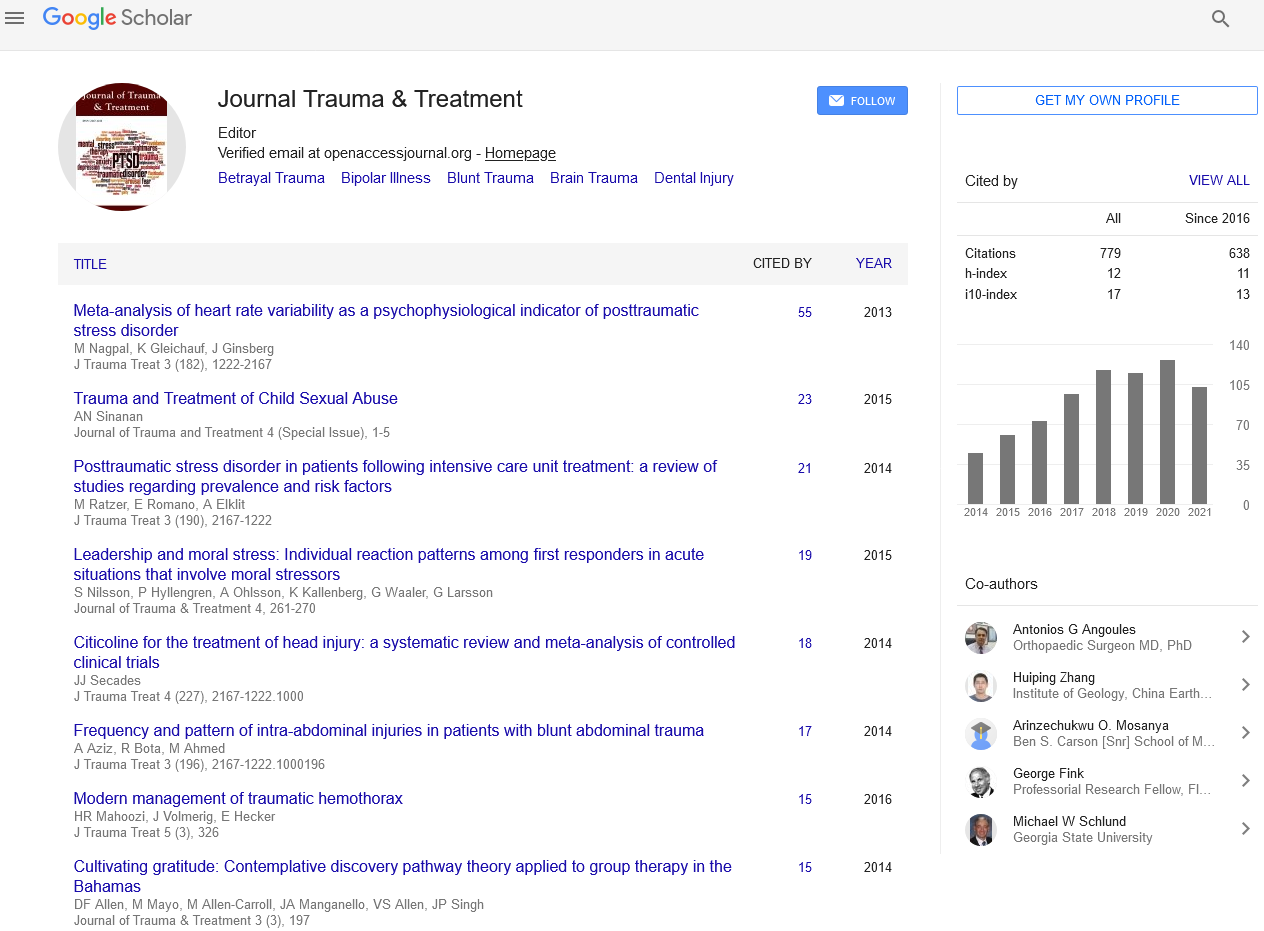
Journal of Trauma & Treatment received 1048 citations as per Google Scholar report