The use of the combination of cells, engineering, and materials methods is called tissue engineering. It involves suitable biochemical and physicochemical factors to improve or replace the biological tissues. Tissue engineering uses the tissue scaffold for the formation of new viable tissue which is intended for a medical purpose. Several applications for the tissue engineering includes organ transplantation such as skin Transplantations, kidney Transplantations, liver Transplantations. The main application of tissue engineering is to congregate functional constructs that restore, maintain, or to improve damaged tissues or whole organs. Artificial skin and cartilage are one of the examples for engineered tissues. New findings in tissue engineering includes 3D bioprinting for tissue engineering, Biomaterials enhancing the therapeutic efficacy of stem cells, Stem cells engineered with nanomaterials
Young Research Forum: Journal of Tissue Science and Engineering
Young Research Forum: Journal of Tissue Science and Engineering
Review Article: Journal of Tissue Science and Engineering
Review Article: Journal of Tissue Science and Engineering
Review Article: Journal of Tissue Science and Engineering
Review Article: Journal of Tissue Science and Engineering
Editorial: Journal of Tissue Science and Engineering
Editorial: Journal of Tissue Science and Engineering
Editorial: Journal of Tissue Science and Engineering
Editorial: Journal of Tissue Science and Engineering
Posters: Molecular Biomarkers & Diagnosis
Posters & Accepted Abstracts: Journal of Tissue Science and Engineering
Posters & Accepted Abstracts: Journal of Tissue Science and Engineering
Scientific Tracks Abstracts: Journal of Tissue Science and Engineering
Scientific Tracks Abstracts: Journal of Tissue Science and Engineering
Posters & Accepted Abstracts: Metabolomics:Open Access
Posters & Accepted Abstracts: Metabolomics:Open Access
Accepted Abstracts: Metabolomics:Open Access
Accepted Abstracts: Metabolomics:Open Access
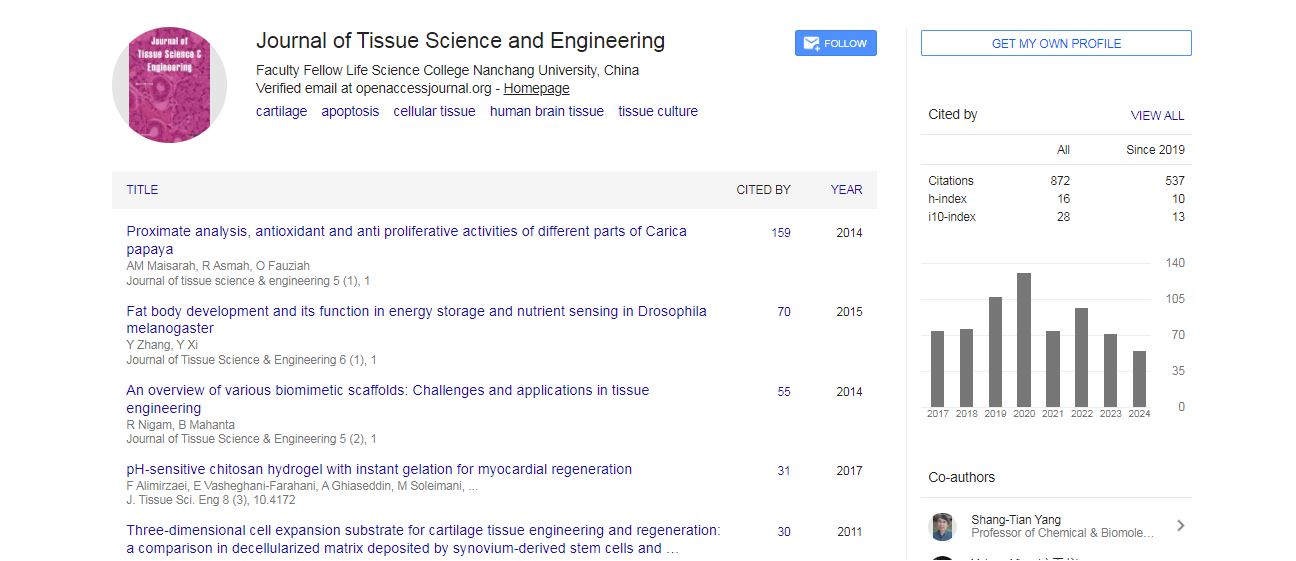
Journal of Tissue Science and Engineering received 807 citations as per Google Scholar report


 Spanish
  Chinese
  Russian
  German
  French
  Japanese
  Portuguese
  Hindi
Hindi 