Interstitial lung disease (ILD) is an umbrella term used for a large group of diseases that cause scarring (fibrosis) of the lungs. The scarring causes stiffness in the lungs which makes it difficult to breathe and get oxygen to the bloodstream. Interstitial lung disease may be caused by long-term exposure to hazardous materials, such as asbestos or coal dust, or it can be caused by an auto-immune disease such as rheumatoid arthritis. Once lung scarring occurs, it's generally irreversible. Symptoms include a dry cough. Shortness of breath can occur either at rest or after exertion. Treatment depends on the underlying cause but often includes steroids.
Research Article: Pulmonary & Respiratory Medicine
Research Article: Pulmonary & Respiratory Medicine
Short Communication: Pulmonary & Respiratory Medicine
Short Communication: Pulmonary & Respiratory Medicine
Case Report: Pulmonary & Respiratory Medicine
Case Report: Pulmonary & Respiratory Medicine
Case Report: Pulmonary & Respiratory Medicine
Case Report: Pulmonary & Respiratory Medicine
Case Report: Pulmonary & Respiratory Medicine
Case Report: Pulmonary & Respiratory Medicine
Posters & Accepted Abstracts: Cancer Science & Therapy
Posters & Accepted Abstracts: Cancer Science & Therapy
Scientific Tracks Abstracts: Cancer Science & Therapy
Scientific Tracks Abstracts: Cancer Science & Therapy
Scientific Tracks Abstracts: Cancer Science & Therapy
Scientific Tracks Abstracts: Cancer Science & Therapy
Scientific Tracks Abstracts: Journal of Forensic Research
Scientific Tracks Abstracts: Journal of Forensic Research
Scientific Tracks Abstracts: Journal of Nephrology & Therapeutics
Scientific Tracks Abstracts: Journal of Nephrology & Therapeutics
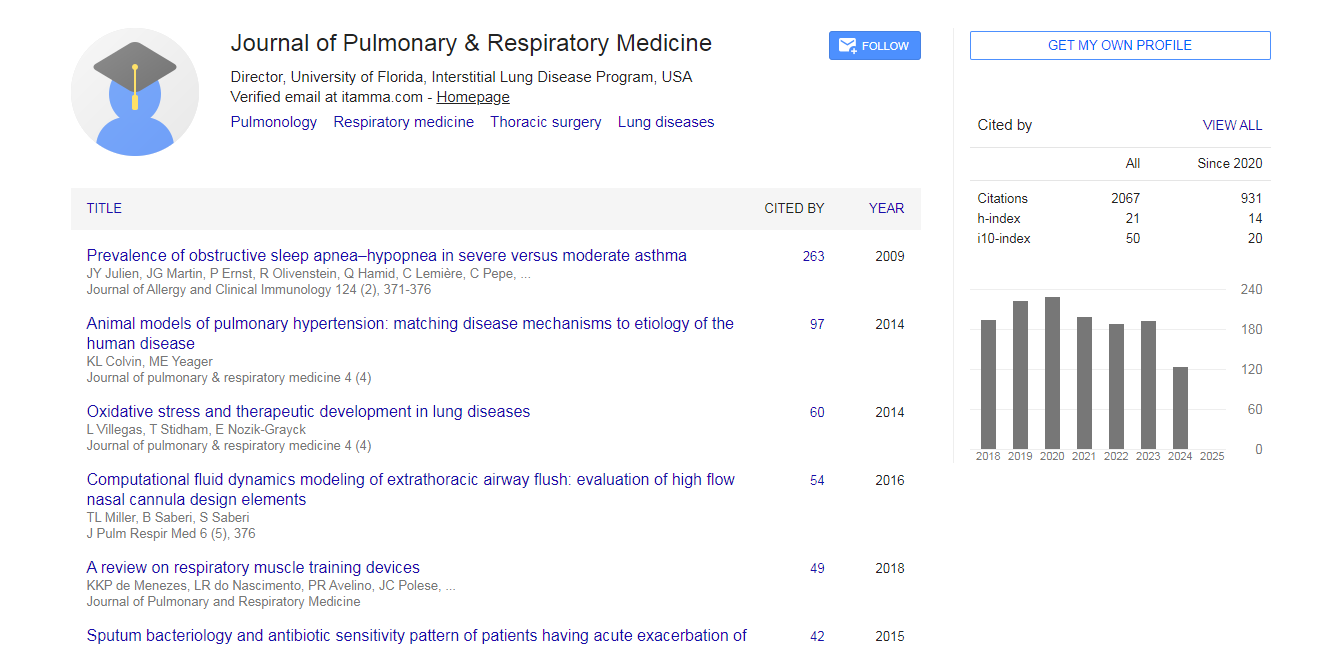
Pulmonary & Respiratory Medicine received 1690 citations as per Google Scholar report
 Spanish
  Chinese
  Russian
  German
  French
  Japanese
  Portuguese
  Hindi
Hindi 