Breast cancer is the most common form of cancer and the second leading cause of death from neoplastic disease in women. One in eight women will develop breast cancer in her lifetime in the developed world. There are a number of recognized risk factors for the development of breast cancer, including hormonal, reproductive and menstrual history, age, lack of exercise, alcohol, radiation, mild breast disease and obesity. However, the key factor in the development of breast cancer is the early onset of the disease. Individual risk increases proportionally with family members with breast cancer and an early age of onset. Although about 10% to 30% of breast cancer cases are attributed to hereditary factors, only 5% to 10% of breast cancer cases are identified as having a strong hereditary component, while only a small fraction of these cases (4% to 5%) are explained by mutations in genes with strong penetrating power transmitted in an autosomal dominant manner
Research Article: Cancer Science & Therapy
Research Article: Cancer Science & Therapy
Research Article: Cancer Science & Therapy
Research Article: Cancer Science & Therapy
Research Article: Cancer Science & Therapy
Research Article: Cancer Science & Therapy
Editorial: Cancer Science & Therapy
Editorial: Cancer Science & Therapy
Review Article: Cancer Science & Therapy
Review Article: Cancer Science & Therapy
Posters & Accepted Abstracts: Cancer Science & Therapy
Posters & Accepted Abstracts: Cancer Science & Therapy
Posters & Accepted Abstracts: Cancer Science & Therapy
Posters & Accepted Abstracts: Cancer Science & Therapy
Scientific Tracks Abstracts: Cancer Science & Therapy
Scientific Tracks Abstracts: Cancer Science & Therapy
Scientific Tracks Abstracts: Cancer Science & Therapy
Scientific Tracks Abstracts: Cancer Science & Therapy
ScientificTracks Abstracts-Workshop: Cancer Science & Therapy
ScientificTracks Abstracts-Workshop: Cancer Science & Therapy
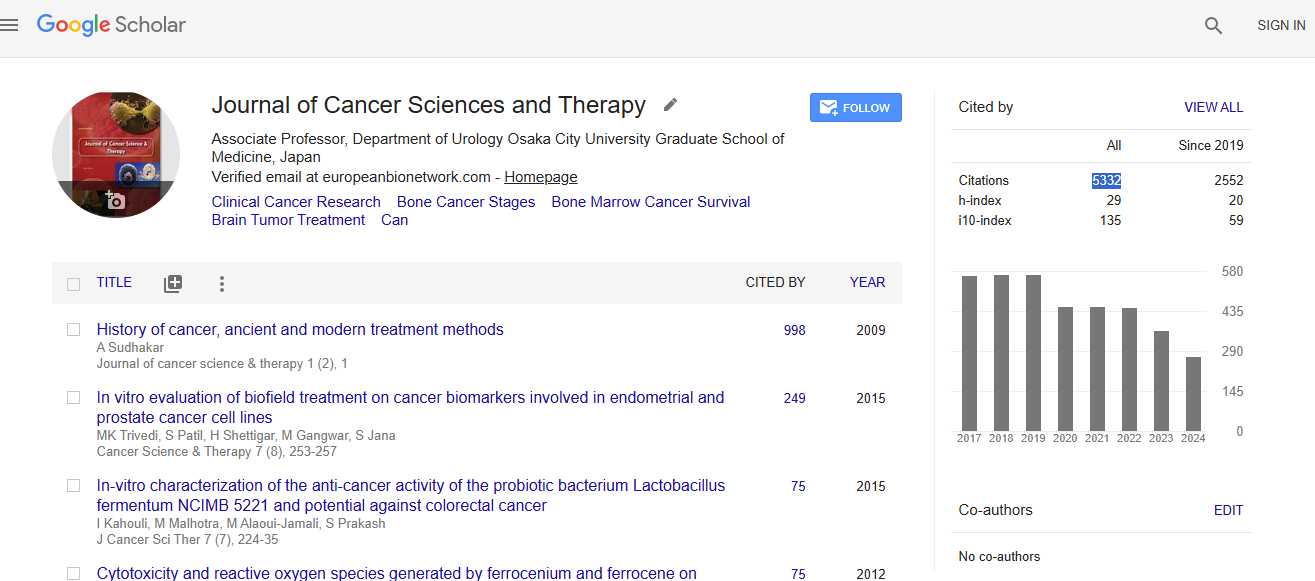
Cancer Science & Therapy received 5332 citations as per Google Scholar report
 Spanish
  Chinese
  Russian
  German
  French
  Japanese
  Portuguese
  Hindi
Hindi 