Cancer is a broad term. It describes the disease that occurs when cell changes cause uncontrolled cell growth and division. Some types of cancer cause rapid cell growth, while others cause cell growth and division at a slower rate. Some forms of cancer cause visible growth called tumors, while others, such as leukemia, do not. Most cells in the body have specific functions and a fixed lifespan. While this may sound like a bad thing, cell death is part of a natural and beneficial phenomenon called apoptosis. A cell is instructed to die so that the body can replace it with a newer, better-functioning cell. Cancer cells lack the components that tell them to stop dividing and die. As a result, they accumulate in the body, using oxygen and nutrients that would generally feed other cells. Cancer cells can form tumors, alter the immune system, and cause other changes that keep the body from working properly.
Research Article: Cancer Science & Therapy
Research Article: Cancer Science & Therapy
Research Article: Cancer Science & Therapy
Research Article: Cancer Science & Therapy
Case Report: Cancer Science & Therapy
Case Report: Cancer Science & Therapy
Review Article: Cancer Science & Therapy
Review Article: Cancer Science & Therapy
Research Article: Cancer Science & Therapy
Research Article: Cancer Science & Therapy
Scientific Tracks Abstracts: Cancer Science & Therapy
Scientific Tracks Abstracts: Cancer Science & Therapy
Keynote: Cancer Science & Therapy
Keynote: Cancer Science & Therapy
Posters: Alternative & Integrative Medicine
Posters: Alternative & Integrative Medicine
Keynote: Journal of Surgery
Keynote: Journal of Surgery
Keynote: Journal of Nephrology & Therapeutics
Keynote: Journal of Nephrology & Therapeutics
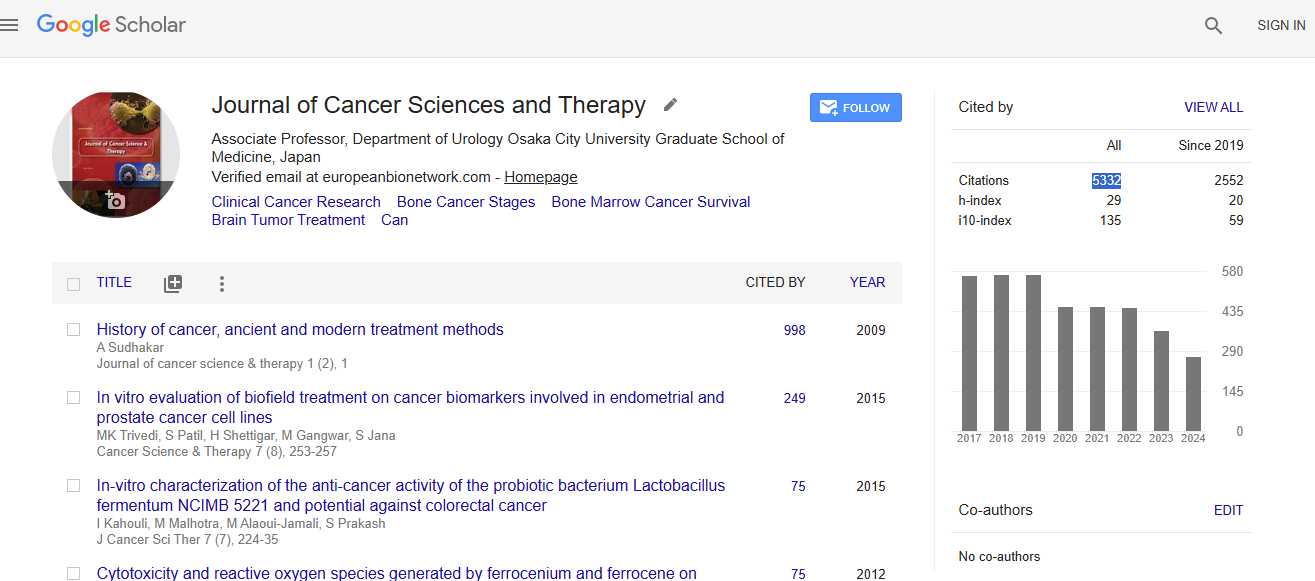
Cancer Science & Therapy received 5332 citations as per Google Scholar report
 Spanish
  Chinese
  Russian
  German
  French
  Japanese
  Portuguese
  Hindi
Hindi 