Over 20 species of Angiostrongylus have been described worldwide, but only Angiostrongylus cantonensis has been confirmed to cause central nervous system disease in humans. A neurotropic parasite that develop in the pulmonary arteries of rats, A. cantonensis is the most common cause of eosinophilic meningitis in South Asia and the Pacific and Caribbean islands. The parasite can also cause encephalitis / encephalomyelitis and rarely ocular angiostrongylosis. This article reviews the life cycle, epidemiology, pathogenesis, clinical features, diagnosis, treatment, prevention and prognosis of A. cantonesis infection. The focus is on the spectrum of manifestations of the central nervous system and the pathogenesis of the disease.
Scientific Tracks Abstracts: Journal of AIDS & Clinical Research
Scientific Tracks Abstracts: Journal of AIDS & Clinical Research
Posters & Accepted Abstracts: Journal of AIDS & Clinical Research
Posters & Accepted Abstracts: Journal of AIDS & Clinical Research
Posters & Accepted Abstracts: Journal of Advanced Practices in Nursing
Posters & Accepted Abstracts: Journal of Advanced Practices in Nursing
Scientific Tracks Abstracts: Journal of Cosmetology & Trichology
Scientific Tracks Abstracts: Journal of Cosmetology & Trichology
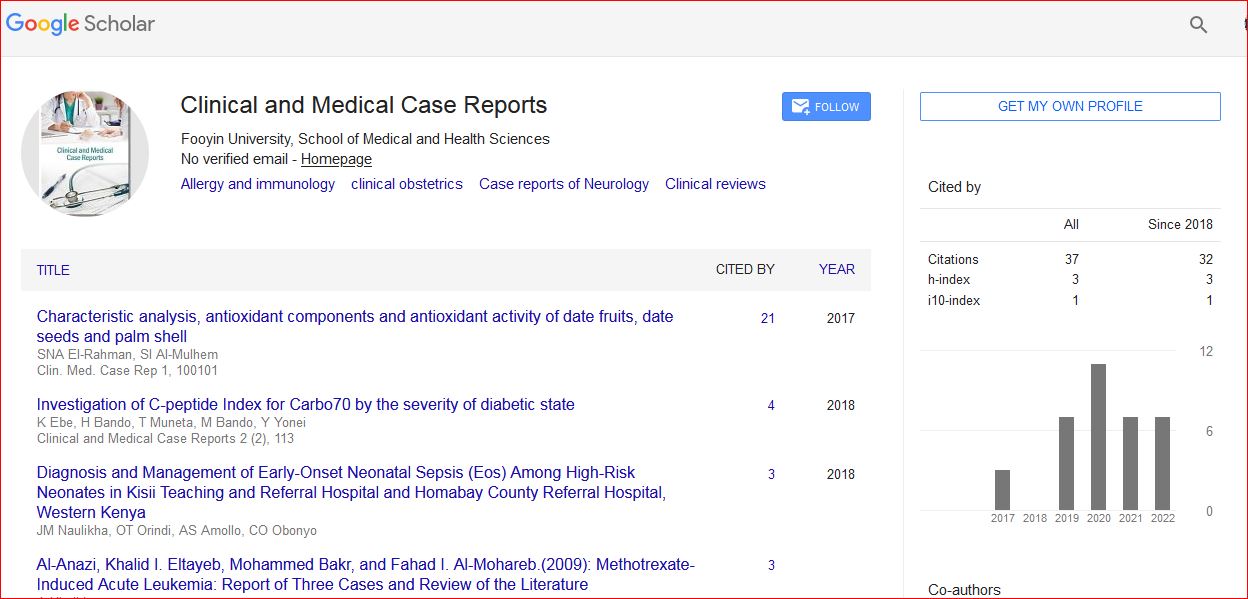
Clinical and Medical Case Reports received 53 citations as per Google Scholar report

 Spanish
  Chinese
  Russian
  German
  French
  Japanese
  Portuguese
  Hindi
Hindi 