David Lamb, Graham Lunn, Mark O Reilly, Cheryl Butler and Iain Kilty
Class 1 PI3Ks are a growing area of interest as pharmacological targets across a number of disease mechanisms. We have assessed the feasibility of developing selective PI3Kgamma inhibitors based upon the ATP-binding hinge site. Following full file screening, 8800 analogues representing 25 chemotypes were further analysed across a panel of PI3K enzymes and cellular assays. Despite this we did not identify a series of compounds which possessed all required criteria of potency, selectivity, metabolic stability and solubility. We profiled the best 3 compounds in vivo to assess their anti-inflammatory efficacy versus PI3Kalpha driven perturbations in glucose/insulin homeostasis. Each compound dose-dependently inhibited LPS elicited pulmonary neutrophilia in rat with a marginal therapeutic index over a subsequent increase in glucose and insulin elevation. In our opinion these studies provide no evidence of a divergence from enzyme selectivity to an in vivo therapeutic index over insulin and glucose perturbations and therefore there is no evidence to suggest ATP competitive hinge binding site PI3Kgamma inhibitors will afford sufficient in vivo TI worthy of clinical progression for inflammatory indications.
PDFShare this article
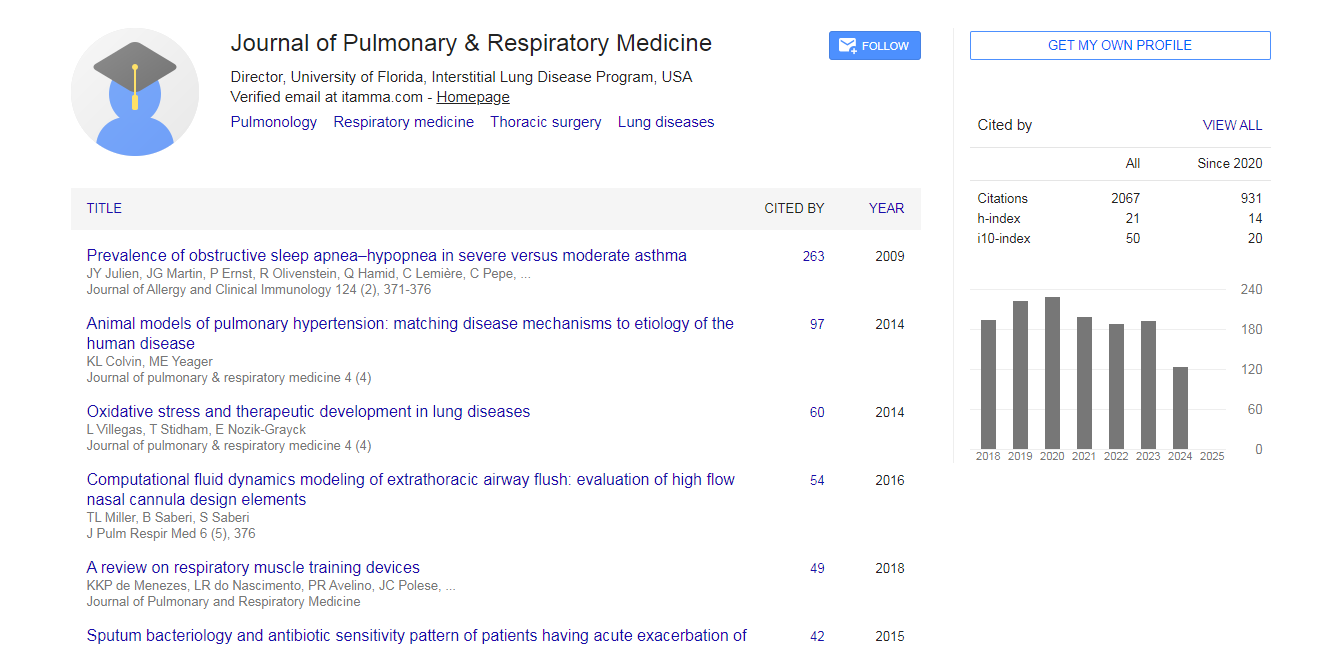
Pulmonary & Respiratory Medicine received 1690 citations as per Google Scholar report