Charydan Ramos*, Danielle Kristy Regis, Marianne Danielle Ricaplaza, Jehan Romero and Zarina Mae Tamondong
Background: Digital medical markets have enhanced medicine availability while increasing the risk of counterfeit pharmaceuticals, endangering patient safety and public health. Block-chain and digital authentication technologies offer solutions, but limitations in implementation and regulations underscore the need for stricter security measures.
Objective: This scoping review investigates counterfeit pharmaceutical prevalence, verification techniques, and legal and technical strategies for ensuring medicine authenticity in online markets. The findings seek to help healthcare practitioners, legislators, and researchers improve medication safety and trust among patients.
Design: A scoping review employing the PRISMA 2020 methodology will conduct searches in PubMed, Cochrane, Elsevier, and Google Scholar (2019-2024) using keywords and Boolean operators. Screening will be based on predetermined criteria, emphasizing counterfeit medications, verification, legal frameworks, and technical approaches. Results: Eighteen (18) studies found ongoing counterfeit drug risks, regulatory framework gaps, and verification technology limitations. The findings emphasize the need for more competitive regulations, enhanced authentication mechanisms, and further study to ensure secure online pharmaceutical transactions.
Conclusion: While digital pharmacy purchases are convenient, counterfeit pharmaceuticals remain a significant problem. Authentication systems demonstrate promise, but more study and stricter regulations are required to safeguard customers and assure drug legitimacy.
PDFShare this article
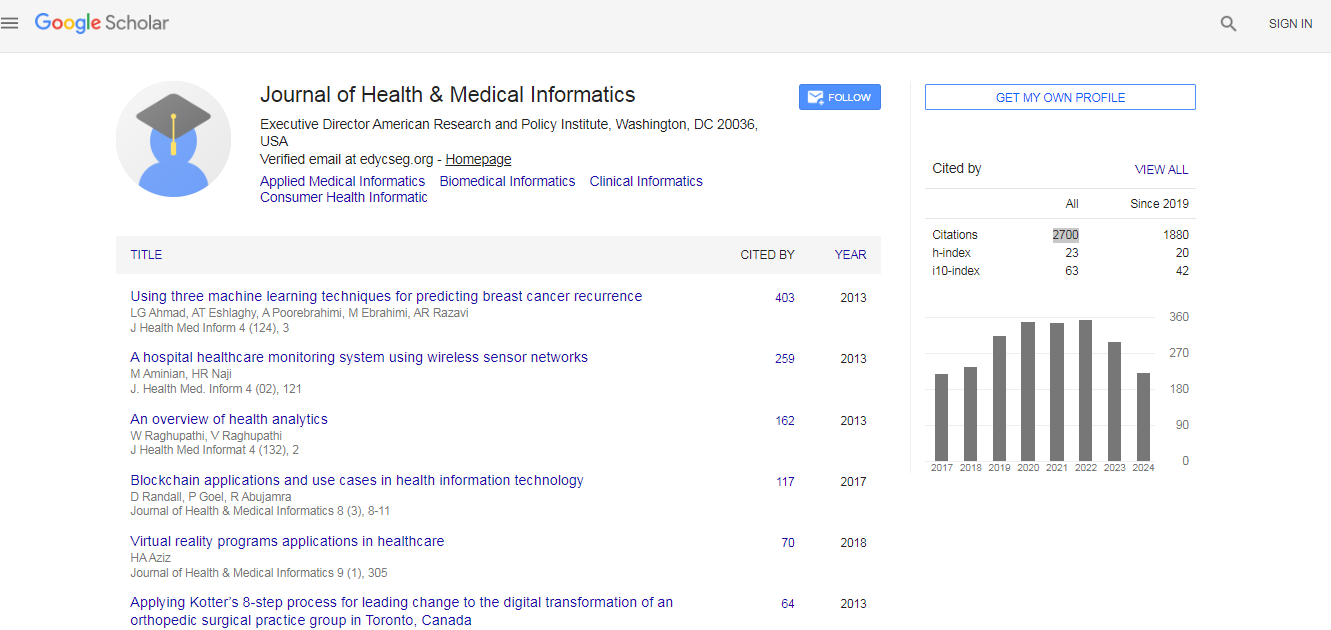
Journal of Health & Medical Informatics received 2700 citations as per Google Scholar report