Brief Report - (2025) Volume 15, Issue 6
Received: 31-Oct-2025, Manuscript No. jccr-26-181163;
Editor assigned: 03-Nov-2025, Pre QC No. P-181163;
Reviewed: 17-Nov-2025, QC No. Q-181163;
Revised: 21-Nov-2025, Manuscript No. R-181163;
Published:
28-Nov-2025
, DOI: 10.37421-2165-7920.2025.15.1690
Citation: Thompson,Emily R.”Rare Post-thyroidectomy Complications: Recognition and Management.” J Clin Case Rep 15 (2025):1690.
Copyright: © 2025 Thompson R. Emily This is an open-access article distributed under the terms of the Creative Commons Attribution License, which permits unrestricted use, distribution and reproduction in any medium, provided the original author and source are credited.
Thyroidectomy, a common surgical procedure, is generally considered safe, yet it carries a spectrum of potential complications. While many patients experience uneventful recovery, a subset may develop rare but significant adverse events that require meticulous attention and advanced management strategies. Understanding these uncommon sequelae is crucial for optimizing patient care and improving surgical outcomes. This collection of case reports delves into several such rare complications, offering insights into their presentation, diagnosis, and treatment. One such rare complication is recurrent laryngeal nerve injury, which can manifest as vocal cord dysfunction. Prompt recognition and a multidisciplinary approach are essential for managing these cases and ensuring the best possible functional recovery for patients [1].
Another serious, though infrequent, complication is severe hypocalcemia. This can occur due to factors beyond simple parathyroid gland removal, necessitating vigilant monitoring and tailored calcium replacement protocols for specific patient groups [2].
Cervical arteriovenous fistula formation represents a less common but potentially devastating complication following thyroid surgery. Advanced diagnostic imaging techniques and endovascular management have proven effective in addressing this vascular abnormality [3].
Permanent vocal cord paralysis, often a consequence of subtle or unrecognized intraoperative nerve manipulation, underscores the critical importance of meticulous surgical technique and thorough postoperative assessment to prevent this sequela [4].
Chylothorax, characterized by a lymphatic fluid leak, is another rare complication that can arise after thyroidectomy. The diagnostic pathway and conservative management strategies are key considerations for such cases [5].
Sternocleidomastoid muscle hematoma, particularly when it leads to airway compromise, presents a rare yet urgent situation. A high index of suspicion and prompt intervention are vital to secure the patient's airway [6].
Delayed tracheal stenosis, occurring months after thyroidectomy, is an uncommon late complication. Its diagnosis can be challenging, and surgical management strategies are often required for effective treatment [7].
Bilateral vocal cord paralysis, though rare, can present a significant challenge after an otherwise uncomplicated thyroidectomy. Comprehensive laryngoscopy is essential for diagnosis, and the possibility of bilateral nerve involvement must be considered [8].
Cervical esophageal perforation is an exceedingly rare postoperative complication of thyroidectomy. Prompt surgical repair is critical to prevent severe morbidity, despite diagnostic difficulties [9].
Finally, carotid artery pseudoaneurysm formation following thyroidectomy is a rare and potentially catastrophic complication that carries a significant risk of hemorrhage. Diagnostic imaging and endovascular management are crucial for its treatment [10].
Thyroidectomy, a widely performed surgical procedure for various thyroid gland pathologies, is associated with a range of potential complications, some of which are rare but carry significant morbidity. This compilation of case reports highlights specific uncommon events that can occur post-thyroidectomy, emphasizing the diagnostic acumen and therapeutic strategies required for optimal patient outcomes. These reports serve to educate clinicians on the diverse and sometimes unexpected challenges encountered in the postoperative period following thyroid surgery. Recurrent laryngeal nerve injury, a known complication of thyroidectomy, can lead to vocal cord dysfunction. Early identification and a multidisciplinary management approach are paramount to restoring vocal function and improving the patient's quality of life [1].
Severe hypocalcemia is a potential complication that requires careful monitoring. Understanding the precipitating factors beyond simple parathyroid gland removal is essential for implementing effective calcium replacement protocols in affected patients [2].
The formation of a cervical arteriovenous fistula after thyroid surgery, though rare, poses a serious threat to vascular integrity. Advanced imaging modalities play a crucial role in its diagnosis, and endovascular techniques offer effective treatment options [3].
Permanent vocal cord paralysis can arise from subtle intraoperative nerve manipulation during thyroidectomy. Adherence to meticulous surgical techniques and a thorough postoperative evaluation are vital to prevent this long-term sequela [4].
Chylothorax, a lymphatic fluid leak, is an uncommon but potentially life-threatening complication after thyroid surgery. Clinicians must be aware of the diagnostic pathways and consider conservative management approaches when appropriate [5].
A sternocleidomastoid muscle hematoma causing airway compromise represents a rare but acute surgical emergency post-thyroidectomy. A high degree of clinical suspicion and rapid intervention are necessary to manage the airway effectively [6].
Delayed tracheal stenosis, manifesting months after thyroidectomy, is an unusual late complication. Its diagnosis often presents challenges, and surgical intervention may be required for resolution [7].
Bilateral vocal cord paralysis following thyroidectomy, while infrequent, demands comprehensive diagnostic evaluation, including thorough laryngoscopy, to identify the extent of nerve involvement and guide treatment [8].
Cervical esophageal perforation is a rare and serious complication that can occur after thyroidectomy. Prompt surgical intervention is critical to manage this potentially devastating injury effectively [9].
Carotid artery pseudoaneurysm is an exceedingly rare but potentially catastrophic complication of thyroidectomy, characterized by a significant risk of hemorrhage. Diagnosis relies on advanced imaging, and endovascular management is often the preferred treatment strategy [10].
This collection of case reports details rare post-thyroidectomy complications, including recurrent laryngeal nerve injury leading to vocal cord dysfunction, severe hypocalcemia requiring aggressive management, cervical arteriovenous fistula formation, permanent vocal cord paralysis due to subtle nerve injury, chylothorax (lymphatic fluid leak), sternocleidomastoid muscle hematoma causing airway compromise, delayed tracheal stenosis, bilateral vocal cord paralysis, cervical esophageal perforation, and carotid artery pseudoaneurysm formation. Each report emphasizes the diagnostic challenges, the importance of prompt recognition, and the specific therapeutic strategies necessary to manage these uncommon but significant adverse events, aiming to optimize patient outcomes and surgical safety.
None
None
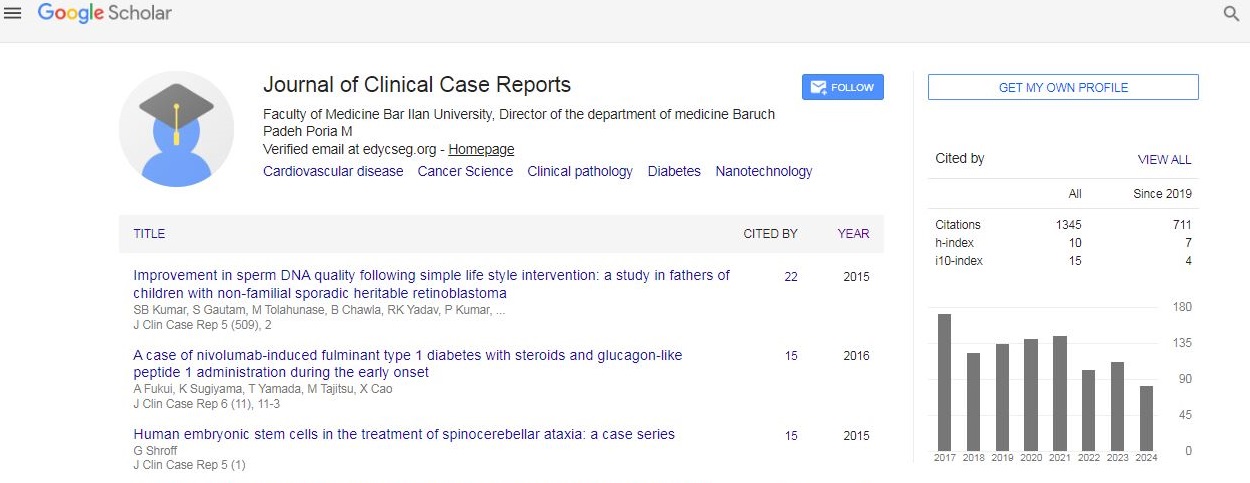
Journal of Clinical Case Reports received 1345 citations as per Google Scholar report