Perspective - (2025) Volume 13, Issue 6
Received: 01-Dec-2025, Manuscript No. jpgeb-26-184335;
Editor assigned: 03-Dec-2025, Pre QC No. P-184335;
Reviewed: 17-Dec-2025, QC No. Q-184335;
Revised: 22-Dec-2025, Manuscript No. R-184335;
Published:
29-Dec-2025
, DOI: 10.37421/2329-9002.2025.13.413
Citation: Fuentes, Alejandro M.. ”Phylogenetics: Revolutionizing Invasive Species Management.” J Phylogenetics Evol Biol 13 (2025):413.
Copyright: © 2025 Fuentes M. Alejandro This is an open-access article distributed under the terms of the Creative Commons Attribution License, which permits unrestricted use, distribution and reproduction in any medium, provided the original author and source are credited.
Phylogenetic approaches are revolutionizing invasive species management by providing critical insights into invasion origins, pathways, and the genetic makeup of introduced populations. Understanding the evolutionary history and genetic diversity of invasive species allows for more targeted control strategies, predicting future spread, and assessing potential impacts on native ecosystems. This framework helps identify the most likely source populations for effective interception and informs adaptive management plans by tracking genetic changes in evolving invasive populations [1].
Genomic data are increasingly used to pinpoint the geographic origin of invasive populations, a crucial step for effective management. By comparing the genetic signatures of invasive populations with those from native ranges, researchers can identify source populations, guiding quarantine efforts and preventing reintroductions. This helps prioritize limited resources towards the most significant invasion fronts [2].
Phylogeography offers a powerful lens to understand dispersal routes and bottlenecks during introductions. Tracing the historical spread of an invasive species through its genetic lineage helps identify major corridors of introduction and areas of subsequent expansion. This knowledge is vital for developing predictive models and implementing spatially explicit control measures [3].
Assessing genetic diversity within invasive populations is key to understanding their adaptive potential and predicting their spread. Low genetic diversity might indicate a strong bottleneck effect, potentially limiting their long-term success, while high diversity can signal a greater capacity to adapt to new environments and overcome control efforts [4].
Phylogenetic trees can reveal the evolutionary relationships among different invasive lineages, highlighting which lineages are more aggressive or have a greater propensity for rapid spread. This insight allows managers to focus control efforts on the most problematic genotypes [5].
Hybridization between invasive and native species can lead to the emergence of novel traits, potentially enhancing the invasiveness of either parent or creating new threats. Phylogenetic analyses can detect hybridization events and trace the genetic contributions, informing strategies to manage or prevent such outcomes [6].
The application of phylogenetic methods allows for the identification of genes under selection in invasive populations, revealing the genetic basis of adaptation to new environments. This understanding can inform the development of more effective, targeted eradication or control methods by predicting how invasive populations might evolve resistance [7].
Phylogenetic frameworks can also be used to track the effectiveness of management interventions by monitoring changes in the genetic composition of invasive populations over time. This adaptive approach allows for adjustments to control strategies based on evolutionary responses [8].
The study of evolutionary relationships can help predict the potential invasiveness of newly introduced species by comparing them to well-established invasive species. If a new species shares phylogenetic traits with known successful invaders, it warrants closer monitoring and preemptive action [9].
Phylogenetic methods are crucial for understanding the role of evolutionary processes, such as rapid adaptation and niche evolution, in the success of invasive species. By tracing the evolutionary trajectories of invasive populations, managers can better anticipate their future behavior and impacts [10].
Phylogenetic approaches are revolutionizing invasive species management by offering critical insights into the origins, pathways, and genetic makeup of introduced populations. Understanding the evolutionary history and genetic diversity of invasive species enables more targeted control strategies, better prediction of future spread, and a more accurate assessment of potential impacts on native ecosystems. This comprehensive framework aids in identifying the most probable source populations for effective interception and supports adaptive management plans by monitoring genetic changes in evolving invasive populations [1].
Genomic data are increasingly instrumental in pinpointing the precise geographic origin of invasive populations, a pivotal step for implementing effective management strategies. By meticulously comparing the genetic signatures of invasive populations with those found in their native ranges, researchers can accurately identify source populations, thereby guiding quarantine efforts and significantly preventing reintroductions. This analytical precision helps in prioritizing limited resources towards the most pressing invasion fronts [2].
Phylogeography provides a powerful analytical lens for understanding the complex dispersal routes and bottlenecks encountered during species introductions. By tracing the historical spread of an invasive species through its genetic lineage, it becomes possible to identify major corridors of introduction and the areas of subsequent expansion. This acquired knowledge is indispensable for developing accurate predictive models and for implementing effective, spatially explicit control measures [3].
Assessing the genetic diversity within invasive populations is paramount for understanding their inherent adaptive potential and for predicting their future spread. Low genetic diversity may suggest a significant bottleneck effect, potentially limiting their long-term establishment and success. Conversely, high genetic diversity can indicate a greater capacity to adapt to novel environments and to overcome existing control efforts [4].
Phylogenetic trees serve as invaluable tools for revealing the evolutionary relationships among various invasive lineages, thereby highlighting those that exhibit greater aggressiveness or possess a higher propensity for rapid spread. This critical insight empowers managers to strategically focus control efforts on the genotypes that pose the most significant threat [5].
Hybridization events between invasive and native species can lead to the emergence of novel traits, which may potentially enhance the invasiveness of either parent species or create entirely new ecological threats. Phylogenetic analyses are adept at detecting such hybridization events and tracing the specific genetic contributions, thereby informing the development of robust strategies to manage or prevent these outcomes [6].
The application of phylogenetic methods is crucial for the identification of genes that are under selection pressure in invasive populations, offering a clear understanding of the genetic basis for adaptation to new environments. This profound understanding can guide the development of more effective and precisely targeted eradication or control methods by enabling predictions of how invasive populations might evolve resistance over time [7].
Phylogenetic frameworks are versatile tools that can be employed to meticulously track the effectiveness of implemented management interventions. This is achieved by continuously monitoring the changes in the genetic composition of invasive populations over specific time periods. This adaptive approach facilitates necessary adjustments to control strategies in direct response to observed evolutionary responses [8].
The study of evolutionary relationships holds significant promise in predicting the potential invasiveness of newly introduced species. This is accomplished by drawing comparisons with species that have already established themselves as successful invaders. If a novel species exhibits phylogenetic traits similar to those of known successful invaders, it warrants heightened monitoring and preemptive management actions [9].
Phylogenetic methods are fundamentally crucial for comprehending the intricate role of evolutionary processes, such as rapid adaptation and niche evolution, in the overall success of invasive species. By diligently tracing the evolutionary trajectories of invasive populations, management authorities can achieve a more accurate anticipation of their future behavior and potential ecological impacts [10].
Phylogenetic and genomic approaches are transforming invasive species management by revealing invasion origins, pathways, and population genetics. This understanding allows for targeted control strategies, prediction of spread, and assessment of ecological impacts. Identifying source populations and understanding genetic diversity are key to effective management and resource allocation. Phylogeography traces dispersal routes and bottlenecks, informing predictive models and control measures. Analyzing genetic diversity within invasive populations helps predict adaptive potential and spread, with low diversity potentially limiting success and high diversity indicating greater adaptability. Phylogenetic trees identify aggressive lineages for focused control. Hybridization between invasive and native species can create new threats, and phylogenetic analyses help detect and manage these events. Identifying genes under selection reveals adaptation mechanisms, aiding in developing targeted eradication methods and predicting resistance evolution. Phylogenetic frameworks monitor intervention effectiveness by tracking genetic changes, allowing for adaptive management. Studying evolutionary relationships can predict the invasiveness of new species by comparison with known invaders, prompting early action. Ultimately, phylogenetic methods are essential for understanding evolutionary processes like adaptation and niche evolution, enabling better anticipation of invasive species behavior and impacts.
None
None
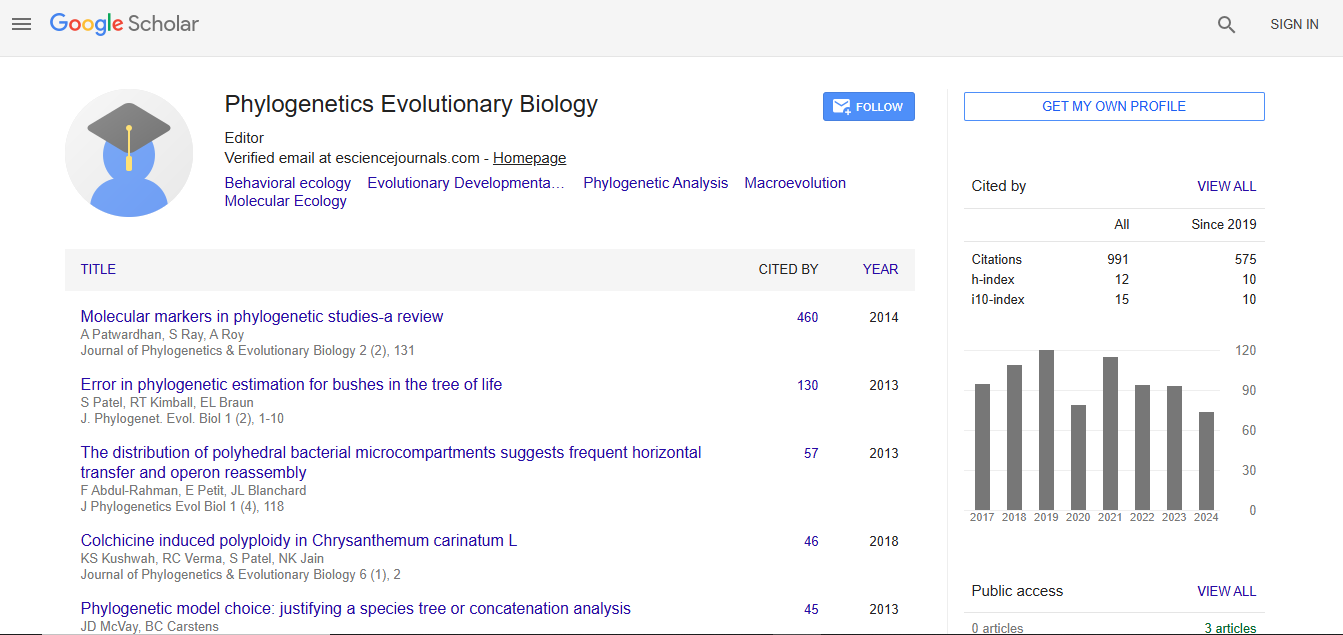
Journal of Phylogenetics & Evolutionary Biology received 911 citations as per Google Scholar report