Brief Report - (2025) Volume 12, Issue 3
Received: 02-Jun-2025, Manuscript No. fmoa-26-187924;
Editor assigned: 04-Jun-2025, Pre QC No. P-187924;
Reviewed: 18-Jun-2025, QC No. Q-187924;
Revised: 23-Jun-2025, Manuscript No. R-187924;
Published:
30-Jun-2025
, DOI: 10.37421/2476-2296.2025.12.342
Citation: Garcia, Beatriz. ”Optimizing Reactor Flow for Enhanced Efficiency and Safety.” Fluid Mech Open Acc 12 (2025):342.
Copyright: © 2025 Garcia B. This is an open-access article distributed under the terms of the Creative Commons Attribution License, which permits unrestricted use, distribution and reproduction in any medium, provided the original author and source are credited.
The optimization of flow patterns within industrial reactors is a cornerstone of modern chemical engineering, aiming to enhance reaction efficiency, product yield, and overall process sustainability. Computational Fluid Dynamics (CFD) has emerged as a powerful tool for this purpose, enabling detailed analysis and prediction of fluid behavior under various operating conditions. This approach allows for the design of optimized reactor geometries and the fine-tuning of operational parameters to achieve desired outcomes, such as minimizing byproduct formation and improving mass transfer rates. Advanced mixing techniques and sophisticated turbulence models are crucial components in accurately predicting reactor performance and ensuring the robustness of the designed flow patterns, leading to more economical and environmentally sound chemical processes [1].
In stirred tank reactors, geometric modifications and the strategic placement of internal baffles play a critical role in controlling flow distribution and mixing performance. Experimental and simulation methods have been employed to demonstrate how specific baffle configurations can effectively suppress undesirable vortex formation and promote axial mixing. This leads to more uniform temperature and concentration profiles throughout the reactor, which is particularly important for reactions that are sensitive to localized variations, thereby improving process control and safety [2].
For bubble column reactors, particularly in biochemical applications, optimizing gas-liquid flow patterns is paramount for enhancing mass transfer. Research in this area focuses on the correlation between gas sparging strategies, the superficial gas velocity, and the resulting bubble size distribution and flow regime. The findings often indicate that carefully designed sparging systems can lead to finer bubble dispersion and reduced back-mixing of the liquid phase, which directly improves oxygen transfer rates, a critical factor for microbial growth and product formation in many bioprocesses [3].
In the realm of microreactors, the precise control of flow patterns is essential for achieving high reaction selectivity and managing residence time. Novel approaches involve the design of microchannel architectures that actively promote plug flow and minimize axial dispersion. This is especially important for fast, highly exothermic reactions where precise control is needed to prevent runaway reactions and improve product purity, with integrated flow conditioners often playing a key role in achieving these objectives [4].
Packed-bed reactors present unique challenges related to multiphase flow characteristics, which can significantly influence catalyst deactivation. Flow maldistribution and channeling can lead to localized overheating and premature pore blocking, thereby reducing the reactor's lifespan. Strategies to optimize gas and liquid flow are therefore crucial to ensure uniform catalyst wetting and consistent temperature profiles, extending operational periods and improving overall reactor efficiency [5].
Fluidized bed reactors, widely used in catalytic cracking and gasification, also benefit immensely from flow pattern optimization. The focus here is on enhancing particle mixing and heat transfer. Studies examine the effects of jet velocity, particle properties, and distributor design on the bed's hydrodynamics. Identifying operating regimes that promote vigorous mixing and uniform temperature distribution is essential for achieving high conversion rates in these processes [6].
Loop reactors are often employed for managing exothermic reactions where preventing thermal runaway is a primary concern. Optimizing flow patterns in these reactors involves a detailed analysis of fluid recirculation rates and their impact on heat removal efficiency. Fine-tuning loop configurations can lead to significantly improved temperature control and enhanced safety margins for highly energetic chemical syntheses, underscoring the importance of flow dynamics in reactor safety [7].
Multi-tubular fixed-bed reactors require careful attention to flow distribution to avoid hot spots and ensure uniform reactant conversion across all tubes. Computational studies often analyze the impact of header design and the use of flow balancing devices on issues like channeling and pressure drop. Design guidelines aimed at achieving superior flow uniformity are crucial for extending catalyst life and maintaining consistent product quality in these complex reactor systems [8].
Membrane reactors offer a unique platform for enhancing reaction performance through the integration of reaction and separation. Optimizing flow patterns in these reactors is vital for improving reactant conversion and selectivity. Tailored flow fields can work synergistically with membrane properties to influence mass transport and reaction kinetics, minimize concentration polarization, and facilitate product removal, thereby boosting overall process efficiency [9].
In the pharmaceutical industry, where reaction conditions are often sensitive, the optimization of flow patterns in agitated gas-liquid reactors is particularly important. Analysis of impeller type, speed, and gas sparging on bubble dynamics, mixing intensity, and mass transfer coefficients provides crucial insights. Achieving optimal flow patterns ensures efficient reagent dispersion and controlled reaction conditions for the synthesis of sensitive pharmaceutical intermediates [10].
The application of computational fluid dynamics (CFD) provides advanced strategies for manipulating fluid flow within industrial reactors to achieve enhanced reaction efficiency and maximize product yield. This methodology critically informs the design of optimized reactor geometries and operating conditions by highlighting the interconnectedness of flow dynamics and chemical transformations. The research underscores the significant benefits derived from tailored flow patterns, which are instrumental in minimizing the formation of undesirable byproducts and accelerating mass transfer rates. Ultimately, these optimizations contribute to the development of more sustainable and economically viable chemical processes. Key insights derived from CFD analyses include the effective application of advanced mixing techniques and a deeper understanding of how various turbulence models influence the prediction of reactor performance [1].
In the context of stirred tank reactors, investigations into geometric modifications and the integration of internal baffles reveal their profound impact on flow distribution and overall mixing performance. Through a combination of experimental studies and sophisticated simulation methods, researchers have demonstrated that carefully engineered baffle configurations can effectively mitigate the formation of vortices, a common issue that hinders efficient mixing. Furthermore, these designs actively promote axial mixing, leading to more uniform temperature and concentration profiles across the reactor volume. This uniformity is of paramount importance for reactions that are highly sensitive to localized variations in conditions, thus significantly enhancing overall process control and ensuring a higher degree of operational safety [2].
The optimization of gas-liquid flow patterns in bubble column reactors is a key focus for improving mass transfer, particularly in demanding biochemical processes. This area of research explores the intricate correlations that exist between different gas sparging strategies, the superficial gas velocity employed, and the subsequent bubble size distribution and flow regime that emerges within the reactor. The findings consistently indicate that specific and thoughtfully designed sparging configurations are capable of inducing finer bubble dispersion and diminishing the extent of liquid phase back-mixing. This improved mixing directly translates to enhanced oxygen transfer rates, which are critically important for supporting microbial growth and facilitating efficient product formation in numerous biotechnological applications [3].
A novel approach to optimizing flow distribution within microreactors has been presented, offering precise control over residence time and reaction selectivity. This innovative strategy centers on the design of specialized microchannel architectures meticulously engineered to promote plug flow characteristics and actively minimize axial dispersion. Such precise control is indispensable for managing fast, highly exothermic reactions where even minor deviations can have significant consequences. The study further demonstrates the remarkable effectiveness of integrated flow conditioners in substantially improving product purity and significantly reducing the inherent risk of runaway reactions, ensuring safer and more controlled microreactor operation [4].
The influence of multiphase flow characteristics on the deactivation of catalysts in packed-bed reactors is a critical area of study for process longevity and efficiency. Flow maldistribution and the occurrence of channeling within the catalyst bed are identified as major contributors to localized overheating and premature pore blockage, both of which drastically reduce the effective lifespan of the catalyst. Consequently, the research proposes and investigates various strategies aimed at optimizing the flow of both gas and liquid phases. The goal is to ensure uniform catalyst wetting and consistent temperature profiles throughout the bed, thereby extending operational periods and substantially improving the overall efficiency and reliability of the reactor system [5].
In the domain of fluidized bed reactors, the optimization of flow patterns is pursued to achieve enhanced particle mixing and improved heat transfer capabilities. This research delves into the complex interplay between various operational parameters, including jet velocity, the physical properties of the particles being fluidized, and the design of the distributor plate, all of which significantly influence the hydrodynamics of the bed. The study aims to identify specific operating regimes that foster vigorous particle mixing and maintain uniform temperature distribution, conditions that are absolutely essential for attaining high conversion rates in critical industrial processes such as catalytic cracking and gasification [6].
This body of work specifically investigates the optimization of flow patterns within loop reactors, with a primary objective of effectively managing highly exothermic reactions and preventing the potentially hazardous occurrence of thermal runaway. The research presents a detailed analytical framework for understanding the impact of fluid recirculation rates on the efficiency of heat removal. The findings derived from this analysis clearly demonstrate that meticulous fine-tuning of loop configurations can lead to substantial improvements in temperature control and significantly enhance the safety margins required for conducting highly energetic chemical syntheses, underscoring the critical role of flow management in reactor safety [7].
The article meticulously analyzes the optimization of flow distribution within multi-tubular fixed-bed reactors. The primary goals are to effectively circumvent the formation of localized hot spots and to guarantee uniform reactant conversion across all individual tubes. This analysis rigorously examines the impact of header design choices and the strategic implementation of flow balancing devices on critical issues such as flow channeling and the overall pressure drop across the reactor. The study culminates in the proposal of essential design guidelines that are crucial for achieving superior flow uniformity, which in turn directly leads to extended catalyst life and the consistent production of high-quality products [8].
This research undertakes an exploration into the optimization of flow patterns specifically within membrane reactors, aiming to achieve enhanced reactant conversion and improved selectivity. A key aspect of this work involves investigating the synergistic effects that arise from the interplay between the design of the flow field and the inherent properties of the membranes employed. The study highlights how carefully tailored flow conditions can effectively minimize the adverse phenomenon of concentration polarization and concurrently enhance the rate at which products are removed from the reaction zone, ultimately leading to a significant increase in overall process efficiency and productivity [9].
The article provides a comprehensive examination of the optimization of flow regimes within agitated gas-liquid reactors, with a particular emphasis on applications in pharmaceutical synthesis. It meticulously analyzes the multifaceted impact of various parameters, including the type of impeller used, its rotational speed, and the method of gas sparging, on critical aspects such as bubble dynamics, mixing intensity, and the overall mass transfer coefficients. The findings derived from this analysis offer valuable insights into how to achieve optimal flow patterns that ensure both efficient reagent dispersion and tightly controlled reaction conditions, which are indispensable for the successful synthesis of sensitive pharmaceutical intermediates [10].
This collection of research highlights the critical importance of optimizing flow patterns in various industrial reactor types to enhance efficiency, yield, and safety. Studies cover computational fluid dynamics (CFD) for advanced reactor design, geometric modifications in stirred tanks, gas-liquid flow in bubble columns, microchannel architectures for precise control, multiphase flow in packed beds affecting catalyst deactivation, particle mixing in fluidized beds, heat management in loop reactors, flow distribution in multi-tubular fixed beds, membrane reactors for integrated reaction and separation, and agitated gas-liquid reactors for pharmaceutical synthesis. Common themes include minimizing byproducts, improving mass transfer, achieving uniform temperature and concentration profiles, extending catalyst life, and ensuring process safety and control through intelligent flow management.
None
None
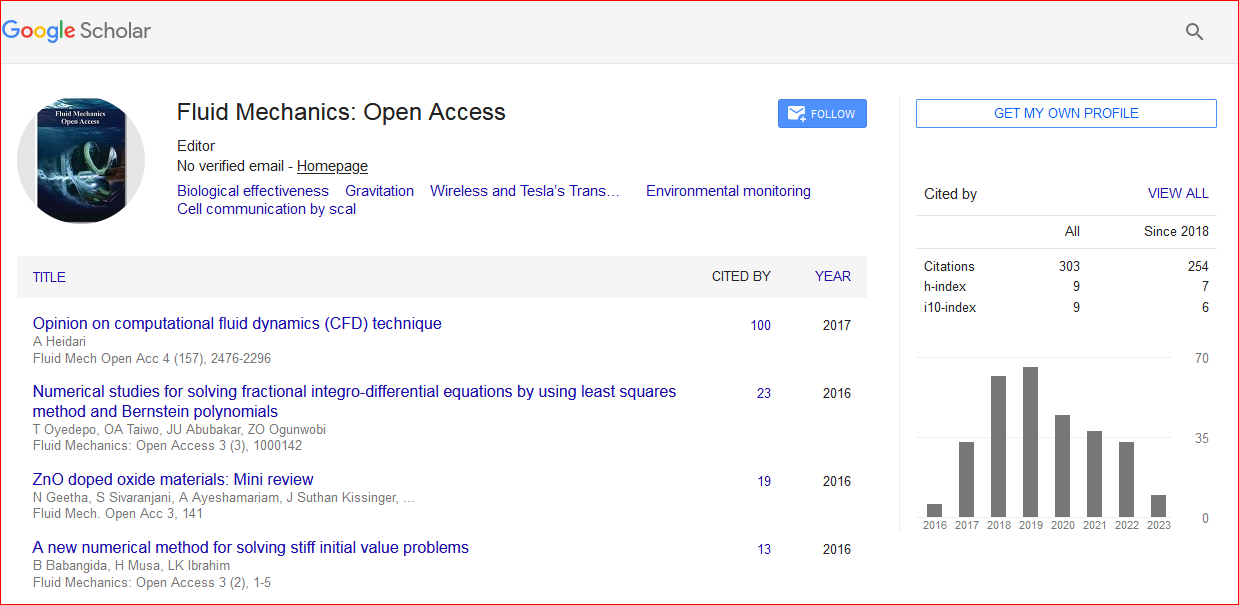
Fluid Mechanics: Open Access received 291 citations as per Google Scholar report