Short Communication - (2025) Volume 12, Issue 3
Received: 02-Jun-2025, Manuscript No. ijn-26-183982;
Editor assigned: 04-Jun-2025, Pre QC No. P-183982;
Reviewed: 18-Jun-2025, QC No. Q-183982;
Revised: 23-Jun-2025, Manuscript No. R-183982;
Published:
30-Jun-2025
, DOI: 10.37421/2376-0281.2025.12.637
Citation: Svensson, Ingrid. ”Multimodal Pain Management for Neurorehabilitation Success.” Int J Neurorehabilitation Eng 12 (2025):637.
Copyright: © 2025 Svensson I. This is an open-access article distributed under the terms of the Creative Commons Attribution License, which permits unrestricted use, distribution and reproduction in any medium, provided the original author and source are credited.
Effective pain management stands as a cornerstone in the intricate process of neurorehabilitation, directly influencing patient outcomes and recovery trajectories. A multimodal strategy, integrating both pharmacological and non-pharmacological approaches, is recognized as essential for addressing the complex nature of pain in neurological conditions. This approach necessitates the development of personalized treatment plans, meticulously tailored to the specific neurological condition, the type of pain experienced, and the unique factors of each individual patient. The proactive engagement of patients through education and active participation is also critically important, particularly in managing chronic pain following neurological injuries, with the ultimate aim of enhancing function and improving overall quality of life [1].
Within the context of stroke survivors, different physical therapy modalities have been explored for their impact on neuropathic pain. Research indicates that exercises specifically targeting motor control and sensory re-education, when combined with conventional physiotherapy, can significantly alleviate pain intensity and foster improved functional capabilities. Early and consistent intervention is strongly advocated to prevent the transition of acute post-stroke pain into a persistent, debilitating chronic condition. This highlights the crucial role of timely and comprehensive rehabilitation efforts [2].
Cognitive-behavioral therapy (CBT) has emerged as a valuable adjunct to pharmacological pain management, particularly for patients who have experienced traumatic brain injury (TBI). Studies have demonstrated that CBT can substantially enhance patients' coping mechanisms for pain and reduce the psychological distress often associated with chronic pain, thereby contributing to better overall rehabilitation progress. These findings underscore the importance of integrating psychological interventions to effectively address the intricate interplay between pain, mood, and functional recovery [3].
The efficacy of mindfulness-based interventions in managing central post-stroke pain has also been the subject of investigation. Regular mindfulness practice has been observed to result in notable reductions in pain intensity, improvements in sleep quality, and enhanced mood among stroke survivors. This suggests that mindfulness serves as a valuable, non-invasive tool that can effectively augment traditional pain management strategies within the scope of neurorehabilitation [4].
Managing phantom limb pain, a complex issue that arises after amputation in individuals with neurological conditions, presents unique challenges and necessitates specific strategies. A multidisciplinary approach, encompassing therapies such as mirror therapy, graded motor imagery, and pharmacotherapy, is vital for addressing the intricate sensory and motor disturbances characteristic of this condition. The emphasis is placed on the critical importance of early intervention and patient-centered care to achieve optimal outcomes [5].
Exercise plays a significant role in managing chronic pain following spinal cord injury (SCI). A tailored exercise program, which includes strength training, aerobic conditioning, and flexibility exercises, has been shown to lead to substantial reductions in pain intensity, improvements in physical function, and an enhanced quality of life. The need for individualized exercise prescriptions is paramount to maximize the benefits while concurrently minimizing potential risks [6].
The management of spasticity-related pain in various neurological disorders, including multiple sclerosis and cerebral palsy, requires a comprehensive strategy. This approach typically involves a combination of pharmacological agents, such as baclofen and tizanidine, alongside botulinum toxin injections and specialized physical therapies. Addressing both the underlying spasticity and the associated pain is deemed essential for achieving meaningful functional improvements [7].
Sleep disturbances have a notable impact on pain perception within the neurorehabilitation setting. A bidirectional relationship exists where pain can disrupt sleep patterns, and conversely, poor sleep quality can exacerbate pain experiences. Consequently, improving sleep hygiene and effectively treating sleep disorders are considered vital components of a comprehensive pain management strategy for patients with neurological conditions [8].
Virtual reality (VR) is increasingly being explored as a tool for pain management in neurorehabilitation. VR-based interventions have demonstrated considerable promise in reducing pain intensity, improving motor function, and increasing patient engagement in rehabilitation exercises for individuals with conditions such as stroke, TBI, and other neurological impairments. VR offers an innovative approach for distraction and functional training within pain management protocols [9].
Complementary and alternative medicine (CAM) therapies are being investigated for their effectiveness in managing chronic pain subsequent to neurological injury. Modalities like acupuncture, massage therapy, and yoga are suggested to offer adjunctive benefits by aiding in pain reduction and functional improvement when integrated into conventional treatment plans. However, the authors highlight the necessity for more rigorous research to fully elucidate the mechanisms and efficacy of these therapies [10].
Effective pain management is critically important for the success of neurorehabilitation efforts, as pain can significantly impede recovery and reduce a patient's quality of life. This article emphasizes that a multimodal approach, which strategically combines pharmacological interventions with non-pharmacological strategies, is essential for comprehensively addressing the varied aspects of pain experienced by individuals with neurological conditions. The authors highlight the paramount importance of developing personalized treatment plans that are carefully considered and adapted to the specific neurological condition, the distinct type of pain being experienced, and the individual patient's unique circumstances and needs. Furthermore, the crucial role of patient education and fostering active patient participation in the management of chronic pain following neurological injury is strongly underscored, with the overarching goal of improving functional abilities and enhancing the overall quality of life for these individuals [1].
This research delves into the impact of various physical therapy modalities on neuropathic pain experienced by stroke survivors. The findings from this investigation suggest that therapeutic exercises designed to enhance motor control and promote sensory re-education, when implemented alongside conventional physiotherapy techniques, can lead to a significant reduction in reported pain intensity and foster notable improvements in functional outcomes. The study advocates for the early and consistent application of these interventions as a means to effectively prevent the progression of acute post-stroke pain into a chronic and potentially debilitating condition, thereby emphasizing the importance of timely and integrated rehabilitation [2].
The utilization of cognitive-behavioral therapy (CBT) as a complementary treatment to pharmacological pain management for patients with traumatic brain injury (TBI) has been thoroughly examined. This particular study revealed that the integration of CBT significantly enhanced patients' coping mechanisms for dealing with pain and led to a marked reduction in the psychological distress associated with chronic pain, ultimately contributing to more favorable overall rehabilitation progress. The results strongly support the integration of psychological interventions to address the complex and often intertwined nature of pain, mood, and functional recovery in individuals with TBI [3].
This article specifically investigates the efficacy of mindfulness-based interventions in the management of central post-stroke pain, a challenging condition often encountered after a stroke. The results obtained indicate that consistent and regular engagement in mindfulness practices can lead to discernible reductions in pain intensity, improvements in the quality of sleep experienced by patients, and an overall enhancement in mood among stroke survivors. This research highlights mindfulness as a valuable and non-invasive therapeutic tool that can serve to augment and complement traditional pain management strategies within the comprehensive framework of neurorehabilitation [4].
The paper addresses the significant challenges and outlines effective strategies for managing phantom limb pain, a condition that arises following amputation, particularly in individuals with underlying neurological conditions. It strongly advocates for a comprehensive, multidisciplinary approach that incorporates a range of interventions, including mirror therapy, graded motor imagery, and pharmacotherapy, to effectively address the complex sensory and motor disturbances that characterize phantom limb pain. The authors stress the critical importance of implementing early intervention strategies and maintaining a patient-centered approach to care in order to achieve improved outcomes for affected individuals [5].
This particular review examines the vital role of exercise in the effective management of chronic pain that occurs after spinal cord injury (SCI). The findings presented in this review indicate that a carefully tailored and individualized exercise program, which strategically incorporates elements of strength training, aerobic conditioning, and flexibility exercises, can result in significant reductions in pain intensity, substantial improvements in physical function, and an overall enhancement in the quality of life for individuals with SCI. The review underscores the necessity of developing individualized exercise prescriptions to maximize therapeutic benefits while simultaneously minimizing potential risks associated with physical activity [6].
This paper provides a detailed discussion on the management of pain that is associated with spasticity in individuals diagnosed with neurological disorders, such as multiple sclerosis and cerebral palsy. It strongly advocates for the adoption of a comprehensive management approach that includes the strategic use of pharmacological agents, including but not limited to baclofen and tizanidine, as well as the application of botulinum toxin injections and various specialized physical therapies. The authors emphasize that effectively addressing both the underlying spasticity and the pain it generates is crucial for achieving meaningful functional improvements in affected patients [7].
The impact of sleep disturbances on an individual's perception of pain within the context of neurorehabilitation is thoroughly examined in this study. The research highlights a significant bidirectional relationship, where pain can disrupt normal sleep patterns, and conversely, inadequate or poor sleep quality can substantially exacerbate pain experiences. Based on these findings, the study suggests that actively improving sleep hygiene and effectively treating any underlying sleep disorders are essential and vital components of any comprehensive and effective pain management strategy designed for patients undergoing neurorehabilitation [8].
This article presents a systematic review focused on the use of virtual reality (VR) technology for the purpose of pain management within the field of neurorehabilitation. The review reveals that VR-based interventions have shown considerable promise in achieving reductions in pain intensity, facilitating improvements in motor function, and enhancing patient engagement in necessary rehabilitation exercises for individuals suffering from conditions such as stroke, TBI, and a variety of other neurological disorders. The authors propose VR as an innovative and effective tool for providing distraction and facilitating functional training as part of comprehensive pain management strategies [9].
This study undertakes a narrative review of the application of complementary and alternative medicine (CAM) therapies for the management of chronic pain following neurological injury. It explores various modalities, including acupuncture, massage therapy, and yoga, suggesting that these therapies can offer valuable adjunctive benefits in terms of pain reduction and functional improvement when thoughtfully integrated with established conventional treatment plans. The authors emphasize the critical need for conducting more rigorous and comprehensive research to further investigate the underlying mechanisms and definitively establish the efficacy of these diverse CAM therapies [10].
Effective neurorehabilitation hinges on robust pain management, advocating for multimodal approaches that combine pharmacological and non-pharmacological strategies. Personalized treatment plans are crucial, considering individual neurological conditions, pain types, and patient factors. Patient education and active involvement are vital for managing chronic pain post-injury, aiming to enhance function and quality of life. Physical therapy interventions, including motor control and sensory re-education exercises, show efficacy in reducing neuropathic pain in stroke survivors, underscoring the need for early intervention. Cognitive-behavioral therapy (CBT) complements pharmacological treatment for TBI patients, improving coping mechanisms and reducing psychological distress. Mindfulness-based interventions offer a non-invasive approach to central post-stroke pain, reducing intensity and improving sleep and mood. Managing phantom limb pain requires a multidisciplinary strategy involving various therapies and patient-centered care. Exercise programs, including strength training and aerobic conditioning, are beneficial for chronic pain post-spinal cord injury. Pain associated with spasticity in neurological disorders necessitates a comprehensive approach combining pharmacological agents and physical therapies. Sleep disturbances negatively impact pain perception in neurorehabilitation, highlighting the importance of good sleep hygiene. Virtual reality (VR) shows promise as an innovative tool for pain management, improving function and engagement. Complementary and alternative medicine (CAM) therapies like acupuncture and yoga can provide adjunctive benefits when integrated with conventional treatments, though further research is needed.
None
None
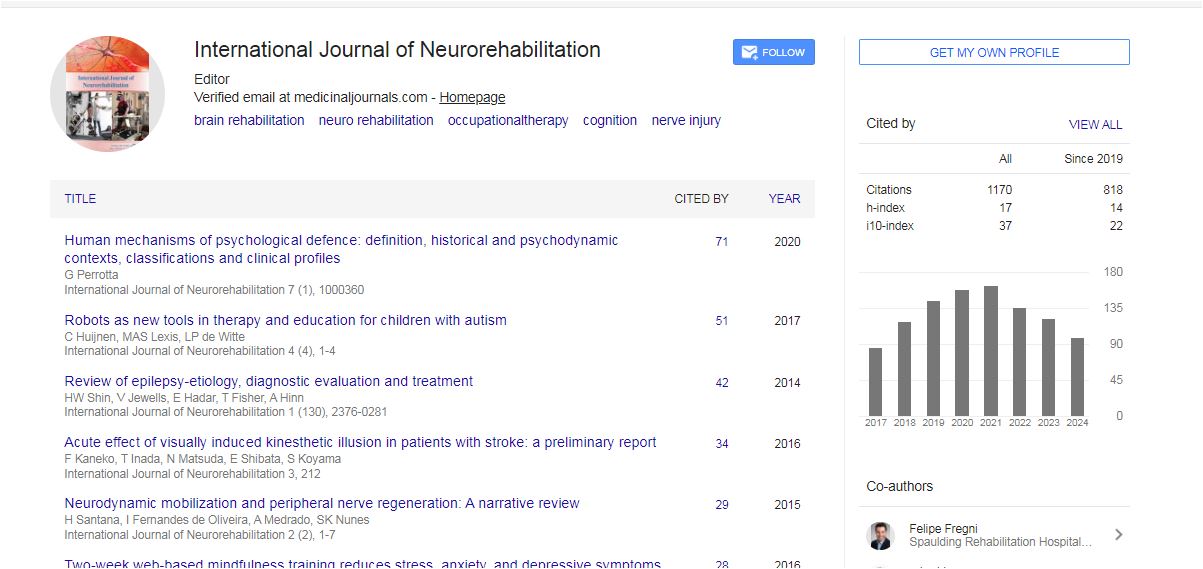
International Journal of Neurorehabilitation received 1078 citations as per Google Scholar report