Short Communication - (2025) Volume 13, Issue 3
Received: 02-Jun-2025, Manuscript No. jpgeb-26-184302;
Editor assigned: 04-Jun-2025, Pre QC No. P-184302;
Reviewed: 18-Jun-2025, QC No. Q-184302;
Revised: 23-Jun-2025, Manuscript No. R-184302;
Published:
30-Jun-2025
, DOI: 10.37421/2329-9002.2025.13.385
Citation: Deshpande, Priya. ”Morphological vs. Molecular Data: A Phylogenetic Comparison.” J Phylogenetics Evol Biol 13 (2025):385.
Copyright: © 2025 Deshpande P. This is an open-access article distributed under the terms of the Creative Commons Attribution License, which permits unrestricted use, distribution and reproduction in any medium, provided the original author and source are credited.
The reconstruction of evolutionary history has long been a central pursuit in biology, with researchers employing a variety of data types to elucidate the relationships between organisms. Among the most prominent of these data types are morphological and molecular characters, each offering distinct advantages and challenges in phylogenetic analysis. Morphological data, encompassing observable physical traits, has been the historical bedrock of taxonomy and systematics. Its direct observation allows for the inference of evolutionary relationships, particularly in cases involving extinct lineages where molecular data is unavailable. The comparative strengths of these data types are being increasingly scrutinized as new methodologies and datasets emerge. Molecular data, derived from DNA, RNA, or protein sequences, has revolutionized phylogenetics in recent decades. Its abundance and the potential for high-resolution analysis have often led to a richer and more densely sampled phylogenetic signal compared to morphology. This allows for finer-scale resolutions of evolutionary events and relationships. However, the interpretation of molecular data requires careful consideration of evolutionary rates and potential biases. The study by Sharma et al. [1] specifically investigates the comparative strengths of morphological and molecular data in reconstructing evolutionary history, focusing on the concept of phylogenetic signal. Disparities in signal strength can arise from fundamental differences in evolutionary rates and the number of informative characters available within datasets. While rapid molecular evolution might obscure deeper divergences, slow morphological evolution can sometimes preserve ancient signals more effectively. This empirical observation highlights the nuanced relationship between data type and phylogenetic resolution, advocating for a thoughtful selection of characters based on the specific evolutionary context. Li et al. [2] empirically examine the impact of data choice on phylogenetic inference and quantify the phylogenetic signal inherent in various morphological and molecular datasets. Assessing the quality of phylogenetic signal from both morphological and molecular sources presents a significant challenge, particularly in datasets exhibiting varying evolutionary dynamics. Factors such as character state changes, homoplasy, and sampling strategies play crucial roles. A high proportion of informative characters in molecular data does not automatically guarantee a superior phylogenetic signal when compared to carefully selected, functionally constrained morphological characters. Chen et al. [3] propose a framework for evaluating the quality of phylogenetic signal from both data types. Different evolutionary processes, including adaptation and genetic drift, can influence the phylogenetic signal present in morphological versus molecular datasets. Morphological characters, often shaped by natural selection, may reflect adaptive radiations, while molecular characters might capture broader phylogenetic relationships influenced more by drift. This leads to variations in the reliability of each data type for reconstructing different timescales of evolution. Tanaka et al. [4] explore how these evolutionary processes influence phylogenetic signal. In situations where molecular data is scarce or problematic, morphological data retains significant utility in phylogenetic reconstruction. The importance of careful character selection and coding strategies cannot be overstated for maximizing the phylogenetic signal from morphological datasets. Despite the perceived advantages of molecular data, well-analyzed morphological data can still yield robust phylogenies, especially for resolving relationships among extinct lineages. Garcia et al. [5] address the utility of morphological data in such scenarios. The impact of data partitions and phylogenetic signal strength on the accuracy of evolutionary trees is a critical area of research. Different types of molecular markers and morphological characters can exhibit varying contributions to tree resolution and support. While some molecular markers carry strong signals, others may be saturated or affected by rapid evolution, diminishing their utility. Morphological data can offer a more stable signal for certain evolutionary questions. Brown et al. [6] provide a partition-based analysis of molecular and morphological data. Congruence and conflict between phylogenetic trees inferred from morphological and molecular datasets are common, stemming from differences in the evolutionary processes acting on these data types. Molecular data may be better at resolving relationships among closely related species, but morphological data can be essential for understanding relationships among distantly related groups or fossil taxa. Moreau et al. [7] examine these congruences and conflicts. The evolutionary rates of morphological and molecular characters significantly impact phylogenetic signal strength. Characters with slower, more consistent evolutionary rates tend to carry a stronger and more reliable phylogenetic signal, regardless of their nature. This underscores the importance of understanding the tempo and mode of evolution when selecting and interpreting phylogenetic data. Lin et al. [8] offer a comparative analysis of evolutionary rates and phylogenetic signal. Beyond static traits, phenotypic plasticity is emerging as a novel source of phylogenetic signal, offering complementary insights into evolutionary history. While acknowledging the value of molecular and stable morphological traits, understanding plasticity can illuminate recent divergences and adaptive responses. Lee et al. [9] explore this potential source of phylogenetic signal, contrasting it with traditional approaches. Numerous studies have attempted to synthesize the effectiveness of morphological versus molecular data in phylogenetic studies. A meta-analysis indicates that molecular data generally offers a higher phylogenetic signal per character, leading to more resolved trees. However, morphological data remains indispensable for inferring relationships among fossils and for resolving deep phylogenetic divergences, particularly when molecular data is limited or unreliable. Chen et al. [10] provide such a meta-analysis across diverse taxa.
The comparative strengths of morphological and molecular data in reconstructing evolutionary history, particularly through the lens of phylogenetic signal, are a subject of ongoing investigation. Morphological data, while historically foundational, can be crucial for understanding macroevolutionary patterns, especially in fossil taxa or for traits subject to strong adaptive constraints. This data type can preserve ancient signals effectively, as observed in studies analyzing clades where such traits are well-defined and have evolved slowly. Researchers emphasize that neither data type is universally superior; their effectiveness is contingent on the specific taxonomic group, the evolutionary timescale, and the precise research question. Sharma et al. [1] highlight this nuanced interplay, suggesting that integrating both data types, when appropriate, can lead to more robust and resolved phylogenies, though careful consideration of data weighting and potential conflicts is essential. Examining the impact of data choice on phylogenetic inference, researchers have quantified the phylogenetic signal inherent in various morphological and molecular datasets. Disparities in signal strength often arise from differences in evolutionary rates and the number of informative characters. While rapid molecular evolution can sometimes obscure deeper divergences, slow morphological evolution can, in certain instances, preserve ancient signals more effectively. This empirically demonstrates the nuanced relationship between data type and phylogenetic resolution, advocating for a thoughtful selection of characters based on the evolutionary context. Li et al. [2] provide such an examination in avian phylogeny. A significant challenge in phylogenetics lies in assessing the quality of phylogenetic signal from datasets that exhibit varying evolutionary dynamics. A proposed framework for evaluating signal quality from both morphological and molecular sources considers factors such as character state changes, homoplasy, and sampling density. It is underscored that a high proportion of informative characters in molecular data does not automatically equate to a superior phylogenetic signal compared to carefully selected, functionally constrained morphological characters. The authors advocate for diagnostic approaches to identify and utilize characters that best reflect the evolutionary history of the group under study. Chen et al. [3] present a harmonized approach for this assessment. Different evolutionary processes, such as adaptation and genetic drift, exert distinct influences on the phylogenetic signal present in morphological versus molecular datasets. Morphological characters, often shaped by selection, may more readily reflect adaptive radiations, whereas molecular characters might capture broader phylogenetic relationships that are more influenced by drift. This divergence in influence means the reliability of each data type for reconstructing different timescales of evolution can vary significantly. Tanaka et al. [4] utilize simulations and empirical examples to illustrate these contrasts. The utility of morphological data in phylogenetic reconstruction remains particularly relevant in situations where molecular data is scarce or presents challenges. The importance of careful character selection and appropriate coding strategies is paramount for maximizing the phylogenetic signal derived from morphological datasets. Despite the often-perceived advantages of molecular data, well-analyzed morphological data can still yield robust phylogenies, especially for resolving relationships among extinct lineages. Garcia et al. [5] offer practical guidance for researchers working with predominantly morphological evidence. Research has also focused on the impact of data partitions and phylogenetic signal strength on the accuracy of evolutionary trees. A comparative analysis of different types of molecular markers and morphological characters assesses their individual contributions to tree resolution and support. Findings suggest that while some molecular markers possess strong phylogenetic signals, others can become saturated or be affected by rapid evolution, thereby diminishing their utility. Conversely, morphological data may offer a more stable signal for certain evolutionary questions. Brown et al. [6] emphasize the need for a critical evaluation of signal quality within each data partition. Investigating the congruence and conflict between phylogenetic trees inferred from morphological and molecular datasets reveals how differences in evolutionary processes acting on these data types can lead to discordant signals. It is observed that while molecular data might be superior for resolving relationships among closely related species, morphological data can be essential for understanding relationships among distantly related groups or fossil taxa. The authors discuss methods for detecting and interpreting signal conflicts, suggesting that a combined approach, carefully weighted, often yields the most comprehensive phylogenetic framework. Moreau et al. [7] explore these implications for evolutionary inference. Quantitative assessments of how variation in evolutionary rates affects the ability to reconstruct accurate phylogenies from different data types are crucial. Studies demonstrate that characters exhibiting slower, more consistent evolutionary rates tend to carry a stronger and more reliable phylogenetic signal, irrespective of whether they are morphological or molecular. This highlights the importance of understanding the tempo and mode of evolution when selecting and interpreting phylogenetic data. Lin et al. [8] provide a comparative analysis of evolutionary rates and phylogenetic signal. The potential of using phenotypic plasticity as a source of phylogenetic signal is being explored, contrasting it with traditional approaches. Researchers investigate how variation in phenotypic traits influenced by environmental factors might reflect evolutionary adaptations or constraints. While acknowledging the value of molecular and stable morphological traits, understanding plasticity is suggested to offer complementary insights into evolutionary history, particularly for understanding recent divergences and adaptive responses. Lee et al. [9] posit phenotypic plasticity as a novel source of phylogenetic signal. A meta-analysis synthesizing findings from numerous published studies provides an overview of the effectiveness of morphological versus molecular data across diverse taxa. The results generally indicate that molecular data offers a higher phylogenetic signal per character, leading to more resolved trees, especially for closely related taxa. However, morphological data remains indispensable for inferring relationships among fossils and for resolving deep phylogenetic divergences, particularly when molecular data is limited or unreliable. The study emphasizes the power of data integration but cautions against overreliance on any single data source. Chen et al. [10] present this meta-analysis.
Research consistently highlights the comparative strengths and weaknesses of morphological and molecular data in reconstructing evolutionary history. Molecular data often provides a richer phylogenetic signal and higher resolution, especially for closely related taxa. However, morphological data remains crucial for understanding macroevolutionary patterns, resolving relationships among fossil taxa, and in situations where molecular data is limited or problematic. Evolutionary rates, character selection, and the influence of evolutionary processes like adaptation and drift significantly affect the phylogenetic signal from each data type. Integrating both morphological and molecular data, with careful consideration of weighting and potential conflicts, generally leads to more robust and comprehensive phylogenies. Neither data type is universally superior; their effectiveness depends on the specific taxonomic group, evolutionary timescale, and research question. Emerging research also explores phenotypic plasticity as a novel source of phylogenetic signal.
None
None
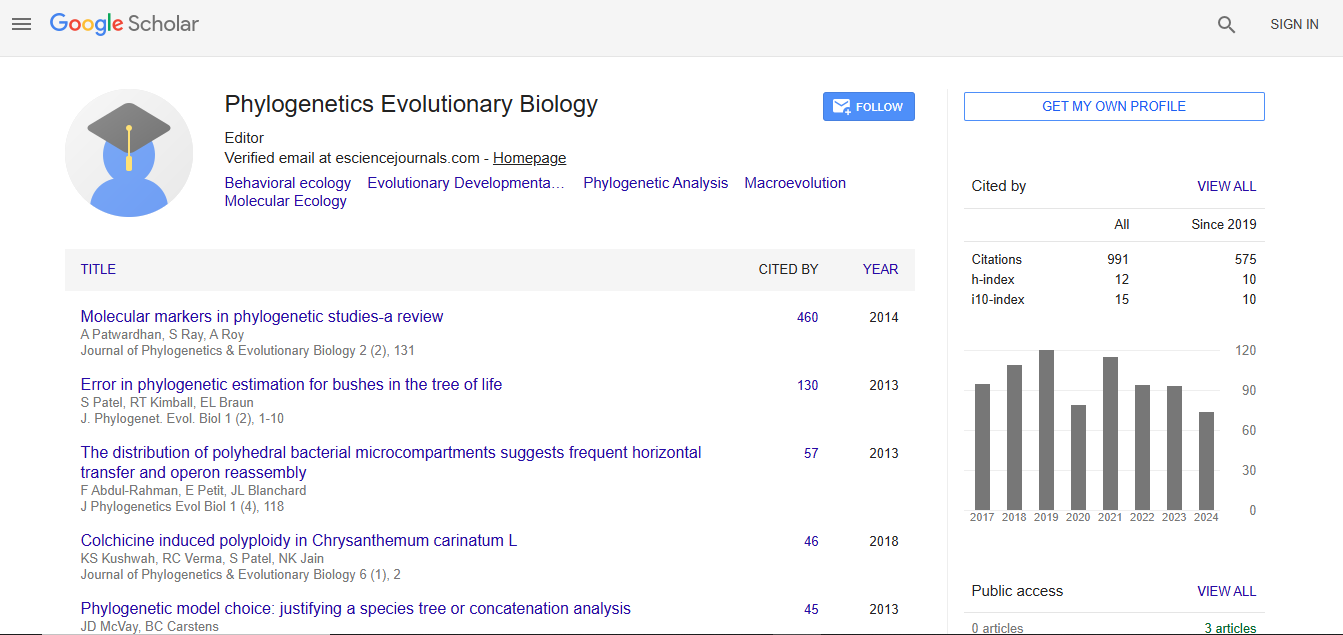
Journal of Phylogenetics & Evolutionary Biology received 911 citations as per Google Scholar report