Commentary - (2025) Volume 14, Issue 6
Received: 31-Oct-2025, Manuscript No. jio-26-184841;
Editor assigned: 03-Nov-2025, Pre QC No. P-184841;
Reviewed: 17-Nov-2025, QC No. Q-184841;
Revised: 21-Nov-2025, Manuscript No. R-184841;
Published:
28-Nov-2025
, DOI: 10.37421/2329-6771.2025.14.589
Citation: Rhodes, Emily. ”Holistic Palliative Care: Enhancing Quality of Life.” J Integr Onco 14 (2025):589.
Copyright: © 2025 Rhodes E. This is an open-access article distributed under the terms of the Creative Commons Attribution License, which permits unrestricted use, distribution and reproduction in any medium, provided the original author and source are credited.
Integrative palliative care for advanced cancer patients is a multifaceted approach that prioritizes a holistic well-being, encompassing physical, emotional, social, and spiritual dimensions. This comprehensive model integrates conventional medical treatments with complementary therapies to substantially improve the quality of life for individuals facing advanced cancer and their families, aiming for optimal comfort and support throughout survivorship [1].
The integration of complementary therapies into palliative cancer care has demonstrated significant efficacy in alleviating symptom burden, notably addressing pain, fatigue, and nausea. Evidence from systematic reviews and meta-analyses supports the use of modalities such as acupuncture, massage therapy, and mindfulness-based stress reduction in enhancing patient-reported outcomes and potentially reducing the reliance on opioid analgesics [2].
Mindfulness-based interventions are increasingly recognized for their profound impact on the psychological well-being of advanced cancer patients receiving palliative care. Studies indicate substantial reductions in anxiety, depression, and stress, accompanied by notable improvements in emotional regulation and coping mechanisms, reinforcing the value of mindfulness in this patient population [3].
Personalized nutritional support plays a critical role in the integrative palliative care strategy for advanced cancer. Research focusing on tailored nutritional counseling has revealed improvements in nutritional status, functional capacity, and overall quality of life, while simultaneously reducing the incidence of malnutrition-related complications [4].
The application of acupuncture and acupressure in managing common symptoms experienced by advanced cancer patients undergoing palliative care, such as pain, nausea, vomiting, and hot flashes, has been systematically reviewed. Findings consistently suggest these therapies can serve as effective adjuncts to conventional care, offering valuable non-pharmacological avenues for symptom relief [5].
Gentle exercise programs have emerged as a beneficial component of palliative care for advanced cancer patients. Studies report enhanced physical function, reduced fatigue, and improved mood among participants engaging in tailored exercise regimens, underscoring the importance of maintaining physical activity for overall patient well-being [6].
The critical role of spiritual care within palliative oncology is being increasingly acknowledged. Addressing existential distress and fostering hope and meaning are paramount, with spiritual support shown to significantly contribute to the overall quality of life and coping abilities of patients with advanced cancer [7].
Music therapy is being explored for its benefits in improving mood and reducing anxiety among advanced cancer patients in palliative care. Preliminary studies suggest that personalized music interventions can lead to significant enhancements in emotional states and overall comfort levels, contributing to a more positive care experience [8].
Art therapy is being investigated as a valuable addition to palliative care for advanced cancer patients, with a focus on its effects on emotional expression, pain management, and quality of life. Findings suggest that art therapy provides an essential outlet for patients to process complex emotions and improve their sense of well-being [9].
Massage therapy has been systematically reviewed for its effectiveness in improving symptom management and quality of life for advanced cancer patients in palliative care. The evidence highlights significant benefits, including pain reduction, anxiety relief, and improved sleep, solidifying its role as a valuable integrative therapy [10].
Integrative palliative care for advanced cancer patients is characterized by a holistic philosophy, aiming to address the complex interplay of physical, emotional, social, and spiritual needs. This comprehensive model synergistically combines established medical treatments with a range of complementary therapies, such as acupuncture, mindfulness practices, and tailored nutritional guidance, to significantly enhance the quality of life for patients and their families during illness and survivorship [1].
The integration of complementary therapies into the palliative care framework for cancer patients has shown marked success in alleviating symptom burden. Specifically, modalities like acupuncture, massage therapy, and mindfulness-based stress reduction have been highlighted in systematic reviews and meta-analyses for their ability to improve patient-reported outcomes and reduce the dependence on opioid analgesics for pain management [2].
Mindfulness-based interventions are proving to be particularly effective in bolstering the psychological well-being of advanced cancer patients undergoing palliative care. Research consistently demonstrates significant reductions in markers of psychological distress, including anxiety, depression, and stress, alongside improvements in emotional regulation and adaptive coping strategies, underscoring the therapeutic value of mindfulness [3].
Personalized nutritional support is an indispensable component of comprehensive integrative palliative care for individuals with advanced cancer. Studies examining the effects of tailored nutritional counseling have reported positive outcomes, including improvements in nutritional status, enhanced functional capacity, and a better quality of life, while also mitigating the risk of malnutrition-related complications [4].
Systematic reviews have consolidated evidence supporting the use of acupuncture and acupressure as effective interventions for managing prevalent symptoms in advanced cancer patients receiving palliative care. These non-pharmacological therapies have demonstrated utility in alleviating pain, nausea, vomiting, and hot flashes, serving as valuable complements to conventional medical treatments [5].
Gentle exercise programs have been recognized for their benefits in palliative care settings for advanced cancer patients. Research indicates that participation in carefully designed exercise regimens can lead to improvements in physical function, a reduction in debilitating fatigue, and an uplift in mood, thereby contributing to the overall well-being of patients [6].
Spiritual care occupies a crucial position within the landscape of palliative oncology. Addressing existential concerns and nurturing a sense of hope and meaning are vital aspects of care, with spiritual support recognized for its substantial contribution to enhancing the quality of life and coping mechanisms of patients facing advanced cancer [7].
Music therapy is emerging as a promising intervention for improving the emotional well-being of advanced cancer patients in palliative care. Evidence from randomized controlled trials suggests that personalized music interventions can lead to significant positive shifts in emotional states and enhance overall patient comfort [8].
Art therapy is being explored for its role as an adjunct to palliative care for advanced cancer patients, with a specific focus on its impact on emotional expression, pain management, and the enhancement of overall quality of life. Qualitative studies suggest it provides a vital avenue for patients to process their experiences and improve their sense of well-being [9].
Massage therapy's effectiveness in palliative cancer care has been systematically reviewed, highlighting its capacity to improve symptom management and patient quality of life. The reviewed literature indicates benefits such as significant pain reduction, relief from anxiety, and improved sleep patterns, supporting its inclusion as an integrative therapeutic option [10].
Integrative palliative care for advanced cancer patients employs a holistic approach, combining conventional treatments with complementary therapies like acupuncture, mindfulness, and nutrition to enhance quality of life and manage symptoms. These complementary therapies, including massage, art, and music therapy, have shown effectiveness in reducing pain, fatigue, nausea, anxiety, and depression. Nutritional support and gentle exercise also play vital roles in improving physical function and well-being. Addressing spiritual needs is also crucial for existential distress and coping. Overall, these integrative strategies aim to empower patients and families through person-centered care, offering non-pharmacological options for symptom relief and improved comfort.
None
None
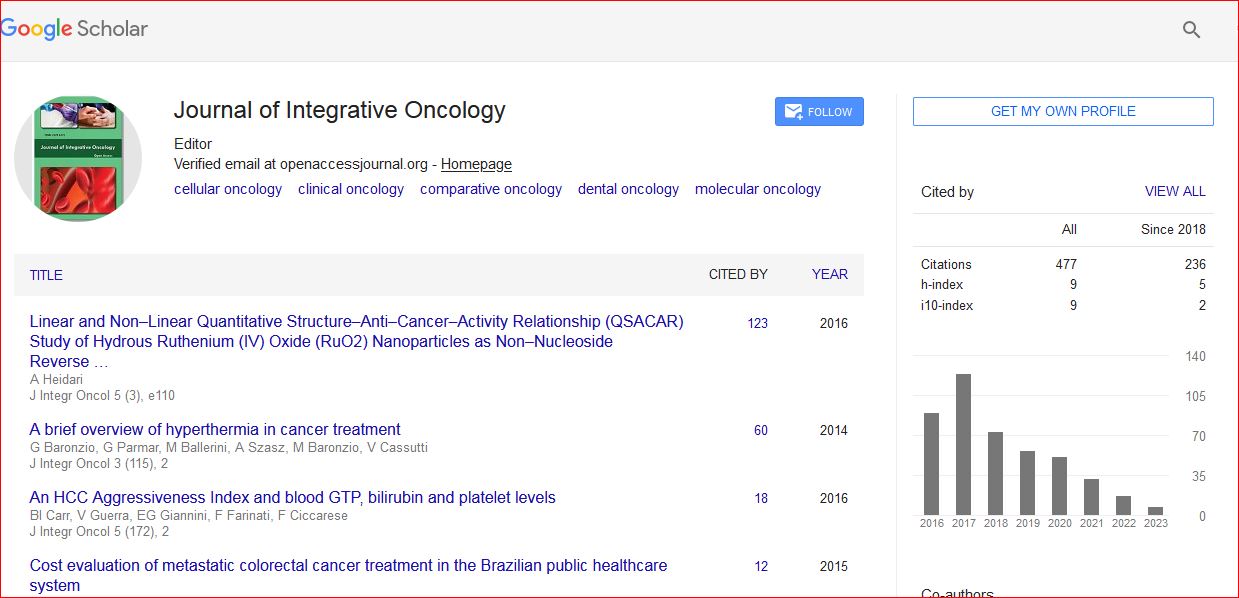
Journal of Integrative Oncology received 495 citations as per Google Scholar report