Commentary - (2025) Volume 12, Issue 4
Received: 02-Aug-2025, Manuscript No. fmoa-26-187935;
Editor assigned: 04-Aug-2025, Pre QC No. P-187935;
Reviewed: 18-Aug-2025, QC No. Q-187935;
Revised: 25-Aug-2025, Manuscript No. R-187935;
Published:
29-Aug-2025
, DOI: 10.37421/2476-2296.2025.12.351
Citation: Papadopoulos, Nikos. ”Gas-Liquid Two-Phase Flow Dynamics in Vertical Pipes.” Fluid Mech Open Acc 12 (2025):351.
Copyright: © 2025 Papadopoulos N. This is an open-access article distributed under the terms of the Creative Commons Attribution License, which permits unrestricted use, distribution and reproduction in any medium, provided the original author and source are credited.
The study of gas-liquid two-phase flow in vertical pipes is fundamental to numerous industrial processes, encompassing oil and gas extraction, chemical engineering, and nuclear power generation. Understanding the complex interactions between the gas and liquid phases is crucial for optimizing system performance, ensuring safety, and predicting operational behavior. This field of research has seen significant advancements, driven by the need for more accurate predictive models and a deeper comprehension of the underlying physics. The diverse flow patterns observed, from dispersed bubbly flow to stratified and annular regimes, each present unique challenges and require specific analytical approaches. Early investigations established foundational principles, while contemporary research leverages sophisticated experimental techniques and computational modeling to unravel finer details. The intricate dynamics of gas-liquid two-phase flow within vertical pipes have been comprehensively analyzed, focusing on flow patterns, interfacial phenomena, and pressure drop characteristics. This analysis highlights the critical role of dimensionless numbers, such as the Reynolds and Froude numbers, in characterizing the various flow regimes, including bubbly, slug, churn, and annular flows. The impact of pipe geometry and fluid properties on the observed flow behavior is emphasized, leading to the development of updated frameworks for predicting flow patterns and pressure losses. These advancements are essential for the effective design and optimization of industrial processes that involve multiphase flows [1].
Investigating the influence of pipe inclination on slug flow characteristics in gas-liquid systems provides valuable insights into the transition between vertical and inclined multiphase flow. This research details how changes in inclination angle affect slug length, frequency, and velocity, and consequently, the overall pressure drop. Such understanding is critical for applications where pipelines deviate from the vertical, a common scenario in oil and gas extraction operations, where variations in terrain necessitate inclined pipe configurations [2].
Research focusing on the annular flow regime in vertical pipes, often employing advanced simulation techniques, delves into the formation and behavior of the liquid film and entrained droplets. These elements are critical for heat and mass transfer processes. The study offers a detailed analysis of interfacial waves and their impact on flow dynamics, contributing to more accurate modeling of this particularly important flow regime, which is prevalent in many high-flow industrial applications [3].
While often focused on microscale phenomena, the impact of surface wettability on gas-liquid two-phase flow offers fundamental principles applicable at any scale. The research highlights how surface properties significantly alter flow regimes and pressure drop. This understanding provides insights applicable to diverse fields, including enhanced oil recovery techniques and the design of microfluidic devices, where surface interactions play a dominant role in fluid behavior [4].
The development of novel computational fluid dynamics (CFD) models for simulating dispersed bubble flow in vertical pipes accounts for bubble coalescence and breakup. These phenomena are crucial for accurately predicting bubble size distribution and overall flow characteristics. The findings derived from such modeling efforts are significant for understanding and predicting the behavior of bubbly flows in a wide array of industrial applications where finely dispersed bubbles are present [5].
Detailed characterization of interfacial wave dynamics in upward annular flow provides insights into wave parameters and their correlation with film thickness and interfacial shear. Understanding these interfacial structures is key to improving the prediction of wall shear stress and overall flow resistance in vertical pipes. This knowledge is vital for optimizing the efficiency of systems experiencing annular flow, such as boilers and condensers [6].
The influence of surfactants on gas-liquid two-phase flow in vertical pipes, specifically their effect on interfacial tension and bubble behavior, has been examined. This work demonstrates that surfactants can significantly alter flow regimes and reduce pressure drop, offering potential strategies for flow control in various industrial processes where surface tension plays a critical role [7].
A comprehensive review of experimental techniques used to study gas-liquid two-phase flow in vertical pipes, including advanced methods like Particle Image Velocimetry (PIV) and capacitance tomography, serves as a valuable resource. This review outlines the strengths and limitations of various diagnostic tools for characterizing flow patterns and velocities, aiding researchers in selecting appropriate methodologies for their studies [8].
Finally, the effect of pipe roughness on gas-liquid flow in vertical upward pipes is investigated, quantifying how increased roughness alters turbulent structures and interfacial behavior, leading to changes in pressure drop and flow regime transitions. This research is important for accurately modeling flows in real-world pipelines, which often possess non-smooth internal surfaces, thus impacting flow dynamics and efficiency [9].
The exploration of gas-liquid two-phase flow in vertical pipes is a dynamic and essential area of fluid mechanics research. The diverse phenomena involved, from the formation and evolution of individual bubbles to the complex interfaces governing annular flow, necessitate a multi-faceted approach. Advances in experimental measurement techniques and computational modeling have significantly enhanced our ability to characterize and predict these flows. The interplay between fluid properties, flow conditions, and geometrical factors dictates the observed flow patterns, which in turn profoundly influence pressure drop, heat transfer, and mass transfer rates. Understanding these relationships is paramount for the efficient and safe design and operation of numerous industrial systems. The continuous development of more sophisticated models, validated by experimental data, promises further improvements in our predictive capabilities and technological applications. The insights gained from studying various flow regimes, including bubbly, slug, and annular flows, are directly transferable to practical engineering challenges, driving innovation and efficiency across a wide spectrum of industries. The influence of external factors, such as pipe inclination and surface characteristics, further adds to the complexity and richness of this research area, requiring continuous investigation and refinement of theoretical and practical approaches. The role of interfacial phenomena, including wave dynamics and the behavior of entrained droplets, is particularly critical in regimes like annular flow, where accurate prediction is essential for managing heat and mass transfer. Furthermore, the introduction of additives like surfactants can significantly modify interfacial properties, offering novel avenues for flow control and performance enhancement. The development of advanced computational tools, capable of simulating complex phenomena such as bubble coalescence and breakup, is crucial for understanding dispersed flow regimes. These numerical models, coupled with experimental validation, provide a powerful means to explore a wide range of operating conditions and system configurations. The review of experimental techniques highlights the importance of reliable measurement methods for characterizing flow patterns, velocities, and interfacial structures, thereby underpinning the advancement of the entire field. Ultimately, the pursuit of a comprehensive understanding of gas-liquid two-phase flow in vertical pipes continues to be driven by the practical demands of industry and the intrinsic scientific curiosity to unravel the complexities of multiphase fluid dynamics. This foundational knowledge directly translates into improved process design, enhanced operational efficiency, and increased safety in a wide range of critical applications worldwide. Further research into the hydrodynamics of slug flow with phase change in vertical pipes addresses scenarios where boiling or condensation occurs. The study explores how latent heat transfer influences slug dynamics, pressure fluctuations, and overall flow stability. This is crucial for applications like evaporators and condensers in various industrial systems, where phase change phenomena significantly impact flow behavior and efficiency [10].
The influence of pipe inclination on slug flow characteristics in gas-liquid systems offers valuable insights into the transition between vertical and inclined multiphase flow. This research details how alterations in the inclination angle affect slug length, frequency, and velocity, consequently influencing the overall pressure drop. This understanding is paramount for applications where pipelines deviate from a purely vertical orientation, a common occurrence in the oil and gas extraction industry, where terrain variations necessitate inclined configurations [2].
The annular flow regime in vertical pipes is a subject of extensive study, often employing advanced simulation techniques to analyze the formation and behavior of the liquid film and entrained droplets. These aspects are critical for effective heat and mass transfer. The research provides a detailed examination of interfacial waves and their consequential impact on flow dynamics, thereby contributing to more precise modeling of this significant flow regime, which is frequently encountered in demanding industrial environments [3].
While often concentrating on microscale phenomena, the examination of surface wettability's impact on gas-liquid two-phase flow provides fundamental principles applicable across various scales. This research underscores how surface properties can profoundly alter flow regimes and pressure drop. The insights gained are applicable to diverse areas, including advanced oil recovery techniques and the sophisticated design of microfluidic devices, where surface interactions are a dominant factor in fluid behavior [4].
The development of novel computational fluid dynamics (CFD) models for simulating dispersed bubble flow in vertical pipes carefully considers bubble coalescence and breakup mechanisms. These processes are integral to accurately predicting the bubble size distribution and overall flow characteristics. The insights derived from such modeling are highly significant for comprehending and forecasting the behavior of bubbly flows across a broad spectrum of industrial applications where dispersed bubbles are a key feature [5].
Detailed characterization of interfacial wave dynamics in upward annular flow offers crucial understanding of wave parameters and their relationship with film thickness and interfacial shear. Grasping these interfacial structures is essential for refining the prediction of wall shear stress and overall flow resistance within vertical pipes. This knowledge is indispensable for optimizing the performance of systems experiencing annular flow, such as industrial boilers and condensers [6].
The investigation into the effects of surfactants on gas-liquid two-phase flow within vertical pipes specifically addresses their influence on interfacial tension and bubble behavior. This study highlights that surfactants possess the capability to modify flow regimes and effectively reduce pressure drop, presenting promising strategies for flow control in numerous industrial applications where surface tension is a critical factor [7].
A comprehensive review of experimental techniques employed for studying gas-liquid two-phase flow in vertical pipes, incorporating advanced methodologies such as Particle Image Velocimetry (PIV) and capacitance tomography, serves as an invaluable resource. This review meticulously outlines the advantages and disadvantages of various diagnostic tools utilized for characterizing flow patterns and velocities, thereby assisting researchers in the selection of optimal methodologies for their specific investigations [8].
The effect of pipe roughness on gas-liquid flow within vertical upward pipes is meticulously examined, providing a quantitative analysis of how elevated roughness influences turbulent structures and interfacial behavior. This leads to observable alterations in pressure drop and flow regime transitions. This particular area of research is critical for the accurate modeling of flows within actual industrial pipelines, which frequently exhibit non-uniform internal surfaces, thereby impacting flow dynamics and overall efficiency [9].
Further exploration into the hydrodynamics of slug flow coupled with phase change in vertical pipes addresses complex scenarios involving boiling or condensation. This research critically examines how latent heat transfer impacts slug dynamics, pressure fluctuations, and the overall stability of the flow. Such understanding is imperative for the effective operation of systems like evaporators and condensers found in a variety of industrial settings [10].
The intricate dynamics of gas-liquid two-phase flow within vertical pipes are comprehensively analyzed, focusing on flow patterns, interfacial phenomena, and pressure drop characteristics. This analysis highlights the critical role of dimensionless numbers, such as the Reynolds and Froude numbers, in characterizing the various flow regimes, including bubbly, slug, churn, and annular flows. The impact of pipe geometry and fluid properties on the observed flow behavior is emphasized, leading to the development of updated frameworks for predicting flow patterns and pressure losses. These advancements are essential for the effective design and optimization of industrial processes that involve multiphase flows [1].
Investigating the influence of pipe inclination on slug flow characteristics in gas-liquid systems provides valuable insights into the transition between vertical and inclined multiphase flow. This research details how changes in inclination angle affect slug length, frequency, and velocity, and consequently, the overall pressure drop. Such understanding is critical for applications where pipelines deviate from the vertical, a common scenario in oil and gas extraction operations, where variations in terrain necessitate inclined pipe configurations [2].
Research focusing on the annular flow regime in vertical pipes, often employing advanced simulation techniques, delves into the formation and behavior of the liquid film and entrained droplets. These elements are critical for heat and mass transfer processes. The study offers a detailed analysis of interfacial waves and their impact on flow dynamics, contributing to more accurate modeling of this particularly important flow regime, which is prevalent in many high-flow industrial applications [3].
While often focused on microscale phenomena, the impact of surface wettability on gas-liquid two-phase flow offers fundamental principles applicable at any scale. The research highlights how surface properties significantly alter flow regimes and pressure drop. This understanding provides insights applicable to diverse fields, including enhanced oil recovery techniques and the design of microfluidic devices, where surface interactions play a dominant role in fluid behavior [4].
The development of novel computational fluid dynamics (CFD) models for simulating dispersed bubble flow in vertical pipes accounts for bubble coalescence and breakup mechanisms. These phenomena are crucial for accurately predicting bubble size distribution and overall flow characteristics. The findings derived from such modeling efforts are significant for understanding and predicting the behavior of bubbly flows in a wide array of industrial applications where dispersed bubbles are a key feature [5].
Detailed characterization of interfacial wave dynamics in upward annular flow provides insights into wave parameters and their correlation with film thickness and interfacial shear. Understanding these interfacial structures is key to improving the prediction of wall shear stress and overall flow resistance in vertical pipes. This knowledge is vital for optimizing the performance of systems experiencing annular flow, such as industrial boilers and condensers [6].
The influence of surfactants on gas-liquid two-phase flow in vertical pipes, specifically their effect on interfacial tension and bubble behavior, has been examined. This work demonstrates that surfactants can significantly alter flow regimes and reduce pressure drop, offering potential strategies for flow control in various industrial processes where surface tension is a critical factor [7].
A comprehensive review of experimental techniques used to study gas-liquid two-phase flow in vertical pipes, including advanced methods like Particle Image Velocimetry (PIV) and capacitance tomography, serves as a valuable resource. This review outlines the strengths and limitations of various diagnostic tools for characterizing flow patterns and velocities, thereby assisting researchers in the selection of optimal methodologies for their specific investigations [8].
The effect of pipe roughness on gas-liquid flow in vertical upward pipes is investigated, quantifying how increased roughness alters turbulent structures and interfacial behavior, leading to observable changes in pressure drop and flow regime transitions. This research is important for the accurate modeling of flows within actual industrial pipelines, which frequently exhibit non-uniform internal surfaces, thereby impacting flow dynamics and overall efficiency [9].
Further research into the hydrodynamics of slug flow with phase change in vertical pipes addresses scenarios where boiling or condensation occurs. The study explores how latent heat transfer influences slug dynamics, pressure fluctuations, and overall flow stability. This understanding is imperative for the effective operation of systems like evaporators and condensers found in a variety of industrial settings [10].
This collection of research investigates various aspects of gas-liquid two-phase flow in vertical pipes. Studies cover the fundamental dynamics of flow patterns, interfacial phenomena, and pressure drop characteristics, emphasizing the role of dimensionless numbers. The influence of pipe inclination and surface wettability on flow behavior is examined, alongside the development of advanced computational models for dispersed bubble flow and detailed analysis of annular flow dynamics. The impact of surfactants and pipe roughness on flow regimes and pressure losses is also explored. Additionally, experimental techniques for studying these flows are reviewed, and research on slug flow with phase change addresses scenarios involving boiling or condensation. These investigations collectively contribute to a more comprehensive understanding and prediction of multiphase flow in industrial applications.
None
None
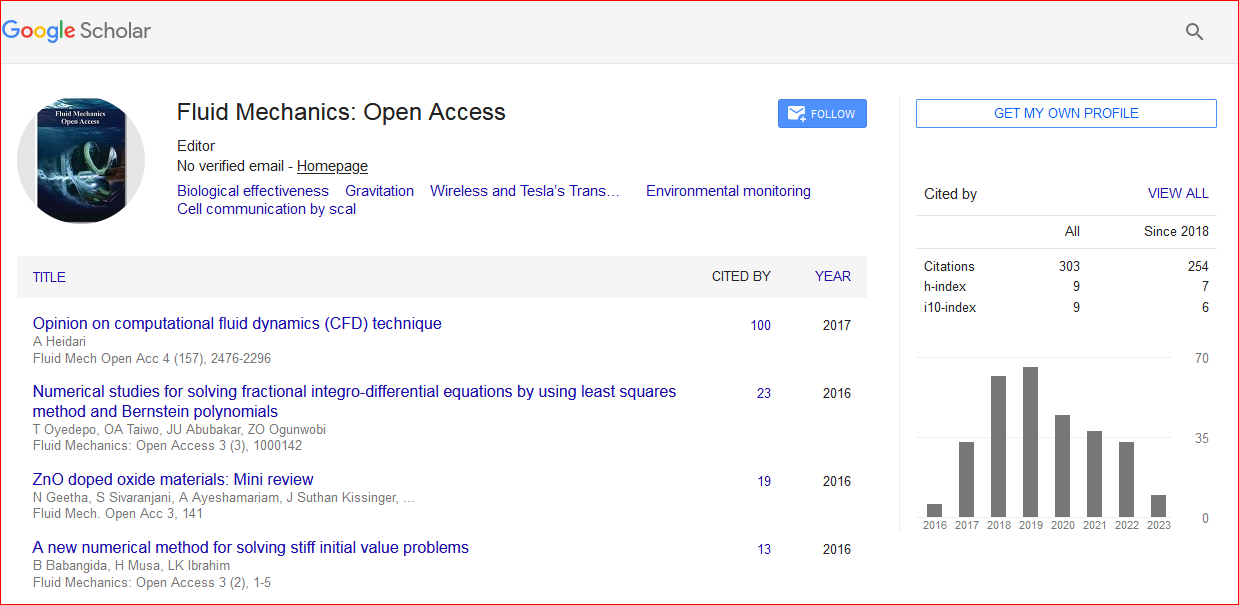
Fluid Mechanics: Open Access received 291 citations as per Google Scholar report