Brief Report - (2025) Volume 13, Issue 6
Received: 01-Dec-2025, Manuscript No. jpgeb-26-184328;
Editor assigned: 03-Dec-2025, Pre QC No. P-184328;
Reviewed: 17-Dec-2025, QC No. Q-184328;
Revised: 22-Dec-2025, Manuscript No. R-184328;
Published:
29-Dec-2025
, DOI: 10.37421/2329-9002.2025.13.407
Citation: Torres, Miguel A.. ”Evolutionary Drivers of Endemic Diversification.” J Phylogenetics Evol Biol 13 (2025):407.
Copyright: © 2025 Torres A. Miguel This is an open-access article distributed under the terms of the Creative Commons Attribution License, which permits unrestricted use, distribution and reproduction in any medium, provided the original author and source are credited.
The intricate tapestry of life on Earth is a testament to the dynamic interplay of geological forces and ecological pressures that have sculpted evolutionary trajectories over vast timescales. Endemic lineages, in particular, offer a unique window into these processes, showcasing how isolation and adaptation drive diversification. Studies investigating these phenomena are paramount for understanding biodiversity and guiding conservation strategies. The evolutionary pathways of endemic species are profoundly influenced by their environments, with geological events often acting as critical architects of isolation and subsequent divergence [1].
Investigating the molecular underpinnings of evolutionary history allows for the resolution of complex phylogenetic relationships and the identification of speciation events. The integration of genetic data with paleoclimatic information is crucial for reconstructing past environmental conditions that shaped lineage diversification, especially for groups with limited dispersal abilities [2].
The impact of anthropogenic activities on natural populations is a growing concern, with habitat fragmentation emerging as a significant driver of genetic differentiation. Changes in landscape connectivity can drastically alter gene flow patterns, leading to the isolation of subpopulations and potentially impacting their long-term evolutionary viability [3].
Reconstructing the historical movements and diversification of species across continents requires sophisticated modeling techniques that account for large-scale geographical and climatic shifts. Paleobiogeographical modeling, when combined with phylogenetic data, can illuminate how continental drift, climate change, and tectonic activity have influenced species distributions and speciation [4].
Marine ecosystems are equally subject to biogeographic influences, with oceanographic currents playing a pivotal role in shaping genetic connectivity. Understanding how past changes in these currents have led to vicariance and the formation of endemic lineages is vital for assessing the resilience of marine biodiversity [5].
Geological events, such as volcanic activity, can create dynamic environments that foster unique evolutionary processes. On isolated islands, repeated volcanic disturbances can lead to cycles of extinction and recolonization, driving both genetic diversity and the speciation of endemic fauna adapted to these fluctuating conditions [6].
Climate fluctuations throughout Earth's history, particularly during the Pleistocene glacial cycles, have had a profound impact on species distributions and diversification. Forest refugia, for instance, have served as critical centers for the survival and evolution of endemic lineages during periods of climatic instability [7].
Freshwater environments provide distinct biogeographic arenas where riverine systems can act as powerful agents of speciation and endemism. The geological formation and subsequent isolation of river basins create barriers that promote the divergence of aquatic populations into unique endemic lineages [8].
Biodiversity hotspots, characterized by unique assemblages of endemic species, often exhibit complex evolutionary histories shaped by past environmental changes. Climate oscillations and associated habitat shifts in these regions have played a significant role in the distribution and genetic divergence of endemic species, rendering them vulnerable to ongoing environmental alterations [9].
In sky island ecosystems, topographic isolation and limited gene flow are primary drivers of speciation and the maintenance of endemic lineages. Molecular data allows for the inference of dispersal events and vicariance, providing critical insights into the evolutionary trajectories of highly specialized plant communities in these isolated environments [10].
The scientific community continues to explore the complex mechanisms that drive the evolution and diversification of life, with a particular focus on endemic species. These specialized lineages often provide invaluable insights into the interplay of historical biogeographic processes and contemporary ecological factors. The study of endemic butterflies, for instance, reveals how geological barriers and ecological pressures have shaped their unique evolutionary paths, emphasizing the role of vicariance and dispersal in generating distinct biogeographic histories, especially within isolated island archipelagos and mountain ranges. This understanding is crucial for effective conservation of vulnerable endemic species [1].
The advent of molecular techniques has revolutionized our ability to decipher the evolutionary past of various taxa. Research into plant families, employing molecular phylogenetics, has uncovered cryptic speciation events driven by past climatic shifts. Integrating phylogenomic data with fossil records and paleoclimatic reconstructions is essential for accurately interpreting the biogeographic history of lineages, particularly those with limited dispersal capabilities [2].
Human-induced landscape alterations pose significant threats to biodiversity, and their impact on genetic structure is a critical area of study. Investigations into endemic amphibian populations demonstrate how habitat fragmentation, by reducing gene flow, leads to increased genetic differentiation between isolated subpopulations. Such research provides vital insights into the long-term evolutionary consequences of human-driven environmental changes [3].
Large-scale geographical transformations, such as continental drift and mountain formation, profoundly influence the dispersal and diversification of species. Paleobiogeographical modeling, applied to avian groups in South America, highlights the dynamic interplay between tectonic activity, climate change, and topography in shaping species' range expansions and contractions, ultimately defining their endemic distributions [4].
Marine environments are not exempt from these biogeographic forces. The impact of oceanographic currents on the genetic connectivity of marine invertebrates is a key research focus. Studies have revealed how past changes in these currents have influenced gene flow and vicariance, leading to the establishment of distinct endemic lineages within sensitive ecosystems like coral reefs, thus contributing to our understanding of marine biodiversity resilience [5].
Geological processes can act as powerful engines of diversification, particularly in isolated settings. The study of endemic insect populations on volcanic islands illustrates how recurring volcanic activity can induce cycles of extinction and recolonization, fostering genetic diversity and speciation within the local fauna [6].
Historical climate variability, including Pleistocene glacial cycles, has demonstrably shaped the distribution and diversification of species. For forest-dwelling rodents in Madagascar, forest refugia during these climatic fluctuations served as crucial centers for endemism, allowing lineages to survive and diversify amidst environmental instability [7].
Within freshwater systems, riverine networks play a significant role in shaping evolutionary trajectories. The formation and subsequent isolation of river basins create biogeographic barriers that drive the divergence of fish populations, leading to the development of distinct endemic lineages, as observed in studies of endemic cyprinid fish [8].
Biodiversity hotspots are characterized by high levels of endemism, often shaped by a complex history of environmental change. In Mediterranean regions, past climate oscillations and resultant habitat shifts have influenced the distribution and genetic divergence of endemic reptiles, contributing to their unique evolutionary status and current vulnerability [9].
Isolation, whether geographical or ecological, is a common theme in the evolution of endemism. In sky island ecosystems, topographic isolation and restricted gene flow are key factors driving speciation and the persistence of distinct evolutionary pathways for specialized endemic plant lineages. Molecular data is instrumental in tracing these biogeographic histories [10].
This collection of research explores the evolutionary processes shaping endemic species across diverse ecosystems. Studies highlight the significant roles of geological events (vicariance, volcanic activity, continental drift), climate change (glacial cycles, fluctuations), and habitat alterations (fragmentation, riverine systems, oceanographic currents) in driving diversification and speciation. Molecular phylogenetics and paleobiogeographical modeling are key tools for reconstructing these historical biogeographic patterns. The research underscores the importance of understanding these processes for conservation efforts, particularly for vulnerable endemic populations facing environmental pressures.
None
None
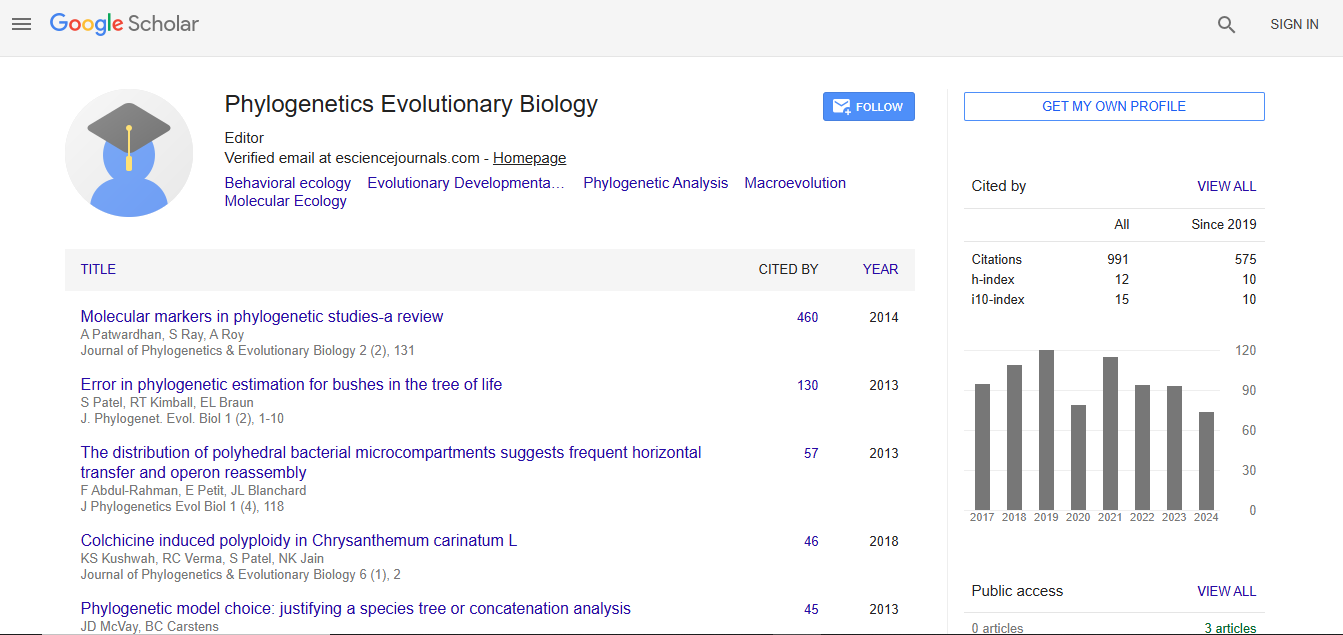
Journal of Phylogenetics & Evolutionary Biology received 911 citations as per Google Scholar report