Commentary - (2026) Volume 16, Issue 1
Received: 01-Jan-2026, Manuscript No. jccr-26-188949;
Editor assigned: 05-Jan-2026, Pre QC No. P-188949;
Reviewed: 19-Jan-2026, QC No. Q-188949;
Revised: 22-Jan-2026, Manuscript No. R-188949;
Published:
29-Jan-2026
, DOI: 10.37421/2165-7920.2026.16.1703
Citation: Carter, Emily. ”Drug-Induced Pemphigus: Diagnosis, Triggers, and Management.” J Clin Case Rep 16 (2026):1703.
Copyright: © 2026 Carter E. This is an open-access article distributed under the terms of the Creative Commons Attribution License, which permits unrestricted use, distribution and reproduction in any medium, provided the original author and source are credited.
Drug-induced pemphigus represents a rare but clinically significant subset of autoimmune blistering diseases, posing considerable diagnostic and therapeutic challenges for clinicians. This condition arises as an adverse reaction to various medications, leading to the formation of autoantibodies that target key adhesion molecules in the epidermis, primarily desmogleins. The presentation can mimic idiopathic pemphigus, necessitating a high index of suspicion and a meticulous review of the patient's medication history. Recent case reports have further illuminated the diverse clinical manifestations, with generalized bullous lesions being a notable, albeit uncommon, presentation that underscores the complexity of this drug-induced phenomenon, demanding careful consideration in the differential diagnosis of severe blistering disorders [1].
The spectrum of drug-induced autoimmune blistering diseases is broad, encompassing various clinical phenotypes, including those resembling pemphigus. Prompt recognition of these entities and the immediate cessation of the offending agent are paramount for achieving disease remission. The review of these conditions emphasizes the critical need for clinicians to maintain a comprehensive understanding of potential drug-induced dermatological reactions to ensure timely and effective management strategies are implemented, thereby mitigating disease severity and improving patient outcomes [2].
Delving into the immunopathological underpinnings of drug-induced pemphigus has provided valuable insights into the specific mechanisms driving disease pathogenesis. Research has focused on the autoantibodies that target desmogleins, essential proteins responsible for maintaining keratinocyte adhesion. Understanding the intricate role these antibodies play in blister formation offers a foundation for exploring novel therapeutic targets aimed at disrupting these autoimmune processes and restoring epidermal integrity [3].
A retrospective analysis of patients diagnosed with drug-induced pemphigus has shed light on the heterogeneity of this condition. This study examined the clinical characteristics and treatment responses, revealing considerable variation in the types of drugs that can act as triggers. Furthermore, it highlighted the efficacy of various immunosuppressive therapies in managing the disease, underscoring the importance of individualized treatment approaches based on patient profiles and disease severity [4].
The management of drug-induced pemphigus requires a strategic and evidence-based approach, as evidenced by systematic reviews synthesizing available data. These reviews explore the utility of corticosteroids, rituximab, and other immunomodulatory agents in controlling the disease. The collective evidence provides a framework for optimizing treatment strategies, aiming to achieve rapid and sustained remission while minimizing potential side effects associated with potent immunosuppression [5].
Diagnostic dilemmas frequently arise when differentiating drug-induced pemphigus from other bullous dermatoses. This challenge underscores the critical importance of obtaining a comprehensive and accurate drug history from patients. Additionally, employing appropriate immunofluorescence studies, both direct and indirect, is essential for confirming the diagnosis and guiding subsequent management decisions, thereby avoiding misdiagnosis and delayed treatment [6].
Certain medications possess the inherent ability to modulate the immune system, potentially triggering or exacerbating autoimmune blistering diseases. This article specifically investigates the role of common drug classes, such as antibiotics and anticonvulsants, in inducing pemphigus. By elucidating these immunomodulatory effects, clinicians can better anticipate and identify drug-related etiologies in patients presenting with pemphigus [7].
The case of drug-induced generalized bullous pemphigus presented in this report illustrates the complexities associated with delayed diagnosis and the challenges posed by polypharmacy. Identifying the specific causative agent can be particularly arduous when patients are prescribed multiple medications, requiring a thorough and systematic investigation to pinpoint the offending drug and facilitate appropriate intervention [8].
A comprehensive review of drug hypersensitivity reactions leading to autoimmune bullous diseases offers valuable context for understanding drug-induced pemphigus. This review dedicates a specific section to this entity, detailing its characteristic clinical features and diagnostic markers. Such overviews are crucial for clinicians encountering these rare but serious adverse drug reactions [9].
While neurocutaneous manifestations are a recognized spectrum of drug reactions, bullous lesions are less commonly associated with neurological involvement. However, this study explores the potential for concurrent neurological symptoms or misdiagnosis in patients presenting with severe cutaneous drug reactions, emphasizing a holistic approach to evaluating complex presentations that may involve both skin and neurological systems [10].
Drug-induced pemphigus is characterized by the emergence of generalized bullous lesions, a rare but significant clinical manifestation that presents a diagnostic hurdle for healthcare professionals. The case report detailing such a presentation emphasizes the necessity of including drug reactions in the differential diagnosis for patients with severe blistering disorders, highlighting the complexity and diagnostic challenges inherent in this condition [1].
Autoimmune blistering diseases induced by drugs encompass a diverse array of clinical presentations, with pemphigus variants being a notable category. The critical importance of promptly identifying the offending medication and discontinuing its use cannot be overstated, as this action is fundamental to achieving remission in affected individuals. This comprehensive review underscores the need for vigilance in recognizing drug-induced autoimmune conditions [2].
The immunopathological mechanisms underlying drug-induced pemphigus are a focal point of ongoing research, particularly concerning the role of autoantibodies directed against desmogleins. These antibodies are instrumental in the process of blister formation, and understanding these pathways offers promising avenues for the development of targeted therapeutic interventions aimed at mitigating disease progression and severity [3].
A retrospective analysis of patients diagnosed with drug-induced pemphigus has provided valuable insights into the variability of drug triggers and the effectiveness of immunosuppressive treatments. This study examined the clinical patterns and treatment outcomes, revealing a range of causative agents and confirming the utility of immunosuppression in managing the condition [4].
Systematic reviews on the management of drug-induced pemphigus synthesize evidence regarding treatment strategies, including the use of corticosteroids, rituximab, and other immunomodulatory agents. These reviews are instrumental in guiding clinical practice by outlining effective approaches to achieve disease control and improve patient prognoses [5].
Distinguishing drug-induced pemphigus from other blistering disorders is often fraught with diagnostic difficulties. A thorough drug history is paramount, and appropriate immunofluorescence studies play a crucial role in confirming the diagnosis, thereby averting potential misinterpretations and ensuring timely and accurate patient care [6].
Certain medications can induce immunomodulatory effects, leading to the onset or exacerbation of autoimmune blistering diseases. This article specifically explores the role of drugs such as antibiotics and anticonvulsants in triggering pemphigus, emphasizing the importance of considering iatrogenic causes in the evaluation of such conditions [7].
A case study detailing drug-induced generalized bullous pemphigus illustrates the challenges encountered with delayed diagnosis, particularly in patients with complex medical histories and multiple comorbidities. Identifying the causative agent within a polypharmacy regimen presents a significant obstacle that requires meticulous investigation [8].
A review article on drug hypersensitivity and autoimmune bullous diseases offers a broad perspective on the topic, with a specific section dedicated to drug-induced pemphigus. This section elucidates its characteristic features and contributes to a better understanding of the relationship between drug reactions and the development of autoimmune blistering conditions [9].
While neurocutaneous manifestations of drug reactions are diverse, bullous lesions are less common. This study investigates the potential for neurological involvement or diagnostic errors in patients presenting with severe cutaneous drug reactions, advocating for a comprehensive evaluation that considers all possible organ system involvement [10].
Drug-induced pemphigus is a rare but significant condition presenting with diverse clinical manifestations, including generalized bullous lesions, posing diagnostic challenges. Prompt identification of the offending drug and its withdrawal are crucial for remission. Research into immunopathological mechanisms, particularly autoantibodies targeting desmogleins, is advancing therapeutic strategies. Clinical studies reveal variability in triggers and the efficacy of immunosuppressive therapies. Management involves corticosteroids, rituximab, and other immunomodulators, guided by systematic reviews. Differentiating it from other blistering disorders requires a thorough drug history and immunofluorescence studies. Certain medications like antibiotics and anticonvulsants can trigger pemphigus. Complex cases, especially with polypharmacy, highlight diagnostic difficulties. A comprehensive understanding of drug hypersensitivity and potential neurocutaneous involvement aids in diagnosis and management.
None
None
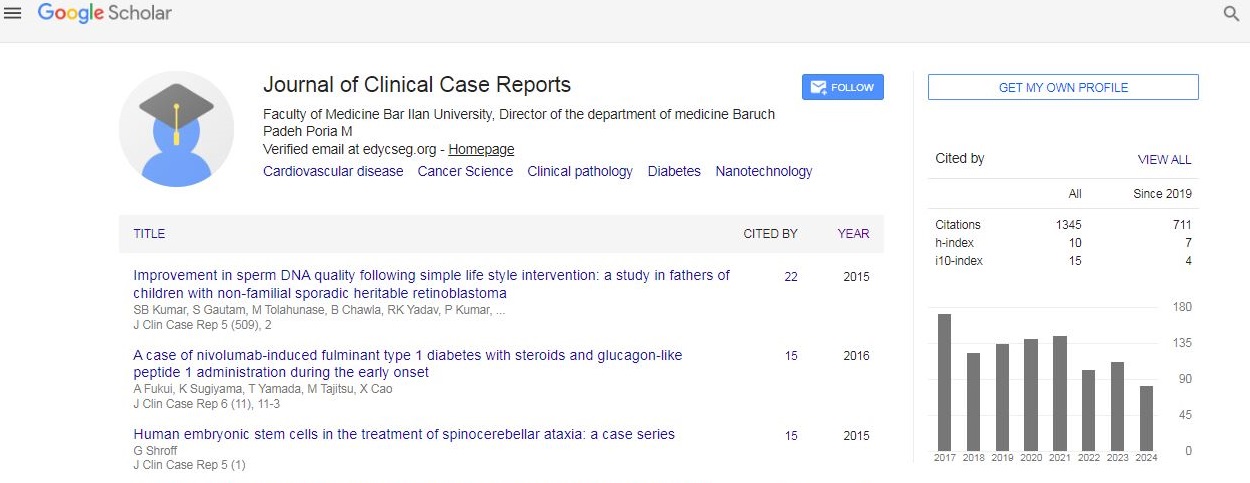
Journal of Clinical Case Reports received 1345 citations as per Google Scholar report