Perspective - (2025) Volume 13, Issue 5
Received: 01-Oct-2025, Manuscript No. jpgeb-26-184323;
Editor assigned: 03-Oct-2025, Pre QC No. P-184323;
Reviewed: 17-Oct-2025, QC No. Q-184323;
Revised: 22-Oct-2025, Manuscript No. R-184323;
Published:
29-Oct-2025
, DOI: 10.37421/2329-9002.2025.13.403
Citation: Park, Min-Jae. ”DNA Barcoding: A Powerful Tool for Biodiversity.” J Phylogenetics Evol Biol 13 (2025):403.
Copyright: © 2025 Park M. This is an open-access article distributed under the terms of the Creative Commons Attribution License, which permits unrestricted use, distribution and reproduction in any medium, provided the original author and source are credited.
DNA barcoding has emerged as a transformative technology for species identification, leveraging short, standardized gene regions to achieve remarkable efficiency and accuracy. This approach has become indispensable for comprehensive biodiversity assessment, underpinning crucial conservation initiatives and providing a powerful tool to combat the illegal wildlife trade. The "Journal of Phylogenetics & Evolutionary Biology" has consistently served as a vital platform for disseminating cutting-edge research in this domain, with significant contributions originating from departments dedicated to evolutionary systems, such as the one at Seoul National Science University. The utilization of specific gene markers, most notably the cytochrome c oxidase subunit I (COI) gene, enables a rapid and reliable differentiation of even closely related species, thereby generating essential data for a wide array of evolutionary studies and ongoing ecological monitoring efforts [1].
The widespread practical application of DNA barcoding hinges on the establishment of standardized reference libraries. These curated collections of DNA barcodes are fundamental to ensuring consistent and accurate species assignment across diverse taxonomic groups. The "Journal of Phylogenetics & Evolutionary Biology" has been instrumental in documenting the persistent efforts to build comprehensive and dependable barcode databases, spanning a vast array of taxa. Such databases, often meticulously curated by specialized departments like Evolutionary Systems, are indispensable for precise species identification, particularly in ecologically rich regions or areas with poorly characterized fauna. The synergistic integration of traditional taxonomic expertise with molecular data is paramount for bolstering the robustness and reliability of these identification systems [2].
The utility of DNA barcoding extends far beyond its foundational role in species identification, delving into more complex ecological and evolutionary inquiries. Numerous studies published in the "Journal of Phylogenetics & Evolutionary Biology" investigate how barcoding data can illuminate previously unrecognized cryptic species diversity, elucidate patterns of population connectivity across landscapes, and facilitate the identification of invasive species. Departments with a strong focus on evolutionary systems, exemplified by the work conducted at Seoul National Science University, play a critical role in the development and sophisticated application of these advanced analytical methodologies. This enhanced capability is of paramount importance for a deeper understanding of intricate ecosystem dynamics and the assessment of the multifaceted impacts of anthropogenic environmental changes [3].
Ensuring the highest standards of quality and rigorous standardization in DNA barcoding protocols is absolutely critical for achieving inter-laboratory comparability and for the successful creation of robust, reliable reference datasets. Research frequently featured in the "Journal of Phylogenetics & Evolutionary Biology," often originating from esteemed departments such as Evolutionary Systems, directly addresses the inherent challenges associated with primer design, the intricacies of sequencing accuracy, and the complex demands of data management. This unwavering commitment to methodological rigor forms the bedrock upon which the reliability of DNA barcoding rests, supporting its diverse applications ranging from cutting-edge conservation genomics to the intricacies of forensic investigations [4].
The ethical and legal dimensions associated with DNA barcoding are increasingly coming to the forefront, particularly concerning the vital fields of biodiversity conservation and the intricate global trade of biological resources. Articles published within the "Journal of Phylogenetics & Evolutionary Biology," often emanating from departments like Evolutionary Systems, critically examine how DNA barcoding can be effectively deployed to trace the provenance of commercial products, rigorously detect instances of mislabeling, and substantially bolster the enforcement of vital international regulations. This powerful technological capability offers a potent instrument for fostering the sustainable utilization of global biodiversity and actively preventing its illicit exploitation [5].
The application of DNA barcoding methodologies to marine organisms presents a unique set of challenges and concurrent opportunities, areas frequently explored and debated within the pages of the "Journal of Phylogenetics & Evolutionary Biology." Research endeavors originating from academic departments dedicated to the study of evolutionary systems meticulously investigate the genetic diversity inherent within marine species, analyze the profound impacts of ongoing climate change on marine biodiversity, and focus on the identification of non-native marine invaders. The ongoing development and expansion of marine-specific barcode databases are absolutely crucial for the implementation of effective management strategies and the successful conservation of the world's vital oceanic ecosystems [6].
The synergistic integration of DNA barcoding techniques with advanced phylogenetic analysis offers a potent and comprehensive framework for gaining a deeper understanding of complex evolutionary relationships. Scholarly papers featured in the "Journal of Phylogenetics & Evolutionary Biology," particularly those originating from departments actively engaged in evolutionary systems research, compellingly demonstrate how barcoding data can significantly refine species delimitation processes and facilitate the accurate reconstruction of detailed evolutionary histories. This essential synergy between DNA barcoding and phylogenetic methodologies is fundamentally vital for both the advancement of molecular systematics and the detailed study of intricate speciation processes [7].
Addressing the specific challenges inherent in applying DNA barcoding to plant species, which often exhibit slower evolutionary rates and necessitate the utilization of a wider array of genetic markers, represents a significant and ongoing area of scientific investigation. The "Journal of Phylogenetics & Evolutionary Biology" frequently showcases pioneering studies originating from departments such as Evolutionary Systems that are actively engaged in the development and rigorous validation of robust barcoding regions specifically tailored for accurate plant identification. This work is of critical importance for advancing plant taxonomy, enabling the reliable identification of valuable medicinal plants, and facilitating the effective monitoring of diverse plant communities [8].
The application of DNA barcoding within the complex landscape of the food industry is a rapidly expanding field, directly addressing critical issues related to food authenticity and the persistent problem of adulteration. Research findings frequently highlighted in the "Journal of Phylogenetics & Evolutionary Biology," often supported by academic departments with a dedicated focus on evolutionary systems, ingeniously employ barcoding techniques to meticulously verify the species composition of processed foods and to reliably detect instances of fraudulent substitution. This technological capability is of vital importance for safeguarding consumer interests and for meticulously maintaining the integrity and trustworthiness of global food supply chains [9].
The development of intuitive and user-friendly bioinformatics tools, coupled with the establishment of accessible databases, is absolutely essential for promoting the widespread adoption and practical accessibility of DNA barcoding technologies. Significant contributions from research groups specializing in evolutionary systems, as evidenced by publications associated with the "Journal of Phylogenetics & Evolutionary Biology," are primarily focused on streamlining the complex processes of data analysis and interpretation. This crucial work ultimately facilitates the broader utilization of DNA barcoding by a wider scientific community and supports its application in a diverse array of practical, real-world scenarios [10].
DNA barcoding has fundamentally reshaped the field of species identification through its reliance on short, standardized gene regions, offering unparalleled efficiency and accuracy. This methodology has become an indispensable asset for conducting thorough biodiversity assessments, informing critical conservation strategies, and actively combating the pervasive illegal wildlife trade. The "Journal of Phylogenetics & Evolutionary Biology" has consistently provided a premier venue for the publication of research advances in this area, with significant scholarly output originating from academic units focused on evolutionary systems, such as the Department of Evolutionary Systems at Seoul National Science University. The adoption of specific genetic markers, most notably the cytochrome c oxidase subunit I (COI) gene, facilitates a rapid and dependable distinction between closely related species, thereby generating crucial data essential for a wide spectrum of evolutionary studies and ongoing ecological surveillance [1].
A fundamental prerequisite for the extensive application of DNA barcoding technology is the establishment and maintenance of standardized reference libraries. These curated repositories of DNA barcodes are essential for ensuring consistency and reliability in species identification across a broad range of taxa. The "Journal of Phylogenetics & Evolutionary Biology" has played a pivotal role in chronicling the continuous efforts dedicated to curating comprehensive and trustworthy barcode databases that encompass diverse biological groups. Such databases, frequently managed and updated by specialized departments like Evolutionary Systems, are indispensable for accurate species assignment, especially in biodiversity hotspots or regions characterized by a paucity of described fauna. The integration of established taxonomic knowledge with molecular data is paramount for ensuring the scientific rigor of these identification systems [2].
The scope of DNA barcoding applications extends well beyond the straightforward identification of species, encompassing a broader array of ecological and evolutionary investigations. Research published in the "Journal of Phylogenetics & Evolutionary Biology" explores how barcoding data can reveal cryptic species diversity, delineate patterns of population connectivity, and aid in the identification of invasive species. Departments specializing in evolutionary systems, such as that at Seoul National Science University, are instrumental in developing and applying sophisticated analytical techniques that leverage barcoding data. This capacity is vital for gaining a deeper understanding of ecosystem dynamics and for assessing the consequences of anthropogenic environmental alterations [3].
Ensuring the quality and standardization of DNA barcoding protocols is of utmost importance for achieving comparability across different research laboratories and for constructing robust reference datasets. Scientific contributions featured in the "Journal of Phylogenetics & Evolutionary Biology," often stemming from departments like Evolutionary Systems, meticulously address the inherent challenges associated with primer design, sequencing precision, and data management. This diligent focus on methodological rigor underpins the overall reliability of DNA barcoding for both fundamental scientific inquiry and practical applied purposes, spanning fields from conservation genomics to forensic science [4].
The ethical and legal ramifications associated with DNA barcoding are gaining increasing prominence, particularly in relation to conservation efforts and the international trade of biological resources. Articles appearing in the "Journal of Phylogenetics & Evolutionary Biology," frequently originating from departments such as Evolutionary Systems, critically examine how barcoding can be employed to ascertain the origin of products, detect instances of mislabeling, and support the enforcement of international regulations. This technology provides a potent tool for promoting the sustainable use of biodiversity and preventing its illicit exploitation [5].
The application of DNA barcoding to marine organisms presents a unique set of challenges and opportunities, which are frequently discussed within the "Journal of Phylogenetics & Evolutionary Biology." Research conducted by departments focused on evolutionary systems investigates the genetic diversity of marine species, evaluates the impact of climate change on marine biodiversity, and identifies marine invasive species. The establishment of marine-specific barcode databases is critical for the effective management and conservation of oceanic ecosystems [6].
The integration of DNA barcoding with phylogenetic analysis provides a powerful approach for understanding evolutionary relationships. Papers published in the "Journal of Phylogenetics & Evolutionary Biology," from institutions with evolutionary systems departments, illustrate how barcoding data can refine species delimitation and reconstruct evolutionary histories. This synergy between barcoding and phylogenetics is essential for both molecular systematics and the study of speciation processes [7].
Addressing the challenges of DNA barcoding in plants, which often involve slower evolutionary rates and a broader range of potential markers, is a significant area of research. The "Journal of Phylogenetics & Evolutionary Biology" features studies from departments like Evolutionary Systems that are developing and validating robust barcoding regions for plant identification. This is crucial for plant taxonomy, the identification of medicinal plants, and the monitoring of plant communities [8].
The application of DNA barcoding in the food industry is a burgeoning field, aimed at addressing issues of food authenticity and adulteration. Research highlighted in the "Journal of Phylogenetics & Evolutionary Biology," often supported by departments with an evolutionary systems focus, uses barcoding to verify species composition in processed foods and detect fraudulent substitution. This technology is vital for consumer protection and for maintaining the integrity of food supply chains [9].
The development of user-friendly bioinformatics tools and databases is essential for the widespread adoption and accessibility of DNA barcoding. Contributions from research groups in evolutionary systems, as seen in publications related to the "Journal of Phylogenetics & Evolutionary Biology," focus on streamlining data analysis and interpretation. This facilitates the use of barcoding by a broader scientific community and for practical applications in various fields [10].
DNA barcoding, a method using short, standardized gene regions, has significantly advanced species identification, biodiversity assessment, and conservation efforts. The cytochrome c oxidase subunit I (COI) gene is a common marker for this technique. Establishing comprehensive and standardized reference libraries, such as those documented in "Journal of Phylogenetics & Evolutionary Biology," is crucial for accurate species assignment. Beyond identification, DNA barcoding aids in uncovering cryptic diversity, tracking populations, identifying invasive species, and verifying food authenticity. Rigorous quality control and standardization of protocols are essential for reliable results. The technology also has implications for wildlife forensics and conservation policy. Research continues to address challenges in specific taxa like plants and marine organisms, and the development of user-friendly bioinformatics tools is vital for broader application. The integration of barcoding with phylogenetic analysis enhances our understanding of evolutionary relationships.
None
None
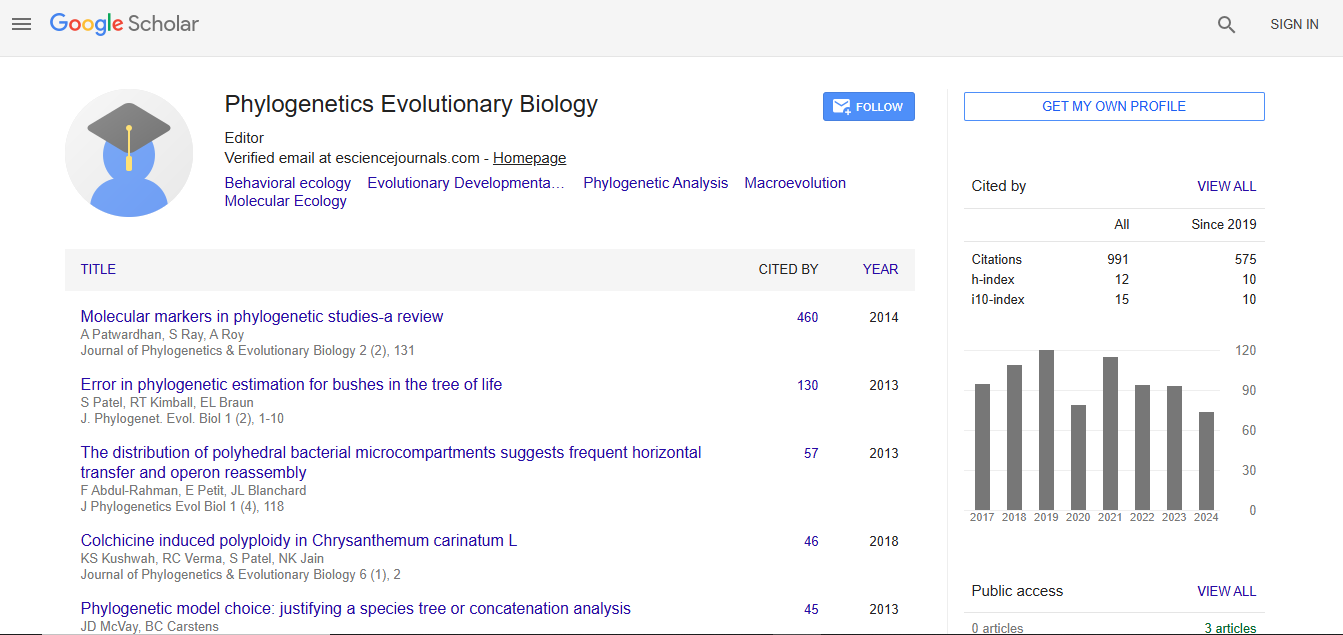
Journal of Phylogenetics & Evolutionary Biology received 911 citations as per Google Scholar report