Commentary - (2025) Volume 12, Issue 4
Received: 02-Aug-2025, Manuscript No. fmoa-26-187937;
Editor assigned: 04-Aug-2025, Pre QC No. P-187937;
Reviewed: 18-Aug-2025, QC No. Q-187937;
Revised: 25-Aug-2025, Manuscript No. R-187937;
Published:
29-Aug-2025
, DOI: 10.37421/2476-2296.2025.12.352
Citation: Okafor, Chinedu. ”Computational Bubble Dynamics in Liquid Columns.” Fluid Mech Open Acc 12 (2025):352.
Copyright: © 2025 Okafor C. This is an open-access article distributed under the terms of the Creative Commons Attribution License, which permits unrestricted use, distribution and reproduction in any medium, provided the original author and source are credited.
The study of bubble dynamics in liquid columns is a fundamental area within fluid mechanics, with significant implications across various scientific and engineering disciplines. Researchers have increasingly utilized advanced computational techniques to gain a deeper understanding of the complex phenomena involved in bubble behavior. These investigations are crucial for optimizing processes in chemical engineering, material processing, and beyond. A comprehensive numerical investigation into the dynamic behavior of bubbles within liquid columns has been conducted, focusing on key phenomena such as bubble rise, deformation, and coalescence under a range of flow conditions. Advanced computational fluid dynamics techniques were employed to capture the intricate interfacial physics, providing valuable insights into the mechanisms governing bubble dispersion and its impact on overall fluid flow characteristics. The findings from this research are directly relevant to multiphase flow applications in chemical engineering and material processing, contributing to the development of more efficient industrial processes [1].
A detailed numerical analysis of bubble detachment and rise in a quiescent liquid has been presented, with a specific focus on exploring the influence of surface tension and viscosity on bubble shape evolution. The authors employed a volume-of-fluid method, a sophisticated approach for accurately tracking fluid interfaces, which revealed how these critical parameters dictate the transition from spherical to irregular bubble shapes. A thorough understanding of this intricate process is paramount for applications involving the controlled generation and transport of bubbles [2].
Furthermore, research has delved into the interaction and coalescence of bubbles within confined narrow columns, specifically examining how such confinement influences their dynamic behavior. Through the application of direct numerical simulation, researchers meticulously analyzed the forces that drive bubble merging and the subsequent changes in bubble shape, thereby highlighting the critical role of liquid film thinning in these processes. This line of inquiry offers crucial insights into the operational principles of bubble column reactors and the mechanics of foaming processes, underscoring the importance of confinement effects [3].
Another significant contribution comes from the numerical investigation into the deformation and breakup of a single bubble rising in a shear-thinning fluid column. The authors expertly utilized a phase-field model, a powerful tool for simulating evolving interfaces, to reveal the complex interplay between bubble inertia, fluid rheology, and surface tension. The resultant findings are of substantial significance for advancing our comprehension of multiphase flows occurring within non-Newtonian media, a common scenario in many industrial applications [4].
In parallel, a numerical study was undertaken to investigate the trajectory and shape evolution of bubbles in a vertical liquid column subjected to external force fields, such as gravity. By employing a lattice Boltzmann method, a versatile numerical technique, the study successfully quantified the drag and lift forces acting on the bubbles and assessed their influence on the bubble's trajectory. These insights hold considerable implications for the design and optimization of bubble column reactors and various aeration processes [5].
A numerical investigation into the dynamics of a swarm of bubbles rising within a liquid column has also been reported, with a particular emphasis on their interactions and collective behavior. A sophisticated multi-phase flow solver, built upon the coupled level set and volume-of-fluid approach, was utilized to meticulously model the complex interactions occurring between bubbles and between bubbles and the column walls. The knowledge gained from this study is highly relevant for optimizing bubble column reactors and for a deeper understanding of froth flotation processes [6].
The effect of surfactants on bubble dynamics within a liquid column has been a subject of dedicated research, focusing on how these additives modify surface tension and interfacial rheology. A finite element method was employed to solve the governing equations, effectively demonstrating how surfactants can significantly alter bubble rise velocity, shape, and coalescence behavior. This understanding is of critical importance for a wide range of applications including foaming, emulsification, and sophisticated drug delivery systems [7].
Additionally, a numerical investigation into the dynamics of a single bubble rising in a viscous liquid column, with explicit consideration of wall effects, has been presented. The authors employed a finite difference method, a robust numerical technique, to track the bubble interface and meticulously analyze the influence of proximity to the wall on the bubble's trajectory and deformation. These findings possess direct relevance to the design and operation of microfluidic devices and the understanding of fluid flow within confined geometries [8].
Finally, the influence of temperature gradients on bubble dynamics within a liquid column has been numerically examined, with a specific focus on thermocapillary effects. A spectral element method was utilized to solve the coupled fluid flow and heat transfer equations, revealing how thermal gradients can induce significant Marangoni stresses. These stresses, in turn, affect bubble shape and motion, a phenomenon of considerable importance for applications in heat exchangers and boiling processes [9].
This collection of research highlights the multifaceted nature of bubble dynamics and the indispensable role of numerical simulations in unraveling these complex fluid phenomena. The diverse methodologies and the range of parameters investigated underscore the ongoing efforts to build a comprehensive understanding of bubble behavior in various liquid environments. Such foundational knowledge is essential for the advancement of numerous technological applications.
The dynamic behavior of bubbles within liquid columns represents a critical area of study in fluid mechanics, with significant practical implications in engineering and scientific applications. Researchers have consistently employed advanced numerical simulation techniques to meticulously explore the intricate phenomena associated with bubble motion, deformation, and interaction. These investigations are vital for the optimization of processes in sectors such as chemical engineering, material processing, and multiphase flow systems. A seminal numerical study has investigated the dynamic behavior of single and multiple bubbles within viscous liquid columns, concentrating on aspects like bubble rise, shape changes, and coalescence under varied flow conditions. The research utilized sophisticated computational fluid dynamics (CFD) methods to accurately capture the complex physics at the fluid interface. This provided profound insights into the mechanisms that govern bubble dispersion and its subsequent influence on the overall flow characteristics of the fluid. The outcomes of this study are highly relevant to multiphase flow applications in chemical engineering and material processing, contributing valuable data for process enhancement [1].
A separate work presented a detailed numerical analysis focused on bubble detachment and subsequent rise in a quiescent liquid. This research specifically explored the impact of surface tension and fluid viscosity on the evolving shape of the bubble. By employing a volume-of-fluid (VOF) method, known for its accuracy in tracking interfaces, the study elucidated how these parameters critically determine the transition from a spherical to a more irregular bubble morphology. Understanding this fundamental process is essential for applications involving bubble generation and controlled transport [2].
Further research has concentrated on the interaction and coalescence of bubbles within confined, narrow columns, investigating the effects of such geometric constraints on bubble dynamics. Through the application of direct numerical simulation (DNS), the researchers systematically examined the forces that induce bubble merging and the subsequent alterations in their shapes, emphasizing the significant role of liquid film thinning. This work offers crucial insights applicable to the design and operation of bubble column reactors and processes involving foam formation [3].
Another notable contribution is a numerical investigation into the deformation and breakup dynamics of a single bubble ascending in a shear-thinning fluid column. The researchers employed a phase-field model, a robust tool for simulating interfacial phenomena, to meticulously capture the bubble interface. This revealed a complex interplay between inertial forces, the rheological properties of the fluid, and surface tension. The findings derived from this study are particularly significant for understanding multiphase flows in non-Newtonian fluid environments, which are prevalent in many industrial settings [4].
In a related study, a numerical investigation was conducted on the trajectory and shape evolution of bubbles in a vertical liquid column experiencing external force fields, such as gravity. The application of a lattice Boltzmann method (LBM) enabled the quantification of drag and lift forces acting on the bubbles, as well as their collective influence on the bubble's path. The results have direct implications for the design and efficiency of bubble column reactors and aeration systems [5].
Research also explored the dynamics of bubble swarms rising in a liquid column, focusing on inter-bubble interactions and collective behavior. A multi-phase flow solver, integrating coupled level set and volume-of-fluid (CLSVOF) approaches, was utilized to model complex bubble-bubble and bubble-wall interactions. The insights gained are valuable for optimizing bubble column reactors and for understanding processes like froth flotation [6].
The influence of surfactants on bubble dynamics in a liquid column was also examined, specifically how they modify surface tension and interfacial rheology. Using a finite element method (FEM) to solve the governing equations, the study demonstrated how surfactants alter bubble rise velocity, shape, and coalescence behavior. This knowledge is vital for applications involving foaming, emulsification, and targeted drug delivery systems [7].
A numerical investigation into the dynamics of a single bubble rising in a viscous liquid column, with careful consideration of wall effects, was presented. A finite difference method (FDM) was employed to track the bubble interface, allowing for a detailed analysis of how proximity to the wall affects the bubble's trajectory and deformation. These findings are particularly relevant for microfluidic devices and flows within confined geometries [8].
Finally, the impact of temperature gradients on bubble dynamics in a liquid column was numerically studied, with a focus on thermocapillary effects. A spectral element method was used to solve the coupled fluid flow and heat transfer equations. The study revealed how thermal gradients can induce Marangoni stresses, influencing bubble shape and motion, a phenomenon critical for heat exchangers and boiling processes [9].
Collectively, these studies highlight the power of numerical simulations in unraveling the complex physics of bubble dynamics in liquid columns. The diverse methodologies and the range of phenomena investigated provide a comprehensive overview of the current state of research and its implications for various industrial and scientific applications.
This collection of studies numerically investigates bubble dynamics in liquid columns, covering phenomena such as rise, deformation, coalescence, detachment, and interaction under various conditions. Advanced computational methods like CFD, VOF, DNS, phase-field models, LBM, and FEM are employed to analyze the influence of parameters like surface tension, viscosity, confinement, fluid rheology, external forces, surfactants, wall effects, and temperature gradients. The research provides crucial insights into bubble behavior, which are applicable to optimizing processes in chemical engineering, material processing, bubble column reactors, microfluidics, and other multiphase flow applications.
None
None
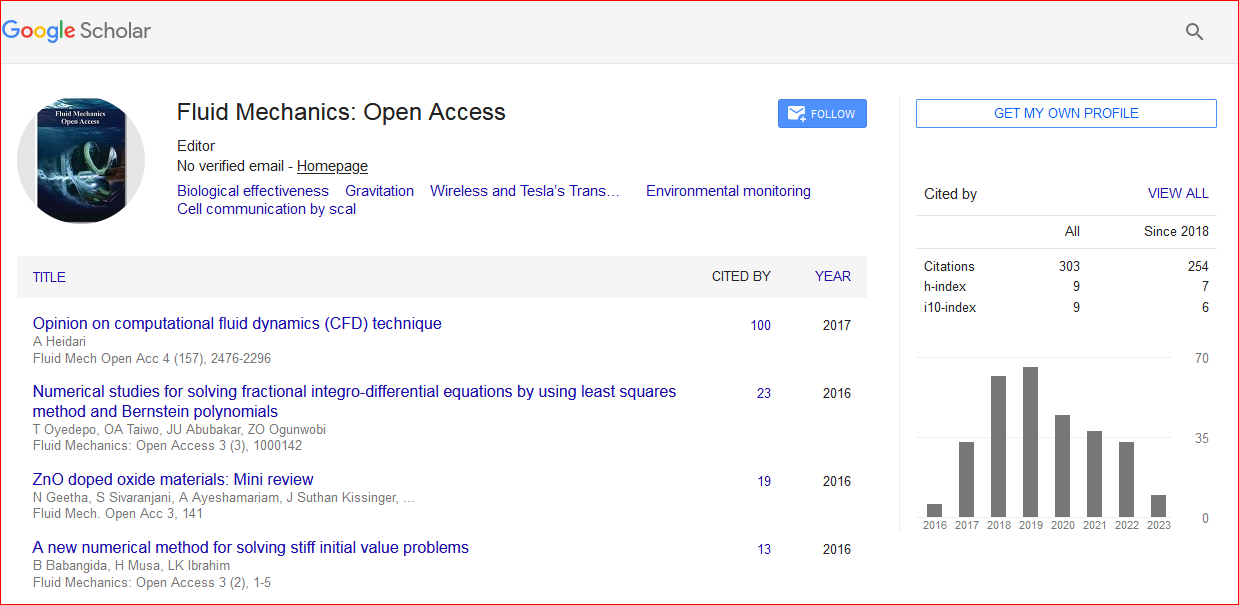
Fluid Mechanics: Open Access received 291 citations as per Google Scholar report