Commentary - (2025) Volume 12, Issue 3
Received: 02-Jun-2025, Manuscript No. fmoa-26-187909;
Editor assigned: 04-Jun-2025, Pre QC No. P-187909;
Reviewed: 18-Jun-2025, QC No. Q-187909;
Revised: 23-Jun-2025, Manuscript No. R-187909;
Published:
30-Jun-2025
, DOI: 10.37421/2476-2296.2025.12.334
Citation: Johnson, Sarah. ”CFD Simulation Of Multiphase Flow In Pipelines.” Fluid Mech Open Acc 12 (2025):334.
Copyright: © 2025 Johnson S. This is an open-access article distributed under the terms of the Creative Commons Attribution License, which permits unrestricted use, distribution and reproduction in any medium, provided the original author and source are credited.
The intricate field of multiphase flow within industrial pipelines presents a persistent engineering challenge, necessitating rigorous scientific investigation to ensure operational efficiency and safety. Recent advancements in computational fluid dynamics (CFD) have significantly enhanced our ability to model and understand these complex phenomena. One area of focus is the numerical simulation of gas-liquid or gas-solid mixtures, where phenomena like phase separation, slugging, and pressure drop are critical concerns. Studies employing advanced CFD models reveal how pipeline geometry, flow rates, and fluid properties exert considerable influence on flow regimes and overall transport capacity, providing a scientific foundation for pipeline optimization [1].
Furthermore, the behavior of stratified and intermittent gas-liquid flows in inclined pipelines has been a subject of detailed numerical analysis. The development and validation of CFD models capable of precisely predicting the transition boundaries between various flow regimes are paramount. These models highlight the substantial impact of inclination angles on the formation of slugs and liquid holdup, which is crucial for maintaining stable flow in oil and gas transportation systems and preventing operational issues [2].
In parallel, the transport of particle-laden flows, a subset of gas-solid flow in pipelines, demands specialized modeling approaches. Eulerian-Lagrangian methods are utilized to track solid particles and their interactions with the gas phase, quantifying the influence of particle loading, size distribution, and flow velocity on erosion rates and pressure drop. These insights are indispensable for the design of pipelines handling solid materials in pneumatic conveying systems, aiming to minimize wear and maximize transport efficiency [3].
Slugging, a particularly disruptive phenomenon in gas-liquid multiphase flow, has also been extensively studied through numerical simulations. Investigations into the impact of pipe configurations, such as bends and diameter changes, on slug frequency and characteristics offer a deeper understanding of the transition from dispersed to slug flow. Methodologies for mitigating slugging events, which pose significant operational and safety risks, are continuously being developed [4].
The accurate capture of interfaces between different phases, such as oil and water or gas and liquid, in transient multiphase flows is another critical aspect addressed by advanced numerical techniques. The Volume of Fluid (VOF) method has demonstrated its capability in simulating these transient flows, accurately predicting phase distribution and mixing when validated against experimental data, which is vital for processes involving immiscible fluid transport [5].
The flow of dense suspensions in pipelines, a type of multiphase flow with considerable industrial relevance, is characterized by non-Newtonian behavior and the tendency for particle settling. Computational approaches are employed to model these slurries, identifying conditions leading to settling, deposit formation, and associated pressure drop increases. This research is essential for the effective design and operation of pipelines carrying materials like mining tailings or concrete [6].
Moreover, the rheological and flow characteristics of liquids can be significantly altered by the presence of gas bubbles. Advanced CFD techniques are used to simulate bubble dynamics, including coalescence and break-up, quantifying how bubble presence and distribution affect effective viscosity and flow patterns, thereby impacting pressure gradients and pumping requirements. This is especially pertinent for aerated liquids or processes involving gas injection [7].
In vertical upward pipelines, annular flow presents a distinct challenge, characterized by the interface between a gas core and a liquid film. Numerical simulations focusing on surface tension and wall shear effects help analyze the stability of the liquid film and droplet formation. This is crucial for accurately predicting pressure drop and the risk of liquid fallback, particularly in natural gas production and transport [8].
The complex interplay of gas, liquid, and solid particles in a single pipeline system is relevant to numerous chemical and petrochemical processes. Multi-phase CFD models are employed to track the motion and distribution of each phase, highlighting how particle characteristics influence gas-liquid flow patterns and vice versa. These insights are vital for optimizing the efficiency and preventing blockages in pipelines handling slurries with entrained gas [9].
Finally, the impact of pipeline bends on multiphase flow regimes, specifically gas-liquid mixtures, has been a subject of numerical investigation. Models simulating flow patterns, pressure losses, and phase segregation around bends reveal how these geometric features can induce significant behavioral changes, potentially leading to slugging or increased holdup, underscoring the importance of optimizing pipeline network layouts for efficient transport [10].
The numerical investigation into multiphase flow dynamics within industrial pipelines has seen significant advancements, particularly in the simulation of gas-liquid and gas-solid mixtures. Advanced CFD models are instrumental in capturing complex phenomena such as phase separation, slugging, and pressure drop. These studies reveal a strong correlation between pipeline geometry, flow rates, and fluid properties, which collectively dictate flow regimes and overall transport efficiency. The findings provide a scientific basis for optimizing pipeline designs and operational strategies to mitigate issues like erosion and enhance transport capacity [1].
A thorough numerical analysis of stratified and intermittent gas-liquid flows in inclined pipelines has been conducted, with a strong emphasis on developing and validating CFD models. These models are crucial for accurately predicting the transition boundaries between different flow regimes. The research underscores the significant influence of inclination angle on slug formation and liquid holdup, highlighting the importance of understanding these transitions for preventing operational problems and ensuring stable flow in oil and gas transportation [2].
In the realm of gas-solid flow, a detailed numerical study has explored particle-laden flows, employing Eulerian-Lagrangian approaches to track solid particles and their interactions with the gas phase. This methodology quantifies the impact of particle loading, size distribution, and flow velocity on erosion rates and pressure drop. Such insights are vital for the design of pipelines that handle solid materials, for instance, in pneumatic conveying systems, to minimize wear and maximize operational efficiency [3].
The challenging phenomenon of slugging in gas-liquid multiphase flow has been a primary focus of numerical simulations. Investigations have examined the effect of pipe configurations, including bends and changes in diameter, on slug frequency and characteristics. This research deepens the understanding of the transition from dispersed flow to slug flow and proposes methodologies for mitigating slugging events, which are known to cause considerable operational disruptions and safety concerns in pipelines [4].
A key aspect of multiphase flow simulation involves the accurate representation of interfaces between different phases, such as oil and water, or gas and liquid. The Volume of Fluid (VOF) method has been employed for simulating transient multiphase flows in industrial pipelines, demonstrating its capability to accurately capture phase interfaces. Validation against experimental data confirms its proficiency in predicting phase distribution and mixing, a critical factor for processes involving the transport of immiscible fluids [5].
Dense suspension flow in pipelines, a complex multiphase scenario with significant industrial implications, has been numerically simulated. Computational approaches are utilized to model the non-Newtonian behavior of slurries and their propensity for settling. Key findings relate to the conditions that promote settling, the formation of deposit layers, and the resultant increases in pressure drop. This work is fundamental for the design and operation of pipelines that convey materials such as mining tailings or concrete [6].
The influence of gas bubbles on the rheology and flow characteristics of liquids within pipelines has been numerically examined. Advanced CFD techniques are employed to simulate bubble dynamics, including processes of coalescence and break-up. The study quantifies how the presence and spatial distribution of bubbles modify the effective viscosity and flow patterns, consequently impacting pressure gradients and pumping requirements, which is particularly relevant for aerated liquids or processes involving gas injection [7].
In vertical upward pipelines, the behavior of annular flow has been the subject of numerical investigation. The research focuses on the interface between the gas core and the liquid film, employing models that account for surface tension and wall shear effects. Analysis of liquid film stability and droplet formation is critical for predicting pressure drop and assessing the risk of liquid fallback, making this research essential for applications in natural gas production and transport [8].
The intricate interaction of gas, liquid, and solid particles within pipeline systems is a phenomenon pertinent to a wide array of chemical and petrochemical processes. Multi-phase CFD models are employed to track the motion and distribution of each phase. The research highlights how particle characteristics can influence gas-liquid flow patterns and vice versa. The insights gained are crucial for designing pipelines that effectively handle slurries with gas entrainment, thereby optimizing efficiency and preventing blockages [9].
Finally, the effect of pipeline bends on multiphase flow regimes, specifically in gas-liquid mixtures, has been numerically studied. Computational models are used to simulate flow patterns, pressure losses, and phase segregation around bends. The findings indicate that bends can induce substantial alterations in flow behavior, potentially leading to slugging or increased liquid holdup. Understanding these effects is crucial for optimizing the layout of pipeline networks and ensuring efficient fluid transport [10].
This collection of research explores the complex dynamics of multiphase flow in industrial pipelines using advanced numerical simulation techniques, primarily Computational Fluid Dynamics (CFD). Studies cover a range of scenarios, including gas-liquid and gas-solid mixtures, dense suspensions, and flows with entrained bubbles. Key phenomena investigated include phase separation, slugging, pressure drop, particle erosion, and deposit formation. The research emphasizes the significant impact of factors such as pipeline geometry, flow rates, fluid properties, and inclination angles on flow regimes and overall efficiency. Findings provide crucial insights for optimizing pipeline design, operational strategies, and mitigating issues like wear and blockages, ensuring more efficient and safer transport of various materials.
None
None
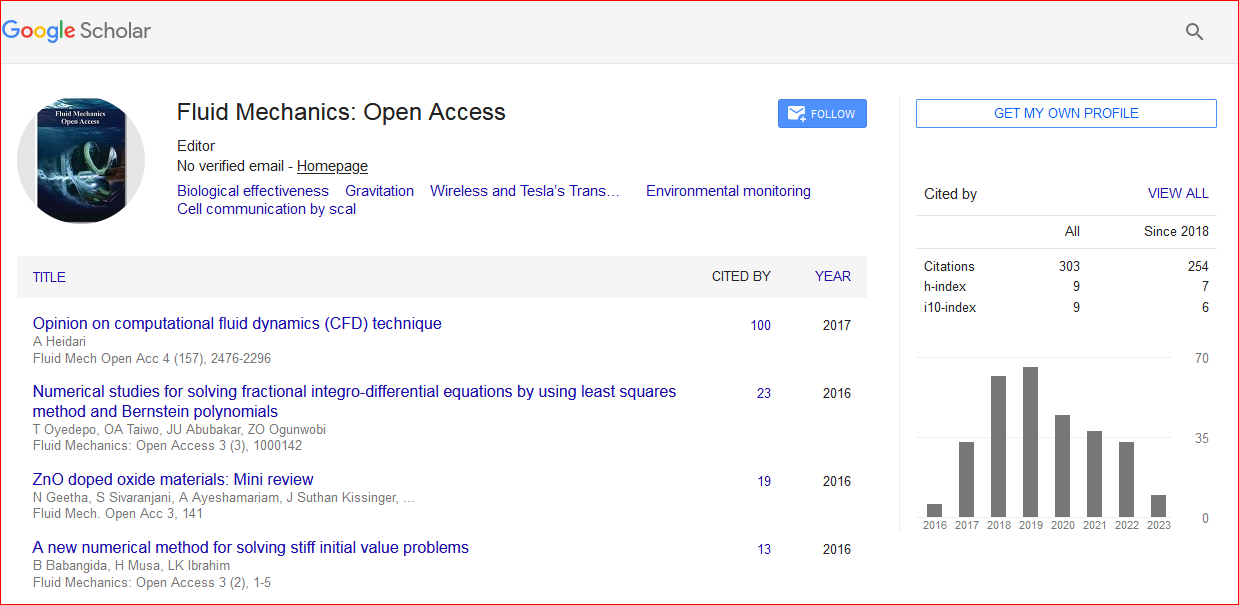
Fluid Mechanics: Open Access received 291 citations as per Google Scholar report