Brief Report - (2025) Volume 9, Issue 2
Received: 02-Jun-2025, Manuscript No. rrms-25-175053;
Editor assigned: 04-Jun-2025, Pre QC No. P-175053;
Reviewed: 18-Jun-2025, QC No. Q-175053;
Revised: 23-Jun-2025, Manuscript No. R-175053;
Published:
30-Jun-2025
, DOI: 10.37421/2952-8127.2025.9.216
Citation: Turner, Michael. ”Advancing Clinical Trials: Efficient, Patient-Centric Future.” Res Rep Med Sci 09 (2025):216.
Copyright: © 2025 Turner M. This is an open-access article distributed under the terms of the Creative Commons Attribution License, which permits unrestricted use, distribution and reproduction in any medium, provided the original author and source are credited.
Modern clinical research continuously seeks innovative methodologies to enhance efficiency and decision-making. Adaptive clinical trial designs, for instance, are increasingly recognized for their ability to increase flexibility and streamline the drug development process. These designs allow for real-time adjustments based on accumulating data, which can lead to faster and more successful outcomes by making complex statistical concepts more accessible to researchers [1].
Further complementing traditional approaches, the integration of Real-World Evidence (RWE) in clinical development is gaining significant traction. RWE offers invaluable insights into drug effectiveness and safety within diverse, routine clinical settings, thereby enriching our understanding beyond controlled trial environments. However, its full potential relies on robust methodologies and clear regulatory frameworks to navigate inherent challenges [2].
Engagement with stakeholders is also evolving, with Patient and Public Involvement (PPI) becoming a critical component of clinical research. Studies examining healthcare professionalsâ?? perspectives reveal that PPI can significantly improve recruitment and the overall relevance of research findings. Despite these benefits, practical hurdles like resource limitations and training gaps necessitate dedicated support and clear guidelines to truly reflect patient needs [3].
The operational landscape of clinical trials is undergoing a fundamental transformation with the rise of Decentralized Clinical Trials (DCTs). These trials present substantial opportunities for expanding patient access and alleviating burdens on traditional sites. Successful implementation of DCTs hinges on addressing technological and logistical considerations, including remote monitoring and digital informed consent, pointing towards a transformative future for clinical research [4].
Technological innovations like Artificial Intelligence (AI) are also revolutionizing specific aspects of clinical trials, particularly in recruitment. AI-driven tools are proving instrumental in optimizing patient identification, streamlining screening processes, and enhancing participant engagement. This approach not only accelerates recruitment timelines but also diversifies participant pools, though it demands careful consideration of data privacy and algorithmic bias for responsible deployment [5].
In specialized fields such as oncology, efficient design strategies like master protocols are being employed. These innovative structures, including umbrella and basket trials, allow for the simultaneous evaluation of multiple treatments or diseases. This optimizes resources and accelerates the identification of effective therapies, underlining the necessity of careful statistical and design considerations in complex therapeutic areas [6].
Transparency and ethical considerations remain paramount in the broader clinical trial ecosystem. Prominent journal editors have underscored the critical importance of data sharing in clinical trials. They advocate for policies that ensure broader access to de-identified patient data, recognizing this as an ethical imperative for promoting scientific advancement, reproducibility, and ultimately, public health, despite inherent practical challenges [7].
Ensuring representativeness is another key focus, with significant efforts dedicated to enhancing diversity in clinical trials. Identifying effective strategies to achieve this is vital for ensuring research findings are broadly generalizable across various populations. A multi-faceted approach, incorporating community engagement, culturally sensitive recruitment, and policy adjustments, is deemed essential to overcome historical disparities and build lasting trust within underrepresented groups [8].
The drive towards personalized healthcare is reflected in the statistical designs for precision medicine clinical trials. These designs focus on developing targeted therapies tailored to individual patient characteristics. Methodologies like adaptive designs and biomarker-guided trials are pivotal in identifying specific subgroups most likely to benefit from a given treatment, necessitating sophisticated statistical approaches to fully realize the potential of personalized medicine [9].
Lastly, the development of treatments for rare diseases, known as orphan drugs, presents a unique set of challenges and opportunities. Small patient populations, diagnostic delays, and complex regulatory landscapes often impede progress. However, there is a critical need for effective therapies for these underserved conditions, driving the exploration of innovative trial designs and collaborative strategies to accelerate orphan drug development and offer hope to affected patients [10].
Clinical trial methodologies are continually evolving to boost efficiency and tailor treatments more effectively. Adaptive clinical trial designs exemplify this, offering a practical guide to increasing research flexibility and efficiency. They enable more informed decisions throughout a study, which ultimately leads to faster and more successful drug development by making complex statistical concepts readily understandable for researchers [C001]. Complementing this, master protocols present an efficient design strategy, particularly in oncology drug development. These innovative structures, like umbrella and basket trials, permit the simultaneous evaluation of multiple treatments or diseases. This approach significantly optimizes resources and accelerates the identification of effective therapies, though realizing their full benefits in a complex field such as oncology requires careful design and statistical consideration [C006]. Furthermore, the advancement of precision medicine is heavily reliant on sophisticated statistical designs for its clinical trials. These designs are specifically crafted to develop targeted therapies based on individual patient characteristics, employing methodologies such as adaptive and biomarker-guided trials. Such approaches are crucial for accurately identifying subgroups most likely to benefit from a particular treatment, underscoring the necessity for advanced statistical tools to unlock the complete potential of personalized healthcare [C009].
The integration of diverse data sources and innovative operational models is also reshaping clinical research. Real-world evidence (RWE) is playing an increasingly critical role in clinical development, as explored through systematic reviews scrutinizing existing regulatory guidance and outlining key challenges. RWE effectively complements traditional clinical trials by offering valuable insights into drug effectiveness and safety within a wide array of routine clinical settings. This approach emphasizes a profound need for robust methodologies and clear regulatory frameworks to fully harness RWE's transformative potential [C002]. Simultaneously, decentralized clinical trials (DCTs) represent a significant paradigm shift, offering new opportunities for enhanced patient access and reduced site burden. These trials require careful consideration of various technological and logistical factors necessary for successful implementation, from advanced remote monitoring systems to digital informed consent processes. Projections suggest that DCTs hold immense transformative potential for the future of clinical research, fundamentally altering how studies are conducted [C004].
A heightened focus on patient-centricity and inclusivity is driving efforts to make clinical research more representative and responsive. Patient and Public Involvement (PPI) in clinical research is being examined through mixed-methods studies that gather healthcare professionalsâ?? perspectives. These studies reveal perceived benefits, such as improved recruitment and enhanced relevance of research, alongside practical challenges like resource constraints and insufficient training. The findings highlight that dedicated support and clear guidelines are essential to foster more effective PPI, ensuring that research genuinely reflects and addresses patient needs [C003]. This push for relevance is mirrored by a concerted effort to improve diversity in clinical trials, a crucial step for ensuring research findings are broadly generalizable across different populations. Systematic reviews identify a range of effective strategies, including community engagement, the development of culturally tailored recruitment materials, policy changes, and financial incentives. These underscore that a multi-faceted approach is absolutely essential to address historical disparities and build lasting trust within underrepresented groups [C008].
Technological innovation is further defining the modern clinical trial landscape, particularly in participant acquisition. Artificial Intelligence (AI) is one such innovation, with emerging applications in clinical trial recruitment. Systematic reviews highlight how AI-driven tools can significantly optimize patient identification, streamline complex screening processes, and enhance overall participant engagement. This leads to accelerated recruitment timelines and a diversification of participant pools. However, challenges related to data privacy and algorithmic bias must be carefully addressed, pointing to critical future research directions for responsible AI implementation [C005].
Beyond technological advancements, ethical considerations and the needs of specialized populations remain central. Prominent journal editors reflect on the critical importance of data sharing in clinical trials, articulating an ethical imperative for transparency and reproducibility. They advocate for policies that facilitate broader access to de-identified patient data, recognizing the collective benefit to scientific advancement and public health, while also acknowledging the practical complexities involved [C007]. Finally, addressing the unique needs of special populations, such as those with rare diseases, is a persistent challenge. Clinical trials for orphan drugs face inherent complexities including small patient populations, frequent diagnostic delays, and various regulatory hurdles. Despite these difficulties, there is a critical and recognized need for effective treatments, which drives the proposal of innovative trial designs and collaborative strategies to accelerate the development of these essential orphan drugs [C010].
Recent advancements in clinical trials are shaping a more efficient and patient-centric research landscape. Adaptive trial designs are increasing efficiency and flexibility, allowing for more informed decisions and faster drug development. Real-world evidence (RWE) plays a growing role, complementing traditional trials by offering insights into drug effectiveness and safety in routine settings, though requiring clear regulatory frameworks. Patient and public involvement (PPI) is gaining traction, with studies showing benefits in recruitment and relevance, despite challenges like resource constraints. Decentralized clinical trials (DCTs) are transforming research by improving patient access and reducing site burden through remote monitoring and digital consent, indicating a significant shift for the future. Artificial Intelligence (AI) is optimizing recruitment by streamlining patient identification and enhancing engagement, promising faster timelines and diverse participant pools, while also raising important considerations for data privacy and bias. Master protocols, such as umbrella and basket trials, offer efficient strategies for oncology drug development, enabling simultaneous evaluation of multiple treatments. Furthermore, the ethical imperative for data sharing in clinical trials is being emphasized for transparency and reproducibility, fostering scientific advancement. Efforts to enhance diversity in trials are crucial for generalizable findings, employing community engagement and culturally tailored approaches. Precision medicine trials are advancing targeted therapies through adaptive designs and biomarker-guided approaches, necessitating sophisticated statistical methods. Finally, clinical trials for orphan drugs face unique challenges due to small patient populations and regulatory hurdles, yet innovative designs are being explored to accelerate treatments for rare diseases.
None
None
Peter P, Alun WB, Siobhan C. "Adaptive clinical trial designs: A practical guide for researchers".Contemp Clin Trials 99 (2020):106191.
Indexed at, Google Scholar, Crossref
Maya IK, Mariamma V, Fabiola FS. "Real-world evidence in clinical development: A systematic review of regulatory guidance and challenges".Clin Pharmacol Ther 112 (2022):17-26.
Indexed at, Google Scholar, Crossref
Angela EG, Sean O, Joanne P. "Patient and public involvement in clinical research: a mixed methods study of healthcare professionalsâ?? views and experiences".Res Involv Engagem 7 (2021):21.
Indexed at, Google Scholar, Crossref
Beyza I, Narin B, Haluk K. "Decentralized clinical trials: Challenges, opportunities, and future directions".Front Digit Health 5 (2023):1099197.
Indexed at, Google Scholar, Crossref
Yiming L, Cheng H, Jian G. "Artificial intelligence in clinical trial recruitment: A systematic review".J Med Syst 48 (2024):12.
Indexed at, Google Scholar, Crossref
Jie R, Xiang W, Jiong L. "Master protocols: an efficient design for oncology drug development".Transl Cancer Res 11 (2022):3469-3478.
Indexed at, Google Scholar, Crossref
Jeffrey MD, Joseph AJ, Stephen M. "Data Sharing in Clinical Trials: A View from the Editors".N Engl J Med 384 (2021):1656-1658.
Indexed at, Google Scholar, Crossref
Giselle C, Penny CH, Maya W. "Strategies to Improve Diversity in Clinical Trials: A Systematic Review".JAMA Netw Open 6 (2023):e234975.
Indexed at, Google Scholar, Crossref
Layla P, Bin Z, Jun Q. "Statistical designs for precision medicine clinical trials".Stat Methods Med Res 29 (2020):2888-2900.
Indexed at, Google Scholar, Crossref
Sibei G, Zhiming L, Siqi L. "Challenges and opportunities of clinical trials for orphan drugs".Orphanet J Rare Dis 16 (2021):54.
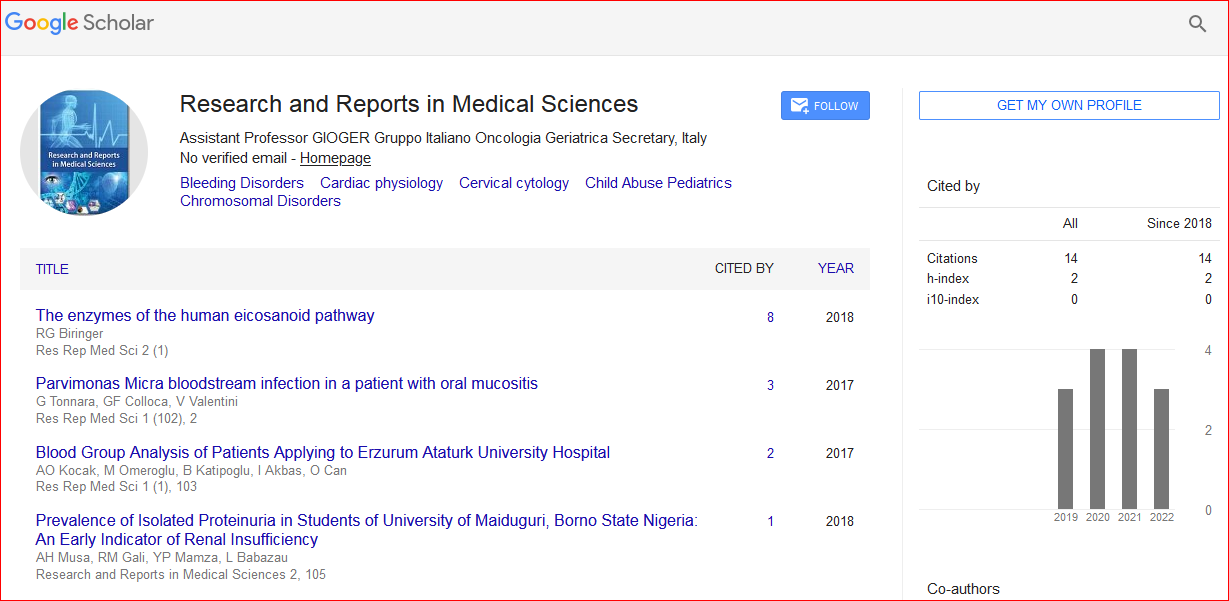
Research and Reports in Medical Sciences received 13 citations as per Google Scholar report