Brief Report - (127) Volume 12, Issue 4
Received: 01-Aug-2025, Manuscript No. ijn-26-183984;
Editor assigned: 04-Aug-2025, Pre QC No. P-183984;
Reviewed: 18-Aug-2025, QC No. Q-183984;
Revised: 22-Aug-2025, Manuscript No. R-183984;
Published:
29-Aug-2025
, DOI: 10.37421/2376-0281.2025.12.639
Citation: Moore, Rebecca. ”Music Therapy: Holistic Neurological Recovery and Enhancement.” Int J Neurorehabilitation Eng 12 (2025):639.
Copyright: © 2025 Moore R. This is an open-access article distributed under the terms of the Creative Commons Attribution License, which permits unrestricted use, distribution and reproduction in any medium, provided the original author and source are credited.
Music therapy presents a significant and promising avenue for individuals undergoing neurological recovery, tapping into multiple brain regions integral to motor control, cognitive functions, and emotional regulation. Its applications are diverse, ranging from improving motor impairments to enhancing emotional well-being, thereby fostering a more conducive environment for healing and rehabilitation [1].
The rhythmic nature of music, a core element in music therapy, demonstrates a notable capacity to improve gait parameters in individuals diagnosed with Parkinson's disease. This is achieved through rhythmic auditory stimulation, a technique that capitalizes on the brain's inherent responsiveness to rhythmic patterns [2].
Furthermore, melodic intonation therapy, another music-based intervention, has shown considerable efficacy in aiding speech production for individuals suffering from aphasia. This approach leverages the distinct melodic and rhythmic qualities of music to stimulate language recovery [3].
Beyond its direct impact on motor and speech rehabilitation, music therapy plays a crucial role in mitigating psychological distress. It has been observed to significantly reduce levels of anxiety and depression, cultivating a more positive emotional state that is vital for maintaining patient engagement throughout the challenging recovery process [1].
The ability of music to facilitate rhythmic entrainment can significantly enhance motor function in individuals with Parkinson's disease. This is demonstrated through measurable improvements in gait speed, stride length, and a reduction in the occurrence of freezing of gait episodes, attributed to the brain's synchronization with external rhythmic cues [2].
Melodic Intonation Therapy (MIT) has proven effective in restoring speech production capabilities, especially in patients experiencing non-fluent aphasia, particularly those with Broca's aphasia. By employing singing and rhythmic intonation, MIT effectively utilizes intact musical processing areas within the brain to foster the development of new neural pathways essential for verbal communication [3].
Music therapy's beneficial effects extend to cognitive rehabilitation, where both active music-making and passive listening have been shown to improve attention, memory, and executive functions in individuals recovering from stroke or traumatic brain injury. This is largely due to music's capacity to activate widespread cortical networks involved in these cognitive processes [4].
The emotional and psychological dimensions of neurological recovery are profoundly addressed by music therapy. Music's ability to evoke emotions, reduce stress hormones, and elevate mood are critical factors for sustained engagement in rehabilitation efforts, especially for those experiencing depression or anxiety stemming from their neurological condition [5].
Neurologic music therapy (NMT) encompasses evidence-based techniques like therapeutic instrumental music performance (TIMP) and rhythmic auditory stimulation (RAS), specifically designed for motor rehabilitation. TIMP targets specific motor deficits through the act of playing an instrument, while RAS uses rhythm to enhance gait and balance [6].
Music therapy can facilitate neuroplasticity by engaging the brain in complex and multisensory tasks. The emotional component of music can further enhance this neuroplastic process, potentially leading to more robust and enduring functional recovery following brain injury [7].
Music therapy offers a multi-faceted approach to neurological rehabilitation, engaging a spectrum of cognitive, motor, and emotional domains essential for recovery. Its broad applicability stems from music's inherent capacity to stimulate diverse neural pathways and influence psychological states, making it a valuable therapeutic adjunct [1].
One of the key mechanisms through which music therapy aids in neurological recovery is rhythmic entrainment, particularly relevant for motor impairments. In individuals with Parkinson's disease, the application of rhythmic auditory stimulation has been shown to significantly enhance motor coordination and functional mobility, improving parameters such as gait speed and stride length [2].
For patients experiencing aphasia, a common consequence of stroke or brain injury, melodic intonation therapy (MIT) provides a targeted intervention. By transforming spoken words into song-like melodies, MIT leverages the brain's preserved musical abilities to bypass damaged language centers, thereby facilitating the re-establishment of speech production [3].
Beyond the direct neurological impacts, music therapy addresses the significant emotional and psychological challenges that often accompany neurological conditions. Its ability to reduce anxiety and depression creates a more positive emotional foundation, which is crucial for sustained motivation and active participation in the rehabilitation process [1].
The effectiveness of rhythmic auditory stimulation in improving motor function, especially gait, in Parkinson's disease is well-documented. Studies highlight improvements in gait speed, stride length, and a reduction in gait variability and freezing episodes, largely attributed to the brain's capacity to synchronize neural oscillations with external rhythmic auditory cues, thereby bypassing dysfunctional motor pathways [2].
Melodic Intonation Therapy (MIT) has demonstrated particular efficacy in restoring speech production for individuals with non-fluent aphasia, especially those with Broca's aphasia. This technique utilizes the musicality of language, employing singing and rhythmic patterns to stimulate and retrain neural pathways involved in verbal communication, capitalizing on the brain's inherent musical processing capabilities [3].
Music therapy also contributes to cognitive rehabilitation by improving attention, memory, and executive functions, particularly in individuals recovering from stroke or traumatic brain injury. Both active engagement in making music and passive listening have been observed to activate widespread cortical networks associated with these cognitive processes, promoting functional recovery [4].
The psychological benefits of music therapy are equally important in the context of neurological recovery. By modulating mood, reducing stress, and evoking positive emotions, music therapy enhances a patient's overall well-being and resilience, which are critical for their ability to cope with and actively engage in the demanding rehabilitation process [5].
Neurologic music therapy (NMT) offers specific, evidence-based interventions for motor rehabilitation, including therapeutic instrumental music performance (TIMP) and rhythmic auditory stimulation (RAS). TIMP utilizes structured musical performance to address motor deficits, while RAS employs rhythmic cues to improve gait and balance, showcasing the precision of NMT techniques [6].
Music's ability to facilitate neuroplasticity is a key factor in its therapeutic value. By engaging the brain in complex, multisensory experiences with significant emotional valence, music therapy can promote more robust and lasting changes in neural circuits, leading to improved functional recovery after neurological injury [7].
Music therapy is a promising intervention for neurological recovery, targeting motor, cognitive, and emotional deficits. Techniques like rhythmic auditory stimulation improve gait in Parkinson's disease, while melodic intonation therapy aids speech in aphasia. The therapy also reduces anxiety and depression, fostering engagement. It enhances cognitive functions such as attention and memory, and promotes neuroplasticity. Specific NMT techniques like TIMP and RAS are used for motor rehabilitation. Music therapy contributes to holistic recovery by addressing multiple aspects of a patient's condition.
None
None
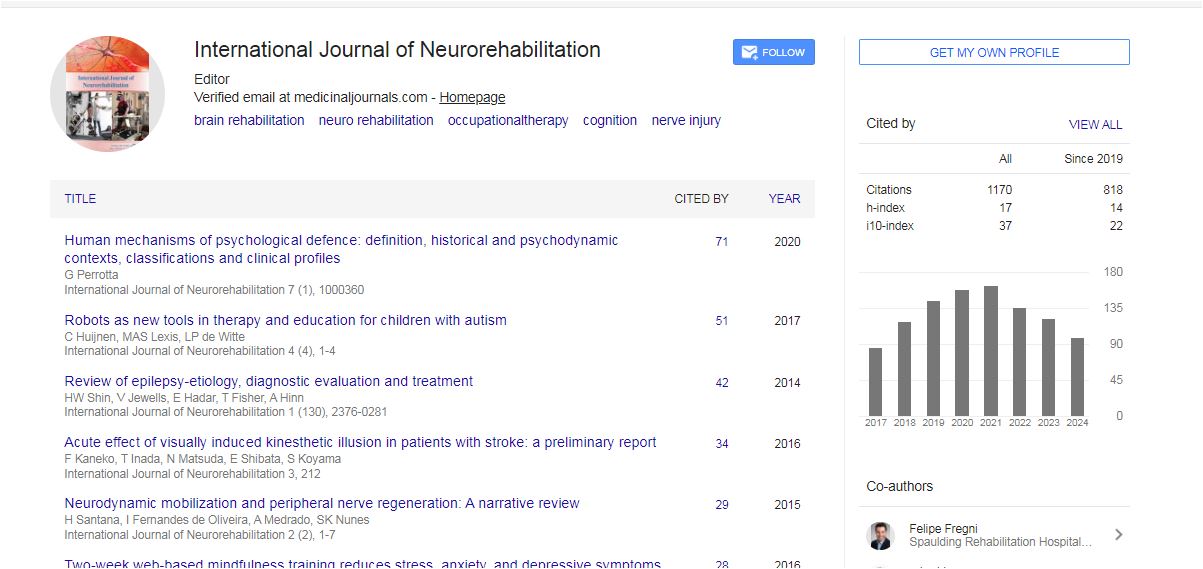
International Journal of Neurorehabilitation received 1078 citations as per Google Scholar report