Persistent organic pollutants include some organo-metals, such as methylmercury; lipophilic halogenated organics, such as dioxins, polychlorinated biphenyls, chlorinated pesticides, and polybrominated flame retardants; and perfluorinated compounds used as repellants. These compounds are resistant to degradation both in the environment and in the human body and tend to bioaccumulate within the food chain. Persistent organic pollutants cause a variety of adverse health effects, including cancer, immune system suppression, decrements in cognitive and neurobehavioral function, disruption of sex steroid and thyroid function, and at least some of them increase the risk of chronic diseases, such as hypertension, cardiovascular disease, and diabetes. Some compounds are byproducts of industry and combustion. Although the manufacture and use of most man-made chemicals has been reduced in recent years, the levels currently present in the population are still associated with an elevated risk of human disease. Others are still manufactured and used. These are dangerous chemicals that have contaminated even areas remote from the industrialized world, such as the polar regions.
Research: Journal of Pollution
Research: Journal of Pollution
Research Article: Journal of Pollution
Research Article: Journal of Pollution
Research Article: Journal of Pollution
Research Article: Journal of Pollution
Editorial: Journal of Pollution
Editorial: Journal of Pollution
Editorial: Journal of Pollution
Editorial: Journal of Pollution
Posters & Accepted Abstracts: Advances in Recycling & Waste Management
Posters & Accepted Abstracts: Advances in Recycling & Waste Management
Posters & Accepted Abstracts: Journal of Biometrics & Biostatistics
Posters & Accepted Abstracts: Journal of Biometrics & Biostatistics
Scientific Tracks Abstracts: Journal of Biometrics & Biostatistics
Scientific Tracks Abstracts: Journal of Biometrics & Biostatistics
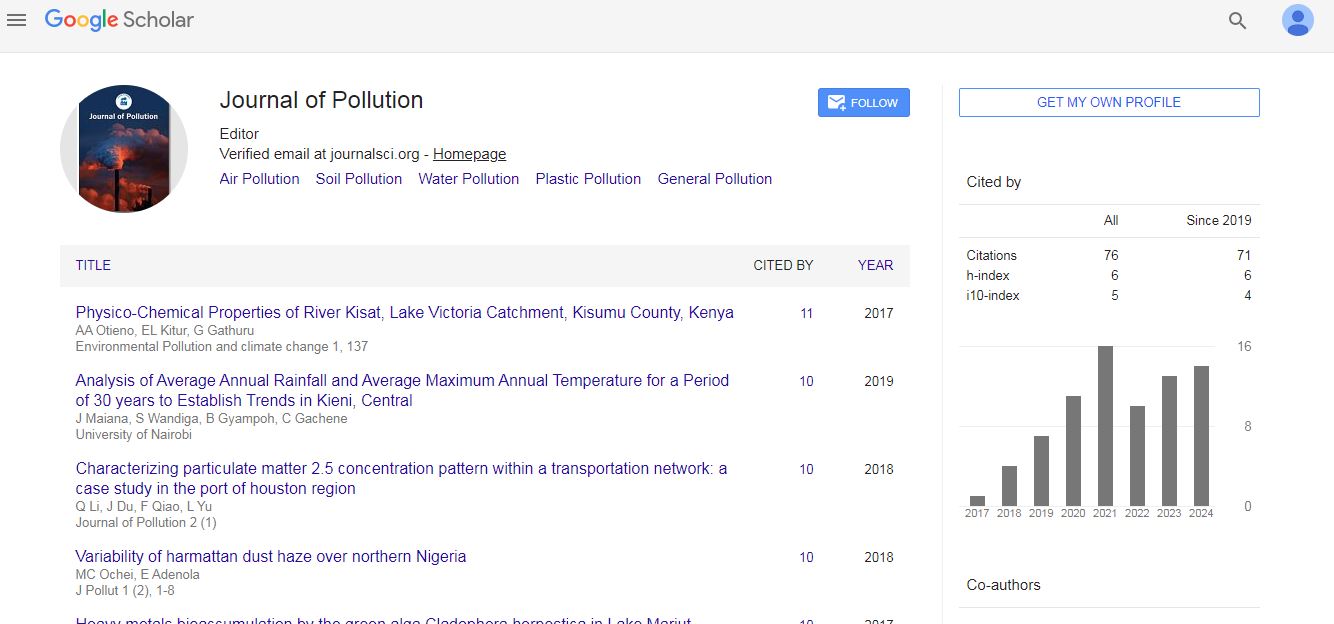
Journal of Pollution received 64 citations as per Google Scholar report
 Spanish
  Chinese
  Russian
  German
  French
  Japanese
  Portuguese
  Hindi
Hindi 