Faecal pollution on bathing beaches poses a potential threat to human health and as a result may also negatively affect the local economy. In instances where the source of such pollution is not obvious, it may be necessary to track such sources using a host-specific genetic markers technique. Bacteroides species are potential indicators for source tracking of faecal pollution in bathing waters. This study designed specific primer sets to amplify sections of the 16S rRNA gene unique to Bacteroides from domestic dogs and used quantitative PCR (qPCR) to quantify such genetic markers in environmental samples. The sensitivity and specificity of the primer sets was determined; they were specific in silico against known dog Bacteroides sequences and in vitro against Bacteroides sequences originating from human and livestock faeces. Dog faecal Bacteroides contamination was then detected in sea water during the bathing season at a local beach where dogs are banned during the summer months, in spite of the fact that these waters had met EU directive standards based on the culture-based enumeration of faecal indicator bacteria.
Research: Journal of Pollution
Research: Journal of Pollution
2021 Conference Announcement: Journal of Pollution
2021 Conference Announcement: Journal of Pollution
Perspective: Journal of Pollution
Perspective: Journal of Pollution
Research Article: Journal of Pollution
Research Article: Journal of Pollution
Editorial: Journal of Pollution
Editorial: Journal of Pollution
Posters & Accepted Abstracts: Advances in Recycling & Waste Management
Posters & Accepted Abstracts: Advances in Recycling & Waste Management
Scientific Tracks Abstracts: Advances in Recycling & Waste Management
Scientific Tracks Abstracts: Advances in Recycling & Waste Management
Accepted Abstracts: Journal of Biometrics & Biostatistics
Accepted Abstracts: Journal of Biometrics & Biostatistics
Scientific Tracks Abstracts: Journal of Biometrics & Biostatistics
Scientific Tracks Abstracts: Journal of Biometrics & Biostatistics
Accepted Abstracts: Journal of Mass Communication & Journalism
Accepted Abstracts: Journal of Mass Communication & Journalism
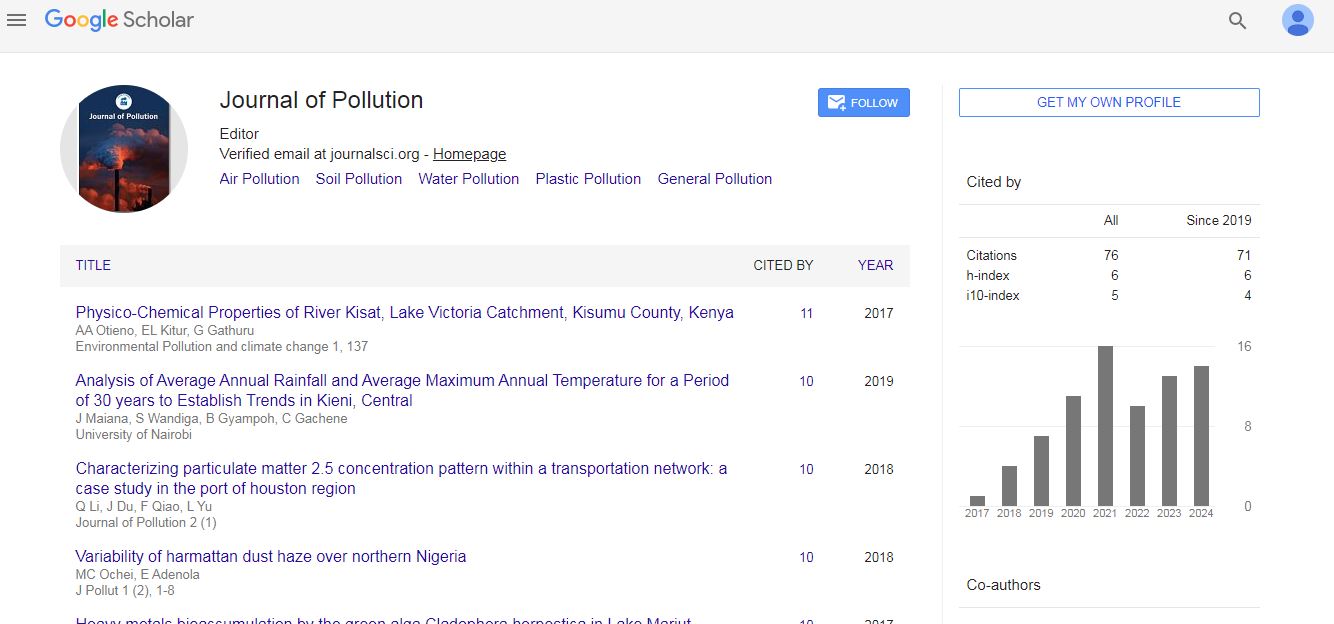
Journal of Pollution received 64 citations as per Google Scholar report

 Spanish
  Chinese
  Russian
  German
  French
  Japanese
  Portuguese
  Hindi
Hindi 